In the political arena, a lot can change in 18 months. Georgia’s Secretary of State Brad Raffensperger was a name not recognized by many people outside of Georgia politicos, but that all changed in January 2021, when Trump pressured him to change the state’s Presidential vote totals. Unmoved by the power of the Oval Office, Raffensperger stood his ground, openly defied Trump’s claims and asserted that there was no evidence to support claims of voter fraud. Audio of the call was published worldwide the following day, and from that point on, Raffensperger was lumped into the same group of “disloyal” Republicans who frequently receive public rebuke from the former President.
Considering the damage typically inflicted on any Republican who contradicts Trump, it was easy to expect a primary election loss for Raffensperger, yet he defied the odds. His principled stance gained popularity and support from Georgia voters, including Democrats, who are allowed to vote in Georgia’s open primaries. Ultimately, he defeated his primary opponent, Rep. Jody Hice, 52.3% to 33.4%, and based on the Atlanta Journal Constitution’s poll results published July 28th, 2022, he is on pace to defeat his Democratic opponent in the General Election by a double-digit margin, as the AJC poll shows him up 46% to 32% over Democrat Bee Nguyen. (Libertarian Ted Metz had 7%, a notable percentage for a third party candidate).
DEFYING THE ODDS AGAINST TRUMP SUPPORTERS
How has Raffensperger managed to grow his popularity in such a polarized political era? Ben Burnett, who is a Georgia political talk show host and a former Alpharetta City Councilman, offered his analysis of Raffensperger’s unexpected bipartisan support post 2021.
“The Secretary of State’s role in Georgia state politics isn’t viewed with as much partisanship as it actually has,” Burnett said. ”He pulls on many of the heart strings of liberals for standing up to Donald Trump. He doesn’t get into abortion or guns. So liberals don’t have a lot to hate about him.”
NATIONAL REVIEW’S KEY POINTS ON RECENT MISSOURI SENATE POLLS :
Trafalgar has Schmitt at 26.5 percent, congresswoman Vicky Hartzler at 24.4 percent, Greitens at 20.2 percent, congressman Billy Long at 6.7 percent, 6.6 percent with minor candidates (Mark McCloskey and Dave Schatz), and 15.6 percent undecided.
Emerson has Schmitt at 33 percent, Hartzler at 21 percent, Greitens at 16 percent, Long at 5 percent, 8 percent for minor candidates, and 17 percent undecided. Sixty-one percent have an unfavorable view of Greitens, double the unfavorables for Schmitt and nearly double those of Hartzler.
When undecideds are pushed to choose, Emerson shows the race at Schmitt 39 percent, Hartzler 25 percent, Greitens 18 percent, Long 7 percent, and 11 percent for the minor candidates. In other words, a third of independents would pick Schmitt if they had to decide today, but barely more than one in nine would choose Greitens.
Republican pollster Remington’s Missouri Scout poll has Schmitt at 32 percent, Hartzler at 25 percent, Greitens at 18 percent, Long at 8 percent, and 7 percent with the minor candidates, with 10 percent undecided.
Earlier today, SurveyUSA published poll results showing incumbent Senator Raphael Warnock up nine against Herschel Walker in the race for Georgia’s open senate seat. The race continues to trend toward Warnock after several damaging revelations about Walker. Warnock continues to benefit from an essentially unvetted opponent in Walker, a celebrity candidate who was buoyed by Trump’s endorsement. Three of most interesting findings in the poll:
• Warnock leads by 22 points among voters under age 50, and trails by a nominal 2 points among those age 50 and older.
• Walker significantly underperforms sitting Governor Brian Kemp’s numbers: of those who cast a vote for Kemp for Governor, only 78% vote for Walker for Senate. Of those who vote for Stacey Abrams in the gubernatorial contest, 93% vote for Raphael Warnock.
• Black voters choose Warnock by an 80-point margin; white voters back Walker by 28 points.
“Herschel Walker won a Heisman Trophy over 40 years ago and carried a historically underachieving football team to national prominence, and 68.2% of Republican primary voters made him the nominee for that reason, Burnett said. “Young voters don’t care about that. They know the University of Georgia as a current powerhouse football program. People under the age of 40 tend to look past Warnock’s domestic issues and left leaning voting record because they don’t realize what 9.1% inflation means, and Herschel Walker means very little to UGA’s football success today. Herschel can’t articulate anything much less a value proposition. Walker’s talents on the field don’t exceed his problems off of it. Senator Warnock isn’t a great guy. But Warnock has never pretended to be an FBI agent, he’s never allegedly held a gun to his wife’s head, and he doesn’t sit in a party that claims to have strong family values. Walker’s entire political existence sits on a mountain of hypocrisy with no results. Georgia Republican voters are 100% to blame for selecting a poor candidate. Any other senate candidate in that primary would have beaten Senator Warnock by sitting in their basement and staying off social media. I mean any of them.”
SHOW DESCRIPTION: Georgia’s most powerful lobbyist, Don Bolia stops in to discuss an industry full of misconceptions. How he recruits clients. How he delivers results. He discusses long term issues that face Georgia, and why every organization needs a government relations expert on the payroll.
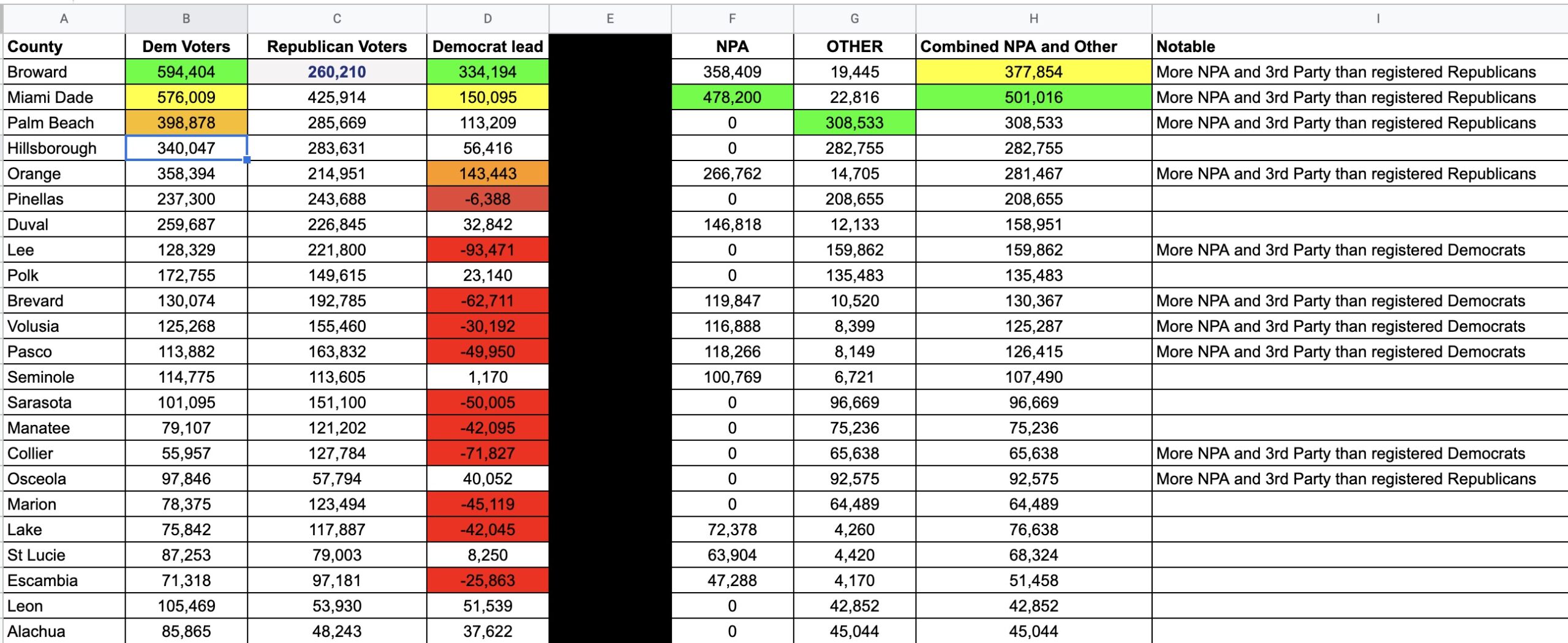
Since 2000, Florida has been the most coveted swing state in the Southeast, whether the stakes are a Presidential race or pivotal midterms. While Democrats still dominate a few Florida counties, recent trends, including a Republican registration advantage, indicate that Sunshine State’s shade of red has darkened since Governor Ron DeSantis was elected in 2018. During that same timespan, Georgia has seen two Senate seats flip from red to blue, and North Carolina’s Democratic governor Roy Cooper was re-elected for a second term.
North Carolina Voter Demographic Trends:
The most recent US Census and other data shows that Charlotte and Raleigh among the fastest growing cities in the country during the past year. While it’s true that Florida also touts several cities among the top 10 for fastest growth, its new residents primarily consist of retirees relocating to Sarasota on the gulf coast, and Melbourne on the Atlantic cost. Charlotte and Raleigh attract young professionals, particularly in academic research careers that heavily rely on federal grants. Florida’s implants are typically seniors, most of whom are socially conservative and deeply committed to long-held voting habits. When you combine the influx of more senior citizen voters with South Florida Hispanics shifting their support to Republicans (including two Congressional seats that flipped red in 2020), North Carolina much more viable for Democrats in the near term.
Need more proof that Democrats are gaining ground in the Tar Heel state? Take a look at turnout in the 2020 election. Biden carried eight of North Carolina’s ten largest counties (losing only the Charlotte-area suburban counties of Union and Gaston), and overperformed Obama’s 2008 margin in the six largest: Wake, Mecklenburg, Guilford, Forsyth, Durham, and Buncombe, in which he received 62%, 67%, 61%, 56%, 80%, and 60% of the vote, respectively. Biden also became the first Democrat to carry New Hanover County, home of Wilmington, since 1976, and held Trump to a single-digit margin in the Charlotte-area suburban county of Cabarrus, the first time since 1976 that the Republican margin in this county has been less than 10%. Obviously, Biden’s approval rating has plummeted since 2020, and many independent voters may switch their support if his approval numbers remain in the 30’s and 40’s, but the overall Democratic momentum in North Carolina is a stark contrast from Florida. Democratic Governor Roy Cooper used that shift to win a second term by 4.5 points. Florida Democrats undoubtedly envy their fellow party leaders in the Tarheel State, because barring a total shock between now and 2022 Midterm Election Day, DeSantis and Senator Marco Rubio appear to be headed to re-election by comfortable margins of victory.
Conversely, Trump held or outperformed his 2016 margin in Robeson, Bladen, Martin, Granville and Gates counties, all counties that had been reliably Democratic in the 20th century and which had voted for Obama twice before flipping to Trump in 2016. Biden thereby became the first Democrat ever to win the presidency without Robeson County, the largest county in the Lumber River region of the state and the county which had given Jimmy Carter his largest raw vote margin in the state in both 1976 and 1980. Trump picked off neighboring Scotland County, one of only 15 counties he flipped nationally, becoming the first Republican to carry it since Ronald Reagan in 1984 and making Biden the first Democrat to win without Scotland since the county’s creation in 1899. Biden also became the first Democrat to win the White House without Granville and Gates counties since 1892, the first since 1884 to win without Bladen County, the first since 1856 to win without Richmond County and the first ever to win without Martin County.
Georgia Voter Demographic Trends:
Analysis of Georgia’s leftward shift is much simpler than North Carolina. Democratic gains in Georiga are directly attributable to the new generation of suburban voters throughout the Atlanta Metro region. Biden was able to build Clinton’s vote shares in the densely-populated Metro Atlanta counties of Gwinnett, Cobb, and Henry, increasing her vote shares of 50%, 48%, and 50% to 58%, 56%, and 60%, respectively–in all three cases, the best showing for a non-Georgian Democrat since John F. Kennedy in the 1960 election.
In this year’s high-profile Senate race, Republican nominee Herschel Walker saw his lead evaporate in most polls against incumbent Democrat Raphael Warnock. Walker is a statewide football legend who was endorsed by former President Trump, but several revelations about his past hurt his polling numbers. Warnock is a pastor who narrowly won in the 2021 special election runoff against Kelly Loeffler. Warnock’s campaign has been low-key as Walker’s misfortunes continue to attract media scrutiny.
If Warnock manages to defeat Walker, statewide Democrats will count on him to play a key role in the 2024 Presidential election. At the national level, Democratic leaders know that Florida will likely be even more challenging to conquer, Florida’s Electoral vote haul is cancelled-out if Democrats win Georgia and North Carolina. Keep an eye on the amount of money, personnel and other resources that Democrat leaders pour into Georgia and North Carolina over the next 30 months.
“In the 2012 presidential election, Republican nominee Mitt Romney won Georgia by 8 percentage points. In 2016, Trump won by 5. Two years later, then-Secretary of State Brian Kemp, the Republican candidate, won the governorship over Democrat Stacey Abrams by just 1.4 percentage points — amid allegations that he and the GOP had worked to suppress minority votes by purging voter rolls.
Even if Trump or a different 2024 Republican presidential nominee improves on Trump’s southwestern performance in 2020 by winning Arizona in 2024, it won’t matter if Democrats manage to win either Georgia or North Carolina. See below:
For decades, mainstream media has applied the phrase “Evangelical Christian” in a manner that implies the majority of protestants active in their respective churches are included in the category. Any reputable journalist who researched “evangelical megachurch” leaders would discover that while there are several groups among Christians that could be deemed “evangelical” due to their desire to share their faith with friends, family and occasional strangers, the churches that show the most support for Trump are Charismatic Pentecostal Christians. The largest denomination representing this known as the “Assemblies of God” church. (*There are also plenty of random non-denominational churches, which aren’t bound to any particular doctrine, so they can’t be categorized any further.)
In several key areas of doctrine and practice, Assemblies of God churches operate and interpret scripture in a distinctly different manner than the largest historical denominations such as Southern Baptists, Lutherans, Presbyterians and Methodists. Key differences between AG churches and other denominations include belief in the power of healing oils, speaking in tongues, psychic prophetic visions and instant medical healing through prayer, often seen on cable TV. The sensationalistic style of these pastors is often parodied and mocked in satirical comedies.
One of the reasons Trump was able to build such a strong support base from this group is that many charismatics have built-in distrust of western medicine and major institutions including the federal government, particularly the FDA and CDC. AG churches also preach an apocalyptic view of the world where current news headlines are regularly compared to passages in the book of Revelation. This weekly exercise fuels conspiracy theories and distrust of authority, which thrived throughout the COVID outbreak and Trump’s claim of a stolen election by the “establishment”, namely Washington D.C. “elites.”
As a Christian of more than 30 years, I feel compelled to point out these vital differences, because there are millions of Christians who don’t boycott Western Medicine or overlook Trump’s actions, or believe that Washington DC is overrun by people who drink the blood of infants. Sadly, the vocal minority receives the most attention from the press and is viewed as Protestant Christianity’s unofficial bellwether.
From the 10,000-foot view, the issue of abortion is a game-changer for the Democratic Party in the 2022 mid terms., but Biden, Pelosi and Schumer will end up with fool’s gold if they expect abortion rights alone to prevent the congress from flipping. The latest proof is from a recent Reuters Poll, where the economy remains the undisputed top concern of voters.
For the 43rd-consecutive week, a plurality of voters surveyed named the economy as the nation’a most important issue, with 33% of voters, including 42% of Republicans and 24% of Democrats naming it their top issue. Crime was the second-highest category for voters in both parties, yet it came in at 11%, merely an afterthought by comparison.
While there’s no doubt that young liberal female turnout will increase in November, social issues won’t outweigh a housing market downturn, inflation and other financial challenges. An important fact for Democrats to consider as they craft their campaign messaging is that when voters are wondering how they will put food on their table, social issues go to the backburner. Middle-aged voters, especially those approaching their 50’s, won’t shake the fear of seeing their 401k’s evaporate to focus on the arduous and battle to expand abortion access. In northern and West Coast states, where abortion laws aren’t strict, residents won’t see any new restrictions on abortion, which means that statewide candidates will have to get far more thoughtful with their pitches to suburban families who see no changes impacting their local region. They may view Democratic culture wars as a diversion from other pressing issues.
That leaves southern states and the mid-west, ”Deep South” and Appalachian states, where far more voters consider themselves Christian conservatives. National news outlets seem to forget that those socially conservative voters will be more inspired to vote Republican, which may cancel-out social liberal turnout where Republicans have a decent lead of active registered voters..
Republicans have a tougher path to flip the House, but Democrats still face even greater odds to maintain their control, regardless of the Supreme Court’s overturning Roe vs. Wade.
Since 2016, Florida’s registered Republican voter base has expanded, particularly in South Florida. Of all the regions of the Sunshine State that have seen the most significant shits, Miami is by far the leader. Congresswoman Maria Elvira Salazar and Rep. Carlos Giménez flipped a blue stronghold red in 2020, and experts still have their respective congressional districts considered “likely Republican” in their 2022 mid-term forecasts. While certain analysts including Aaron Zitner at the Wall Street Journal credit Trump for strengthening the GOP’s appeal to blue collar, “working class” voters, there is another major factor that shouldn’t be ignored that occurred prior to Trump’s arrival at the White House.
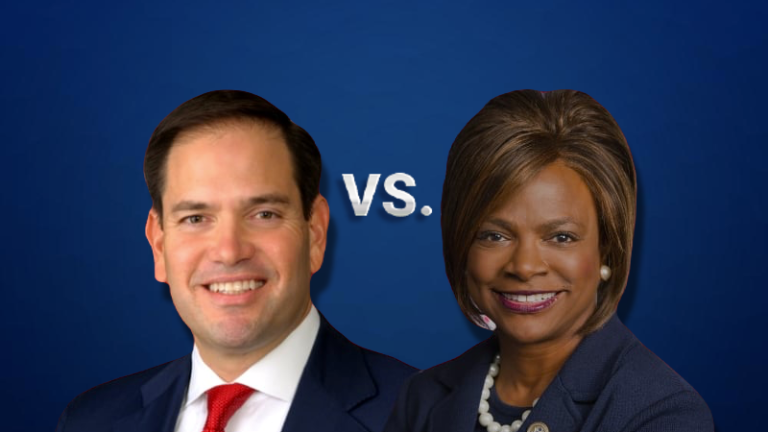
In 2014, President Obama broke a 5-decade-long embargo against Cuba and the Castro regime, with the intention of normalizing trade. Obama’s move pleased free market capitalists and Democrats alike, but there’s reason to believe it was a fatal blow to the former stronghold for the Florida Democratic Party. Prior to Obama’s Cuba shift, fear of socialism dominating America was based on mere speculation, but the alarmists became prophets among South Florida’s hispanic community, particularly in Little Havana. Coupled with Biden’s unwillingness to address Maduro’s chokehold on Venezuela, Hispanics in South Florida have every reason to believe Republicans who warn that Democrats are sending the United States down a path toward socialism. Ironically, the very demographic that Republicans feared they would lose during Trump’s presidency, is now solidifying not only Marco Rubio’s re-election but Governor DeSantis, as well, thanks to DeSantis’ firm stance against federal government intervention and DeSantis’ pro small-business perspective throughout the COVID pandemic.
If Democrats want to win back any of these defectors, they will have to concede that the Hispanic community is more socially and fiscally conservative than the majority of the most vocal current leaders in the Democratic Party. Senator Elizabeth Warren is the perfect example of a leader rallying the wrong crowd, and just this week, South Florida Congresswoman Frederica Wilson joined Warren in calling for total forgiveness of college student loans. When industrial and agricultural blue collar hispanics hear rants from Ivy League academics turned Senator, it re-enforces the feeling that DC elites are out of touch and catering to wealthier, college-educated liberals in the northeast, who have don’t have to worry as much about the impact of inflation and other economic challenges. Until that changes, Georgia may be replacing Florida as the most coveted swing state, because the Sunshine State is becoming a darker shade of red, and the “purple” status of the Obama presidency / Rick Scott governor era, now seems like a distant memory.