A former ambassador has entered Kentucky’s Gubernatorial race. Kelly Craft, who served as the United States’ Ambassador to Canada from 2017-2019, officially declared her candidacy in Kentucky’s Republican gubernatorial primary. Craft, who served under former President Donald Trump, will compete with multiple Republicans for the nomination. Ultimately, the party’s nominee will be tasked with unseating the incumbent, Andy Beshear. Despite Kentucky voter’s long-running commitment to Senators Rand Paul and Mitch McConnell, the state hasn’t consistently elected Republicans for governor.
Earlier today, Craft released a statement and a video to announce her campaign:
“I’m Kelly Craft and I am running for Governor of Kentucky because I know our best days are ahead of us. This movement is for all of us who still believe that we can lead in education, that government doesn’t get a seat at our kitchen table, and that our kids should grow up in safe neighborhoods. I believe we have Kentucky’s promise within reach—let’s achieve it together. Watch my story and join our conservative movement here: www.KellyCraft.com.” – Craft said.
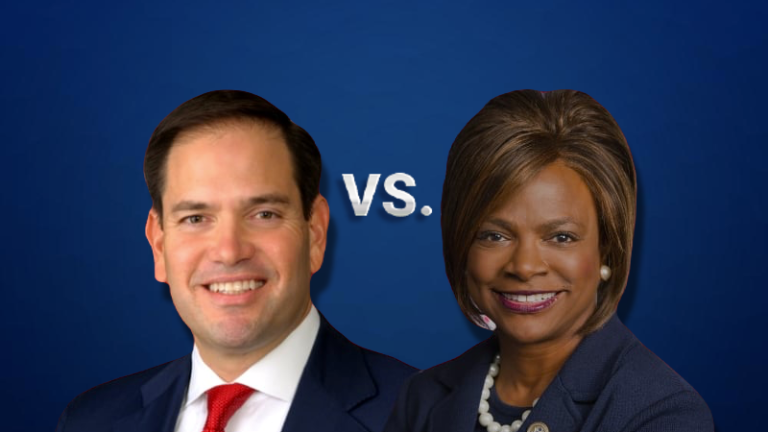
Two new polls on Marco Rubio vs. Val Demings show Rubio with a lead, but in a statistical dead heat due to margin of error. The Fabrizio / Anzalon poll shows Rubio leading Demings, with 49 percent of voter support to Demings’ 47 percent, while the Susquehanna Poll shows Rubio leading with 47 percent of the vote, to Demings’ 44 percent. In both cases, the margin is narrow enough to keep Sen. Rubio anxious until November, especially with independent voters leaning Democrat in the Susquehanna Poll.
Both polls surveyed 500 voters, which means that the margin of error is 4.4 percent. Two silver linings for Rubio in the Fabrizio / Anazlon poll was his larger share of support from independent voters (48 percent vs Demings’ 45 percent) and Rubio’s support “persuadable” voters, described below:
“Persuadable voters are the 19 percent of the 50+ segment of the electorate who are not definitely voting for one of Rubio or Demings. Nine percent are Probably/Leaning toward voting for Rubio, seven percent are Probably/Leaning toward voting for Demings, while the rest are Undecided. They are more likely to be Independents and moderates than voters 50+ overall. They are pessimistic about the direction of the country, and more focused on economic issues for their vote. Nearly all Senate “Persuadables” are more positively inclined toward a candidate who prioritizes issues that protect seniors.” – Fabrizio / Anzalon Poll
Other notable results from the Fabrizio / Anzalon poll included the following stats:
The demographic group where Demings had the largest lead was among black voters over the age of 50, where she gets 79 percent of the vote to Rubio’s 17 percent.
Demings enjoyed her second-highest lead was among college graduates, but that lead was much smaller by comparison, with Demings getting 55 percent to Rubio’s 42 percent.
The demographic group where Rubio had the largest lead was among white voters over the age of 50, where he got 56 percent compared to Demings’ 41 percent.
Rubio enjoyed his second-highest lead was among voters without a college degree, with Rubio getting 54 percent to Demings 42 percent.
Women over 50 support Demings by only two percent more than Rubio, 49 to 47 percent.
Hispanic voters over 50 support Rubio over Demings by only a two percent margin, 50 to 48 percent.
Notable results from the Susquehanna Poll include the following stats:
Economic issues led all issue categories for the most influential issues influencing voters, with 54 percent naming it among their top two issues, followed by social issues, (defined as including gun control and abortion,) with 44 percent choosing it among their top issues.
More voters chose the environment as one the top two issues influencing their vote than crime, health care or taxes
13 percent of voters surveyed chose health care among the top two issues influencing their vote.
16 percent of voters surveyed chose crime among the top two issues influencing their vote.
17 percent of voters surveyed chose taxes among the top issues influencing their vote.
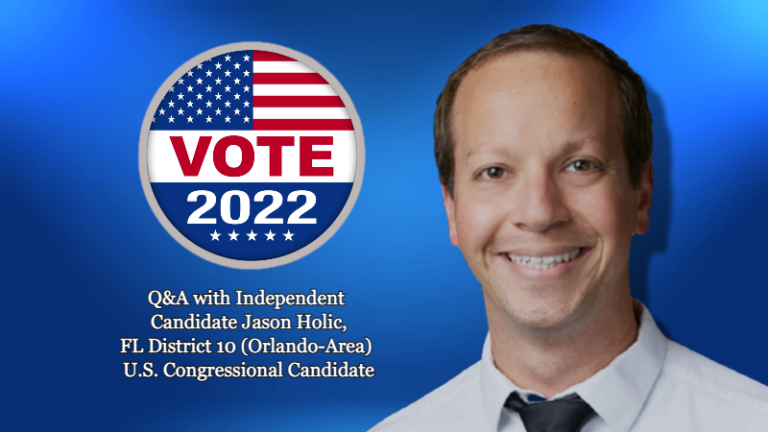
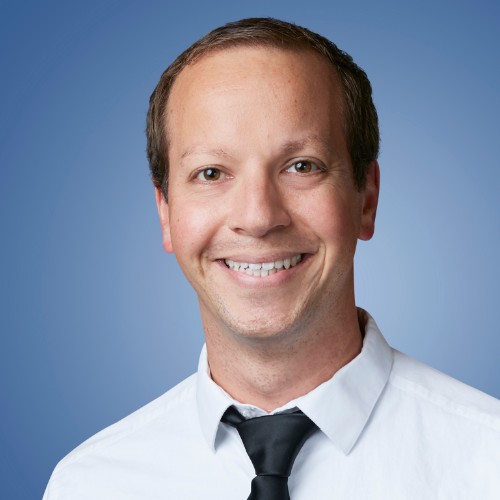
Florida’s 10th Congressional District race for the 2022 Midterm Election could be considered the ultimate microcosm of the nation’s current political climate, with many independent voters seeking calmer tones and compromise in both chambers. District 10 covers much of Orlando proper. The two major party’s nominees couldn’t be further apart on the issues, with Democratic Party nominee Maxwell Frost, a 25-yr old left-wing activist who would be the first Generation Z member elected to the House, and Republican nominee Calvin Wimbish, a green beret known for his staunch loyalty to former President Trump. For voters seeking an alternative, there is an independent candidate – Jason Holic, who will appear on the ballot as NPA, (No Party Affiliation.)
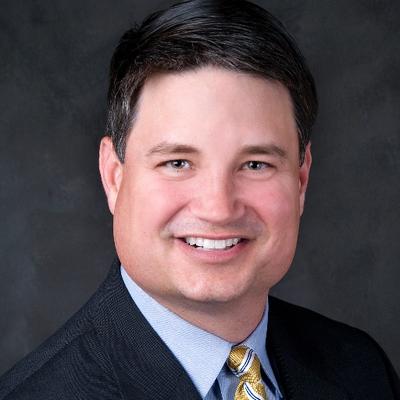
Holic is a businessman and active member of the central Florida community. Holic’s professional background includes work as the VP of Business Applications and Insights at Experience Kissimmee, a a 501(c)6 org devoted to driving more tourism to the central Florida region. Early in Holic’s career, he led digital marketing efforts for suicide prevention, mental illness stigma reduction, and healthy nutrition campaigns. Holic was an Eagle Scout and is currently a Cub Scouts den leader. He is also an ordained deacon, an inventor (patent application 63/157,271) and a mentor to UCF students. You can learn more about Holic’s campaign at JasonHolic.com, and in our Q&A session, below:
Q:When you first contemplated a run for office as an independent, did you start from a mindset of “If there was ever an time that an independent could win, this is the year”, or was it more along the lines of: “Even though I’m not likely to win, I have to give voters the option to cast a “protest” vote against the two major parties” ?
A: “When I filed to run for District 10, my mindset was a mix of “I can’t be the only person who thinks there’s a better way to run and to serve” and “At least if I run in this district, which tends to be pretty solidly Democratic, I’ll be less likely to be accused of siphoning off votes from either party.” Now that we’re closer to the General Election, I believe a path to victory is evident and that it would be foolish to categorize a non-partisan as merely a protest vote. Looking at the voter registration data for Orange County, it’s clear I’m not the only person outside the two-party system. No Party Affiliation (NPA) voters are the second largest group of registered voters in the county – right between the two major parties. And when you look at the voter turnout for the turnout for the Primary Election, less than a third of the registered voters for each party cast a ballot. Further to that point, the party winners for District 10 didn’t secure a majority of the vote. That means the vast majority of registered voters, party affiliated or not, haven’t necessarily found their candidate. I hope that my candidacy provides an attractive alternative.”
Q: Your background includes a lot of experience in technology and digital media. When you read about potential bills and see U.S. Congressional hearings where tech CEO’s are grilled on policies involving social media, digital tech and internet regulation, etc, do you sense a major gap between what legislators believe and assert vs. the realities of how the digital tech industry operates?
A: What’s unfortunate about televised hearings is that they are often leveraged as platforms for soundbites. Watching them can make it difficult to truly understand what an elected official stands for. When it comes to tech-related hearings, though, you can at times sense that elected officials aren’t fully versed in the nuances of technology, how platforms are interrelated, and the general business models each tech giant pursues. That’s not to absolve the tech companies from any potential wrongdoing, but if a legislator does not comprehend the way in which the companies operate, those elected officials will have a difficult time uncovering the truth and determining if, for instance, there are antitrust violations or other red flags.
One of the exciting things about tech and the internet is that because the underlying infrastructure is so free and open to the public, there has historically been incredible innovation and access. While this has led to some incredible new services and products in a short amount of time, the downside to rapid innovation is that violations to consumer privacy, antitrust, and other laws may go unnoticed and undetected. Ensuring the protection of citizens is of utmost importance, and it can be done without stifling the growth and development of the tech space.
Q:Social issues have emerged as top talking points among office-holders and candidates. Both parties have found their own angle to seize the opportunity to rally their base off emotionally-charged issues. Do social issues rank among the top priorities of your campaign platform, or do you think some of those current office holders and candidates are focusing more on social issues now because they’re easier to excite their base than economic issues like tax reform, social security, future liability, etc?
A: Social issues are certainly important, but they’ve also become divisive because of how political parties have often taken deliberately opposing positions. For some, social issues have been reduced to marketing wedges. What I see as the catalyst for change is probably a bit more boring than the road more travelled. I tend to seek out the root cause when confronted with difficult situations or divisive topics. And more often than not, in the political sphere, that points me to two issues that, if not resolved, pose a serious threat to our ability to govern, unify, and lead: 1) campaign finance, and 2) extreme partisanship. Knowing the root cause of any issue provides a path for hope to become action.
Q:Which issues would you say are the ones that concern you the most for America’s future if they’re not addressed more seriously?
A: Nearly all of our political disagreements can boil down to one of two root issues: campaign finance, and extreme partisanship. Sometimes interrelated, these issues require distinct solutions to clear the logjam and allow our nation to move together as a united front – not without conflict, but with an approach to peacefully and respectfully resolve conflict in a collaborative manner. First, there’s far too much money in politics. Campaigning has become a battle for fundraising. A democratic nation should run on the principle of one vote per person, but money and the influence it brings over elected officials can turn the principle into one vote per dollar. Personhood for the purpose of governing our nation ought to be limited to humans; capital has its place in society, and it ought not to influence the halls of the legislature. Ideally, personhood levels the playing field for all Americans; capital is inherently unevenly distributed and therefore creates an uneven and undemocratic playing field in the political sphere. It can exacerbate extreme partisanship. Having worked in marketing, I quickly recognized how political candidates have leveraged marketing principles in their campaign tactics, and when the candidates win, continue to leverage them in their governing. Marketing works well in the business world, where splitting consumers into segments and carving out a loyal following leads to positive returns. Just look at Coke and Pepsi or any sports rivalry. Both sides benefit financially from the division of the population. But the problem with transferring that approach to politics is that it intimately impacts real lives. Decisions are being made of much higher consequence than which soda goes into your glass. Yet politicians so often grasp onto one side or the other of any number of divisive issues. That approach further divides the nation and makes it increasingly more difficult for mutually beneficial problem solving. It’s time we change that, and it’s time we accept the nuance to even the most currently divisive issues. It doesn’t have to be Pro-Life vs. Pro-Choice, or Gun Rights vs. Gun Reform, or any other camps. We can find things we agree on and work from there, rather than focus on the things that divide us. We can agree that moms shouldn’t lose their lives in childbirth, or that kids shouldn’t be targets at schools. Those are the things we can agree on and solve.
Q:Do you think there should be an ad spending limit, and if so, how do you think Congress could arrive at and defend the limit total as anything other than a subjective figure?
A: I’m not suggesting that there should be an arbitrary or subjective limit to advertising for candidates by their campaign committees. However, I am suggesting that candidates exercise good judgment. In my case, that leads me to believe I should minimize the influence of money in my campaign, just as I advocate to minimize the influence of money in politics in general. I can’t in good conscience campaign on the ideals of campaign finance reform while at the same time falling into the same pattern of inflated advertising spending apparent in so many other campaigns. For my own voting decisions this fall, I intend to look past advertising and seek as much objective coverage about the candidates as possible to help guide my thinking. I trust all other voters to find the best path for their own decision making as well, although it is my hope that those decisions are based on more than paid advertising messages.
Small donations from individual citizens are the foundation of my limit campaign fundraising. I believe this is the most representative, and therefore most democratic method for raising campaign funds. My campaign recommends contributions not exceed $100 as a way of leveling the playing field. In our society, each citizen is granted a single vote; likewise, my campaign is funded by individuals donating a limited amount of funds. Whether the current federal limit on individual contributions should be revised is up for debate, but I find it more palatable to institute stricter limits on corporate-backed contributions, PACs, and other mechanisms that obfuscate fundraising sources.
Q:Your opponents in the two major parties in this campaign could be described as polar opposites in almost every category, from age to foreign policy. Do you think the fact that neither major party elected a moderate in their respective primary is a result of more extremists in those parties gaining more traction than centrists during the past several years? If so, is that part of what inspired you to run in the first place?
A: Extreme partisanship is probably the single biggest reason for my running. Polar opposite candidates rarely truly represent the majority of Americans. It’s time for a more moderate approach so we can work through the nuances and start solving problems together. It’s time to recognize that there’s a ton of gray area in decision making – the world isn’t just black and white. It’s time to recognize there’s a lot more color in the world than just red and blue.
Q:Last but not least, feel free to share any facts about your personal background and as for the final question: Are there any areas where you believe you can relate to average American voters better than your opponents?
A: I never want to claim that I’m better at anything than the other candidates – ultimately that’s up to voters to determine. But here are a few facts about my background that may relate to some voters, but if not, will at least provide some insight into who I am. I grew up in what felt like a typical upbringing at the time – and maybe it was for Sarasota County – but what I now know is that my upbringing isn’t something that everyone is blessed with: two married parents, a pool in the backyard, and plenty of food on the table. My two older brothers and I were raised attending church fairly regularly, and I was baptized in the Gulf of Mexico.
I was never obligated to work in high school because my parents wanted me to focus on school, but I took a job for a short time anyway at the local bowling alley, scraping out ashtrays, frying chicken tenders, sanitizing shoes, cleaning the lounge bathroom, and heaving dripping garbage bags into the dumpster. I did well in school, earned the rank of Eagle Scout, played bagpipes, and as a National Merit Scholar, I probably could have gone to any number of universities. But a free ride to a state school through Bright Futures was hard to pass up, so I attended UCF. There, I joined the Orientation Team (O-Team), served as president for Beta Theta Pi, met my future wife, worked as a summer advisor, and graduated on time cum laude and with university honors. Then the Great Recession hit, and the job prospects for an Advertising/Public Relations major were slim. I went to grad school thanks to an assistantship at the University of South Carolina and finished remotely while working an internship in San Diego, which fortunately turned into a full-time job upon graduation. Somewhere in that timeline, my dad was let go from his 20+ years of work in the financial planning industry, which taught me that company loyalty is rarely bidirectional. So he turned to public service and was mayor of Venice for three terms. My mom also finished her associate’s degree after a 20+ hiatus to raise a family. I’m immensely proud of their dedication and commitment to not only their goals, but to whatever higher calling comes their way. I got married and we spent another year in San Diego, with no job prospects for teachers (the day my wife moved in, the local school district cut hundreds of positions). Somehow we made ends meet in our shoebox apartment.
But we decided to move back to Orlando so we would be halfway between our families. I picked up some contract marketing work and my wife earned Teacher of the Year at Colonial High School before serving in children’s ministry at a couple of churches and later becoming a group fitness instructor. I eventually landed a position at Universal Orlando Resort in the marketing department for a few years before transitioning to a Vice President role at Experience Kissimmee, a 501(c)6 where our mission is to create economic opportunity for the community by driving visitation to the destination. There I developed a tool to help similar organizations measure and understand their impact on a community level (Impactulator). I give blood regularly (everyone who is eligible should do it – it’s fast, easy, and one of the few ways we’re empowered to literally save lives no matter our occupation), try to volunteer on my birthday, brew beer, run for exercise, and try to be a good husband and dad. I work a fulltime job, and just like pretty much everyone else, I want to leave this world better than when I came into it; I’ve had more than my fair share of lucky breaks in life, and I want to use them to serve others. Fun note: my blood type is B+, which is how I try to live my life – be positive.”
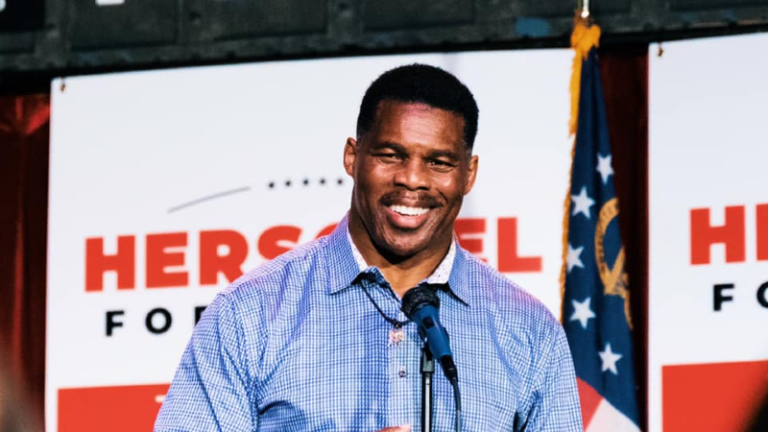
“Herschel Walker’s team brought in Chip Lake, and Herschel’s message has been very sharp,” said Ben Burnett of The Ben Burnett Show.” Burnett, who is connected to Georgia’s top political players, believes that Lake can keep Walker focused on the most effective messaging. “Chip is best known nationally for putting Tom Price and Doug Collins in Congress. You have to stay poised when you’re getting hit and you need to learn how to respond. I trust Chip Lake with the message. I’m not sure that I can ever trust the messenger.”
Warnock hasn’t made any major campaign blunders to date, and Joe Biden’s numbers have slowly improved, so Walker’s lead in two recent polls seems like an increase of support from his own party, as well as independent voters, but that apparent shift may be a mirage.
DON’T CALL IT A COMEBACK?
When you look into the poll data for Trafalgar’s August poll released on August 27th and compare it to Trafalgar’s next most recent poll, you have to go back to March 9th. That March 9th Trafalgar poll had Walker up 48 to 46, which means Warnock actually gained support, albeit only one point, from March to August, while Walker stayed at 48. As for Emerson, the next most recent poll for Emerson was released April 3rd, and in that poll, Walker enjoyed a 49 to 45 lead over Warnock, which means that Walker dropped two points between March and August, while Warnock improved just under one point. Ultimately, the same two polls that showed Walker leading Warnock in late August are the same two polls that showed Walker leading Warnock before Walker’s summer drought, when he trailed in seven of eight polls, and tied Warnock 46-46 in an early June poll conducted by Eastern Carolina University. The margin of error in these polls is between 2.9 percent to 3.9 percent, so in each case, these are all considered virtual ties.
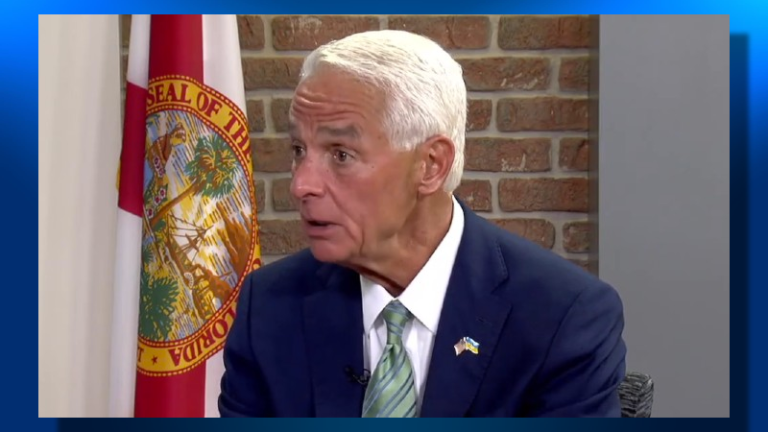
Watch any press conference or stump speech by Charlie Crist during this 2022 election season, and one overriding theme will stand out among all of his talking points: Crist believes he deserves your vote because Ron DeSantis is too power hungry and too ambitious for higher office to care about every day average Floridians. The irony is that Crist is the ultimate example of a calculated career politician who has shown an endless thirst to ascend to higher office, even when he called governor’s mansion his home.
In each of Charlie Crist’s campaigns for statewide office, he’s portrayed himself as a uniter. The one area where Crist gets Democrats and Republicans to agree is about the fact that Crist’s ambition for higher office has always been obvious. Florida has experienced an influx of new residents unrivaled by almost every other state with the exception of Texas, and as a result, many new residents and young voters aren’t familiar with Charlie Crist’s political career. When Crist served as Jeb Bush’s education commissioner, he wasn’t satisfied and ran for Florida Attorney General in the late 90’s, so nobody was surprised when Crist ran for governor in 2006, after Bush termed-out. Crist won the 2006 Florida Gubernatorial race but before his first term was complete, he was already campaigning for a seat in the U.S. Senate. This is where Charlie Crist desperately hopes you stop reading.
In Crist’s third year in his lone term as Florida governor, a major opportunity arose when former Senator Mel Martinez announced he would be retiring from office before finishing his term. As governor, Crist’s duties included appointing interim Senators. When the time came to make the appointment, Crist chose someone who not only had no experience in elected office, but was Crist’s own chief of staff, George LeMieux, a man whom Crist had previously dismissed as unqualified for such a high office.
Why did Crist have the sudden change of heart after an impromptu meeting in the middle of the night at a WHATABURGER fast food restaurant in Tallahassee?
“Insiders have long wondered why Crist bypassed big names like Jacksonville Mayor John Delaney, U.S. Rep Bill Young and his own lieutenant governor, Jeff Kottkamp. Crist instead chose LeMieux, his onetime chief of staff, who had never held elected office.” – Tampa Bay Times article.
A potential explanation became obvious after Crist declared his candidacy in 2009 for the very same senate seat where he appointed LeMieux. Unlike other potential appointees, LeMieux had experience as Crist’s most loyal staffer, and every political analysts called the move for what it was: A quid pro quo power play Crist utilized to effectively eliminate any major opposition in a Republican Primary Race for Martinez’s senate seat.
Consider the following:
• Crist knew LeMieux eagerly wanted to serve in the Senate but also knew LeMieux likely couldn’t win an election outright due to his lack of experience in office. Such inexperience would be remedied by serving as an interim Senator.
• LeMieux knew that he could run against Bill Nelson for the other senate seat that would be up for grabs in the 2012 election, and that campaign could begin almost immediately after serving as interim senator. (LeMieux did run for Nelson’s seat in 2012, only to lose to Connie Mack in the Republican Primary.)
• LeMieux knew that if he bowed out of 2010’s race, publicly thanked Crist for the opportunity to serve, and endorsed Crist vs any hypothetical Republican primary opposition, it would help Crist’s odds to win a Senate seat in 2010, especially if Crist’s approval numbers continued their downward trajectory. Logically, Crist would likely repay the favor by endorsing LeMieux in a primary vs. Republican primary candidates for the other Senate seat in 2012.
Clearly, LeMieux was the path of least resistance for Crist to the Senate in 2010, and both of them knew it. Crist could save a threatened political career and LeMieux could start his own.
Another important factor to keep in mind is that Florida was starting to see economic indicators of a housing market slide in 2007, and governors typically take the brunt of the blame for a state specific budget and economic issues, since Senators don’t touch state budgets and only legislate federal policies and federal spending. Charlie Crist’s emergency parachute was the U.S. Senate, but that backup plan was were obliterated thanks to a rising young star in the GOP by the name of Marco Rubio, who won over Republican primary voters to such a degree that Crist left the Republican Party in April of 2010, before the Republican Primary Election even occurred, to run as an independent. Crist went on to lose to Rubio by nearly 20 points in the 2010 Midterm election.
On November 1, 2013, Crist filed to run for governor as a Democrat. He won the Democratic nomination but was defeated in the general election by Republican incumbent Rick Scott. Crist holds the rare distinction of losing a statewide general election in Florida as a Republican, a Democrat and an Independent. Crist’s highlight of the past decade came in 2016, when he defeated Republican Congressman David Jolly in the former Florida’s district-wide race in his hometown county for Congress in 2016, his lone victory in the past 16 years.
Barring major changes in voter sentiment over the next few weeks, Crist is headed toward a third-statewide election loss. Should Crist lost that election, it would be hard to imagine another statewide campaign in his future, unless he wants to become the Buffalo Bills of Florida politicians.
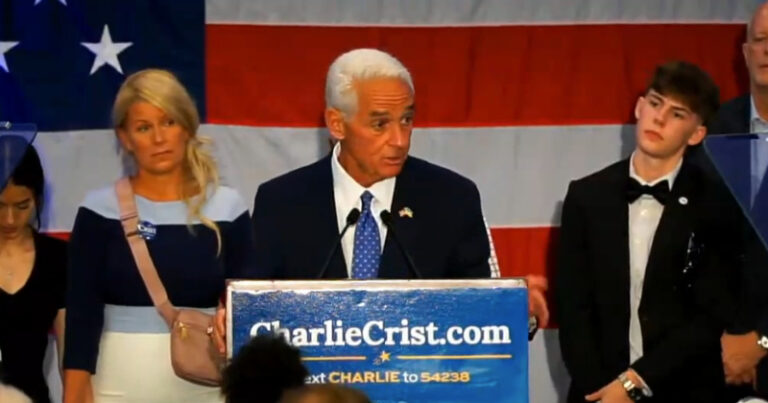
Florida Democrats hope the third time is the charm for former governor and perennial candidate Charlie Crist. Last night, Crist won a decisive victory against Sec. of Agriculture Nikki Fried, the only state cabinet elected Democrat. Even for those who don’t follow Florida politics closely, Crist’s name recognition strength vs. Fried’s made his win unsurprising underwhelming, but there was an important message that may have been overlooked as Crist delivered his victory speech: Democrats weren’t willing to take the risk of nominating another candidate favored by the extreme left.
CRIST WAS THE CLOSEST THING TO A ‘SAFE PICK’ FOR DEMOCRATS
While Crist can claim one statewide victory to Florida’s Governor’s Mansion in 2006, Crist went on to lose a campaign for senate as an independent, and his second bid for governor in 2014, after he switched to the Democratic Party and lost to incumbent Republican Rick Scott.
Since Andrew Gillum’s narrow loss to DeSantis in 2016, more details have emerged of Gillum’s reckless and possibly illegal activities, ranging from bribes to doing drugs with prostitutes. Gillum was the favorite of socialist Bernie Sanders and generated enough support among younger voters to defeat then candidate Gwen Graham. In hindsight, Ghraham had many similarities to Crist, and was well known due to her family connections. Graham’s father, Bob Graham, served as Florida Governor from 1979 to 1987, then went on to serve as U.S. Senator for Florida for nearly two decades, serving from 1987 to 2005. During the past four years, many Democrats have wondered what would have happened if they had nominated Gwen Graham back in 2018.
While nobody can travel back in time, there’ no denying the fact that compared to Gillum, Gwen Graham’s voting record, which included several noteworthy right-leaning votese, could have swayed enough moderate Republicans and Independents to defeat DeSantis.
VOTER ENTHUSIASM FOR DESANTIS IN 2022 MUCH HIGHER THAN SCOTT IN 2014
Democrats may cling to the hope that Crist will be the gubernatorial version of Biden vs. Trump, but Biden didn’t win Florida for the same reason Crist will need a miracle: Voter enthusiasm. Republicans packed the polls for Trump to deliver the Sunshine State by a wider margin than expected in 2020. DeSantis’ support is just as apparent and evident throughout the state. As DeSantis has tackled social issues such as Critical Race Theory , launched civic education initiatives and such as audited special districts for corporate giants such as Disney, many conservatives joined his proactive approach to reform and are much more publicly visible and vocal than they were when Rick Scott was making changes without as much media exposure. Since Crist couldn’t win vs. Rick Scott’s base, the odds are even uglier against DeSantis.
CRIST HAS NO DEFINED ‘BASE’ OF SUPPORT
Ironically, the largest base of support that Crist has ever enjoyed came from Republicans in 2006, when he ran as Jeb Bush’s chosen conservative successor to the office and enjoyed broad support from the majority of registered Republicans. The more Crist moved to the center, the less support he found.
Just like Val Demings vs. Marco Rubio, Crist can’t rely on Florida’s most Democratic counties to carry him to victory. will have to chip away at DeSantis’ slight majority approval from independents, (Recent polls show DeSantis with between 52 percent to 54 percent approval among Independents). Republicans have a statistical advantage with more overall registered voters in the state. Both party’s “Get Out the Vote” drives will be extremely critical.
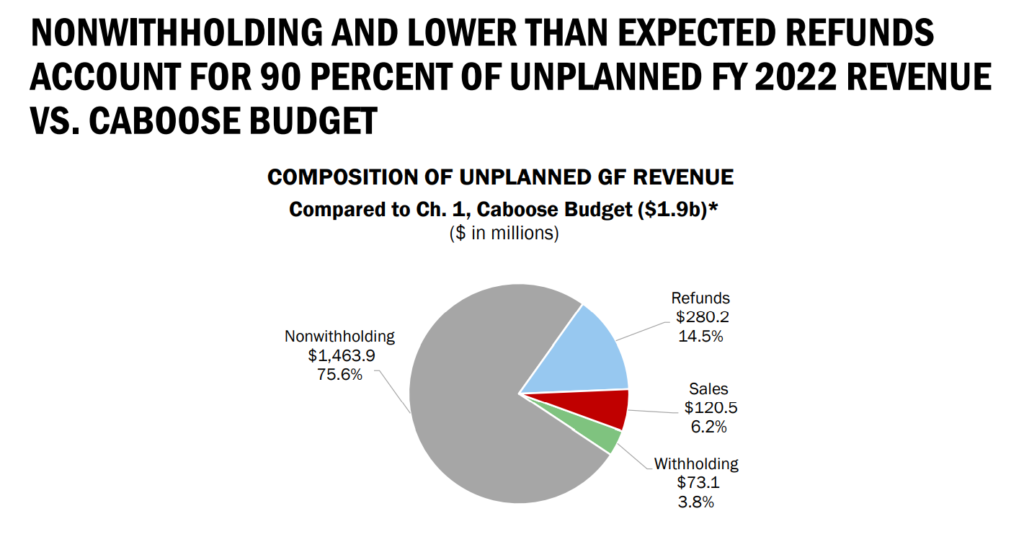
“Governor Youngkin also revealed, and not all governors mention this, that another $1.2 billion allocated to the various agencies of government had not been spent by June 30. He added it to the unexpected revenue. From his prepared remarks on August 19:
But I am incredibly proud to share – and hope Virginians will be proud to hear – that our state government spent roughly $1.2 billion less than was appropriated by the General Assembly. And the combination of the roughly $2 billion in unplanned revenue and the $1.2 billion dollars of unspent appropriations resulted in a $3.2 billion dollar cash surplus at year end.
He then went on to explain, for those listening closely, that most of the surplus was already appropriated before he ever got to that podium.”
Georgia Political Talk Show Host Ben Burnett interviewed Chip Lake.
Widely regarded as one of the GOP’s highest profile consultants, Lake is working with Herschel Walker and put Tom Price, Geoff Duncan, and Doug Collins in high profile elected positions. He sat down with Burnett to discuss the November midterms and the future of the GOP. Listen in the player below, or at https://omny.fm/shows/the-ben-burnett-show/chip-lake-1



Kelly Craft Enters Kentucky Gubernatorial Race
A former ambassador has entered Kentucky’s Gubernatorial race. Kelly Craft, who served as the United States’ Ambassador to Canada from 2017-2019, officially declared her candidacy in Kentucky’s Republican gubernatorial primary. Craft, who served under former President Donald Trump, will compete with multiple Republicans for the nomination. Ultimately, the party’s nominee will be tasked with unseating the incumbent, Andy Beshear. Despite Kentucky voter’s long-running commitment to Senators Rand Paul and Mitch McConnell, the state hasn’t consistently elected Republicans for governor.
Earlier today, Craft released a statement and a video to announce her campaign:
“I’m Kelly Craft and I am running for Governor of Kentucky because I know our best days are ahead of us.
This movement is for all of us who still believe that we can lead in education, that government doesn’t get a seat at our kitchen table, and that our kids should grow up in safe neighborhoods. I believe we have Kentucky’s promise within reach—let’s achieve it together. Watch my story and join our conservative movement here: www.KellyCraft.com.” – Craft said.