Home Blog Page 52

Bills to Strengthen U.S. – Mexico Border Security Introduced by Alabama Senator Katie Britt

0

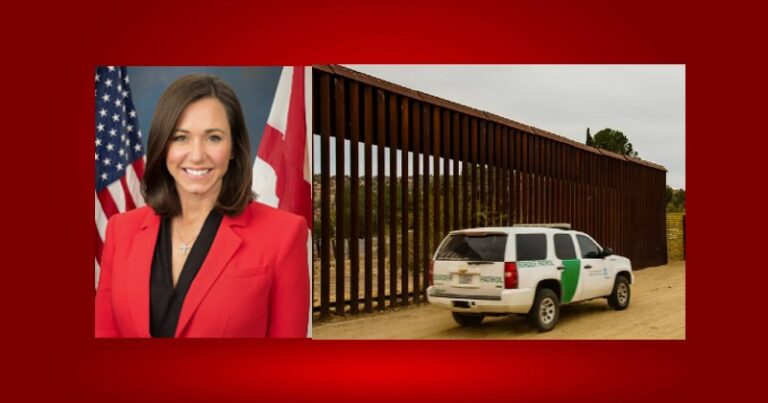
Senator Katie Britt (R-Ala.) introducing a package of four pieces of legislation to compel senate colleagues to acknowledge the security crisis at the U.S. – Mexico border, protect American communities, close asylum loopholes, and fund completion of the border wall

“There is an unprecedented humanitarian and national security crisis at our southern border,” Britt said in a press release. “This is a direct, avoidable result of the Biden Administration’s dangerously weak policies. Hardworking parents across our nation want their children to grow up in safe, strong communities, so that they can reach their full potential and live their American Dream. This legislation would help secure that dream for families in every corner of our country.”

The first piece of Britt’s border security legislative package is a simple resolution that would act as a straight-forward acknowledgment that there is a crisis on the southern border. The resolution is cosponsored by Senators John Barrasso (R-Wyo.), John Boozman (R-Ark.), Mike Braun (R-Ind.), Shelley Moore Capito (R-W.Va.), Bill Cassidy (R-La.), Tom Cotton (R-Ark.), Kevin Cramer (R-N.D.), Mike Crapo (R-Idaho), Ted Cruz (R-Texas), Deb Fischer (R-Nebr.), John Hoeven (R-N.D.), Cindy Hyde-Smith (R-Miss.), James Lankford (R-Okla.), Markwayne Mullin (R-Okla.), James Risch (R-Idaho), Mike Rounds (R-S.D.), Marco Rubio (R-Fla.), Eric Schmitt (R-Mo.), Thom Tillis (R-N.C.), and Roger Wicker (R-Miss.).

“We have to acknowledge the problem before we can solve it, but President Biden hasn’t even been willing to do that,” Senator Britt said. “With a record number of Americans dying from fentanyl poisoning, record deaths among migrants attempting to cross the border, record profits by the cartels, and a record amount of people on the terrorism watchlist apprehended at the border, there is no doubt that this is a crisis unlike which we have ever seen.”

The second piece of the package is a bill, the “Keep Our Communities Safe Act,” to close the Obama-Biden catch-and-release policy that requires the federal government to release illegal aliens into the United States’ interior after detaining them for six months, if no other country accepts them for deportation.

The Keep Our Communities Safe Act is cosponsored by Senators John Barrasso (R-Wyo.), John Boozman (R-Ark.), Mike Braun (R-Ind.), Bill Cassidy (R-La.), Tom Cotton (R-Ark.), Kevin Cramer (R-N.D.), Mike Crapo (R-Idaho), Ted Cruz (R-Texas), Deb Fischer (R-Nebr.), Chuck Grassley (R-Iowa), John Hoeven (R-N.D.), Cindy Hyde-Smith (R-Miss.), Markwayne Mullin (R-Okla.), James Risch (R-Idaho), Mike Rounds (R-S.D.), Marco Rubio (R-Fla.), Eric Schmitt (R-Mo.), Thom Tillis (R-N.C.), John Thune (R-S.D.), and Tommy Tuberville (R-Ala.).

The third piece of the package is the Asylum Abuse Reduction Act, a four-pronged bill to fix America’s asylum process. It would require migrants to declare asylum at a U.S. embassy or consulate in Mexico or Canada before entering the US; create a criminal bench warrant for aliens that have failed to appear for immigration court; codify the Trump Administration’s Third Country Asylum Rule; and establish a fix to the Flores Settlement Agreement.

Cosponsors of the Asylum Abuse Reduction Act are Senators John Barrasso (R-Wyo.), John Boozman (R-Ark.), Bill Cassidy (R-La.), Tom Cotton (R-Ark.), Mike Crapo (R-Idaho), Cindy Hyde-Smith (R-Miss.), Markwayne Mullin (R-Okla.), James Risch (R-Idaho), Mike Rounds (R-S.D.), John Thune (R-S.D.), and Thom Tillis (R-N.C.).

The fourth and final piece of the package is the WALL Act, which would expend funds to complete building the wall on the southern border and pay for this expenditure by eliminating the entitlement benefits and tax credits that illegal immigrants are using and fining those making illegal entry into the United States.

“It is critical that we end incentives and loopholes that are encouraging immigrants to break the law and game the system,” Senator Britt commented. “The status quo has led to a tidal wave of people coming across our border. It is imperative that we fix the process to eliminate asylum abuse and ensure legitimate asylum claimants are processed in a timely fashion.”

Cosponsors of the WALL Act are Senators John Barrasso (R-Wyo.), Mike Braun (R-Ind.), Ted Cruz (R-Texas), James Risch (R-Idaho), Mike Rounds (R-S.D.), and Roger Wicker (R-Miss.).

“We need to seal and secure the border – at ports of entry and between them – through a combination of physical infrastructure, technology, equipment, and personnel,” Senator Britt said. “An invaluable piece of this equation is finishing the wall on our southern border. This is a commonsense measure that funds this construction without raising taxes on American citizens or adding to the national debt.”

Britt’s fellow senator from Alabama, Tommy Tuberville, praised Britt’s bill for striving to end what he describes as a “Catch and release” approach to detainees who illegally crossed the border.

“The Biden administration’s open-border, catch-and-release policies have created a crisis that threatens the safety of local communities and our national security,” Tuberville said. “The Keep Our Communities Safe Act addresses the deliberate enforcement void created by President Biden by giving the Department of Homeland Security the discretion to detain illegal immigrants awaiting deportation and barring criminals from being released into the country. This bill closes loopholes that overwhelm law enforcement and endanger Americans,”

West Virginia Senator Shelley Moore Capito and Florida Senator Marco Rubio applauded Britt’s legislation, calling the current illegal immigration issue a crisis.

“Let’s be clear: The record level of illegal immigration we have seen is the result of failed policies throughout the first two years of the Biden administration,” Capito said. “It took too long for the administration to act on the border, and it took too long for the president to go and see the crisis he created. It’s past time we establish what this truly is – a sustained crisis on our southern border.”

Senator Rubio also criticized inaction by President Biden. The crisis at our southern border escalates by the day, putting American families at risk,” Rubio said. “Yet, the Biden Administration continues to do nothing to secure our border, and instead, releases illegal aliens into our communities. Congress has to take common sense steps to restore order and prevent violent crime,” .

Arkansas Senator Tom Cotton noted the unusually-high number of illegal immigrants entering the U.S. since President Biden took office. “By refusing to secure the border, Joe Biden has added 6 million illegal immigrants to the country in just two years, “Cotton said. “Our bills will help stop both bogus asylum seekers and the release of criminal aliens into our communities.”
Mississippi Senators Challenge Biden’s Student Loan Forgiveness Plan in Amicus Brief to Supreme Court

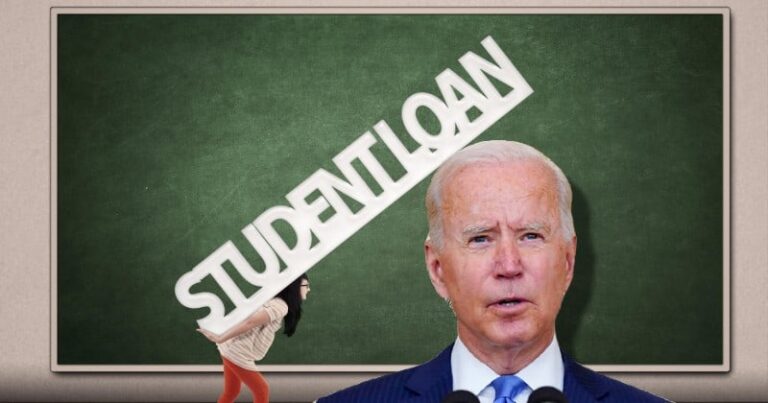
Since President Joe Biden outlined his plan for student loan forgiveness, legal skeptics and Republicans have contended that the plan exceeded constitutional authority. This week, Mississippi’s two, U.S. Senators Roger Wicker (R) and Cindy Hyde-Smith (R) are among 43 Republican Senators who filed an amicus brief to the Supreme Court of the United States, supporting respondents in the dual Supreme Court cases challenging Biden’s student-loan debt relief program, Biden v. Nebraska and Department of Education v. Brown.

According to a press release from Sen. Hyde-Smith, she and Wicker assert that Biden’s unilateral decision to forgive federal student loan debt in these circumstances constitutes unprecedented executive overreach and defies the separation of powers between Congress and the President.

“There can be no dispute, then, that the powers to spend and forgive the monies owed the Treasury rest with Congress alone,” the Senators contend in their amicus brief. “The President is not a king, and he has no power to dispense with the lawful acts of the legislature.”

The full amicus brief can be viewed online, HERE.

The amicus brief was led by U.S. Senator Marsha Blackburn (R-Tenn.). In addition to Wicker and Hyde-Smith, it was signed by U.S. Senators Lindsey Graham (R-S.C.), Ted Budd (R-N.C.), James Lankford (R-Okla.), Rick Scott (R-Fla.), Bill Cassidy, M.D. (R-La.), Bill Hagerty (R-Tenn.), Kevin Cramer (R-N.D.), Mike Lee (R-Utah), Josh Hawley (R-Mo.), Mike Braun (R-Ind.), Mike Rounds (R-S.D.), Cynthia Lummis (R-Wyo.), Thom Tillis (R-N.C.), John Barrasso (R-Wyo.), John Thune (R-S.D.), John Hoeven (R-N.D.), Chuck Grassley (R-Iowa), John Cornyn (R-Texas), James Risch (R-Idaho), Mike Crapo (R-Idaho), Todd Young (R-Ins.), Ted Cruz (R-Texas), Tom Cotton (R-Ark.), Ron Johnson (R-Wis.), Marco Rubio (R-Fla.), Dan Sullivan (R-Alaska), Markwayne Mullin (R-Okla.), Katie Britt (R-Ala.), Tommy Tuberville (R-Ala.), Jerry Moran (R-Kan.), John Kennedy (R-La.), Roger Marshall, M.D. (R-Kan.), Joni Ernst (R-Iowa), Steve Daines (R-Mont.), Tim Scott (R-S.C.), Deb Fischer (R-Neb.), Pete Ricketts (R-Neb.), and John Boozman (R-Ark.).

Arkansas Congressman Rick Crawford Statement on Biden’s State of the Union Address

Today, Representative Rick Crawford (AR-01) released the following statement in response to President Biden’s State of the Union Address: 

“The rosy vision that President Biden painted tonight is far from the reality that Americans currently face. The median household has to earn $9,000 more annually than they did when Biden was inaugurated, just to break even with the same buying power today. The Administration is oblivious to the hurt their ‘transient’ inflation is still causing families. A better, more effective course was laid out tonight by Gov. Huckabee Sanders, my governor, and a great leader for our state.”

Florida Governor Ron DeSantis Awards $275 Million to Coastal Areas to Thwart Rising Seas, Storm Surge

0

Following the catastrophic flooding and beach erosion that devastated Florida’s coastal cities during Hurricanes Ian and Nicole, Florida Governor Ron DeSantis awarded $275 million for 75 resilience projects using already-appropriated funding through the Resilient Florida program to help prepare vulnerable communities for the adverse impacts of flooding and storm surge.

In an official statement, DeSantis said “Under my administration, the state of Florida has invested an unprecedented level of funding, totaling more than $1.1 billion, to create or fortify infrastructure in Florida’s communities,” DeSantis said. “The projects announced today will ensure inland and coastal communities are prepared for the impacts of storm surge, hurricanes, and flooding, continuing our aggressive efforts to protect Florida’s natural resources and infrastructure.”

State Senate President Kathleen Passidomo, a resident of Naples, saw her hometown permanently changed by historic storm surge during Hurricane Ian. “As my own community continues to recover and rebuild from the damaging storm surge caused by Hurricane Ian, I now have an even greater appreciation for the benefits of the forward-thinking, long-term strategy for resilience planning Governor DeSantis and the Florida Legislature have put in place here in Florida”, Passidomo said.

House Speaker Paul Renner said the program is one of multiple examples of the state’s renewed effort to improve infrastructure and prevent future damges.

“Florida’s long-term resilience strategy will strengthen our coastal communities, prepare us for future natural disasters, and prioritize long-term infrastructure needs,” Renner said. “Governor DeSantis, President Passidomo, and I are committed to helping affected communities recover from recent storms and boosting strategic investments in infrastructure for the continued growth and prosperity of our state.”

“Governor DeSantis’ bold vision for a Resilient Florida is driving progress towards safer and more productive communities in an otherwise low-lying, storm-prone state,” said Chief Resilience Officer Wes Brooks. “These awards will fund critical actions across inland and coastal areas to adapt legacy infrastructure and implement nature-based solutions that address current and projected sea level rise and flooding to minimize adverse impacts on Floridians and their families.”

According to the governor’s office, on December 1, 2022, the Florida Department of Environmental Protection submitted the second preliminary Statewide Flooding and Sea Level Rise Resilience Plan to the Governor and Legislature, which proposes funding for resilience and adaptation projects received from across the state.

The Governor’s “Framework for Freedom Budget” proposal includes $406 million for resilience to build upon the historic progress made over the past two years. This recommendation includes $350 million for the implementation of statewide resilience projects and $56 million for resilience planning and coral reef protection.

Governor DeSantis recommended the creation of the Resilient Florida Grant Program to help prepare communities for the impacts of flooding and storm surge. The Legislature answered the call by passing Senate Bill 1954 in 2021, comprehensive legislation that ensures a coordinated approach to Florida coastal and inland resilience. DeSantis created the Office of Resilience and Coastal Protection at DEP to provide funding, technical assistance, and coordination among state, regional, and local entities to help support Florida’s coastal communities and appointed the state’s first Chief Resilience Officer to coordinate the state’s resilience efforts.

The 75 projects can be viewed, HERE.

Sens. Rubio, Warner Question Mark Zuckerberg on Facebook User Data Access

0

U.S. Senators Marco Rubio (R-FL) and Mark Warner (D-VA), sent a letter to Meta CEO Mark Zuckerberg, questioning the company about recently released documents revealing that Facebook knew that hundreds of thousands of developers in what it classified as “high-risk jurisdictions” including the PRC and Russia, had access to user data. According to a press release from Rubio, the documents were released as part of ongoing litigation against the company related to its lax handling of personal data after revelations regarding Cambridge Analytica. The newly available documents reveal that Facebook internally acknowledged in 2018 that this access could be used for espionage purposes.

 The full text of the letter is below.

Dear Mr. Zuckerberg: 

We write you with regard to recently unsealed documents in connection with pending litigation your company, Meta, is engaged in. It appears from these documents that Facebook has known, since at least September 2018, that hundreds of thousands of developers in countries Facebook characterized as “high-risk,” including the People’s Republic of China (PRC), had access to significant amounts of sensitive user data. As leaders of the Senate Intelligence Committee, we write today with a number of questions regarding these documents and the extent to which developers in these countries were granted access to American user data. 

In 2018, the New York Times revealed that Facebook had provided privileged access to key application programming interfaces (APIs) to Huawei, OPPO, TCL, and other devicemakers based in the PRC. Under the terms of agreements with Facebook dating back to at least 2010, these device manufacturers were permitted to access a wealth of information on Facebook’s users, including profile data, user IDs, photos, as well as contact information and even private messages. In the wake of these revelations, as well as broader revelations concerning Facebook’s lax data security policies related to third-party applications, our staffs held numerous meetings with representatives from your company, including with senior executives, to discuss who had access to this data and what controls Facebook was putting in place to protect user data in the future. 

Given those discussions, we were startled to learn recently, as a result of this ongoing litigation and discovery, that Facebook had concluded that a much wider range of foreign based developers, in addition to the PRC-based device-makers, also had access to this data. According to at least one internal document, this included nearly 90,000 separate developers in the People’s Republic of China (PRC), which is especially remarkable given that Facebook has never been permitted to operate in the PRC. The document also refers to discovery of more than 42,000 developers in Russia, and thousands of developers in other “high-risk jurisdictions,” including Iran and North Korea, that had access to this user information. 

As Facebook’s own internal materials note, those jurisdictions “may be governed by potentially risky data storage and disclosure rules or be more likely to house malicious actors,” including “states known to collect data for intelligence targeting and cyber espionage.” As the Chairman and Vice Chairman of the Senate Select Committee on Intelligence, we have grave concerns about the extent to which this access could have enabled foreign intelligence service activity, ranging from foreign malign influence to targeting and counter-intelligence activity. 

In light of these revelations, we request answers to the following questions on the findings of Facebook’s internal investigation: 

1) The unsealed document notes that Facebook conducted separate reviews on developers based in the PRC and Russia “given the risk associated with those countries.”  

  • What additional reviews were conducted on these developers?  
  • When was this additional review completed and what were the primary conclusions?  
  • What percentage of the developers located in the PRC and Russia was Facebook able to definitively identify?  
  • What communications, if any, has Facebook had with these developers since its initial identification?  
  • What criteria does Facebook use to evaluate the “risk associated with” operation in the PRC and Russia? 

2) For the developers identified as being located within the PRC and Russia, please provide a full list of the types of information to which these developers had access, as well as the timeframes associated with such access.

3) Does Facebook have comprehensive logs on the frequency with which developers from high-risk jurisdictions accessed its APIs and the forms of data accessed? 4) Please provide an estimate of the number of discrete Facebook users in the United States whose data was shared with a developer located in each country identified as a “high-risk jurisdiction” (broken out by country). 

5) The internal document indicates that Facebook would establish a framework to identify the “developers and apps determined to be most potentially risky[.]”  How did Facebook establish this rubric?  How many developers and apps based in the PRC and Russia met this threshold? How many developers and apps in other high-risk jurisdictions met this threshold? What were the specific characteristics of these developers that gave rise to this determination? Did Facebook identify any developers as too risky to safely operate with? If so, which? 

6) The internal document references your public commitment to “conduct a full audit of any app with suspicious activity.”  How does Facebook characterize “suspicious activity” and how many apps triggered this full audit process? 

7) Does Facebook have any indication that any developers’ access enabled coordinated inauthentic activity, targeting activity, or any other malign behavior by foreign governments? 

8) Does Facebook have any indication that developers’ access enabled malicious advertising or other fraudulent activity by foreign actors, as revealed in public reporting? Thank you for your prompt attention. 

Sens. Rick Scott, Tim Scott Resubmit Bill Similar to Florida’s Parental Rights in Education Act

0

Senator Rick Scott of Florida joined fellow Republican Senator Tim Scott of South Carolina to introduce the “Parental Rights Over the Education and Care of Their Kids Act”, also known as the “PROTECT Kids Act”, to protect parental rights and prevent school administrators from concealing information about students’ gender from their parents. Co-sponsors of the bill included Senators Mike Crapo of Idaho, Lindsey Graham of South Carolina, Cindy Hyde-Smith of Mississippi and Marco Rubio of Florida.

The PROTECT Kids Act would restrict federal funding for any elementary or middle school that allows students to change their pronouns, gender markers, or sex-based accommodations, including locker rooms and bathrooms, without the consent of their parents. Representative Tim Walberg (MI-05) will be introducing the companion legislation in the U.S. House of Representatives. The bill is similar to Florida’s “Parental Rights in Education Act”, which was mislabeled by opponents as the “Don’t Say Gay Bill”, despite the fact it didn’t ban use of the word gay or homosexuality by students or teachers, but instructed kindergarten through third-grade teachers not to include formal teaching on sexual orientation and gender identity.

“I have long believed that parents, not the government, know what is best for their children,” Senator Rick Scott said in a press release. “It is time for schools to stop pushing these woke ideologies on our kids and let them focus on reading, writing and arithmetic. I am proud to stand with my colleagues in supporting the PROTECT Kids Act to stop the indoctrination and ensure parents have a say in what happens at their kids’ school.”

“Far too often, parents are pushed out of their child’s education—and kids are paying the price,” Senator Tim Scott said. “As the party of parents, Republicans are committed to ensuring that parents are always in the driver’s seat when it comes to their child’s upbringing. I am proud to stand for parental rights and put forth my PROTECT Kids Act to ensure parents remain the lead decision maker in their child’s life.”

The PROTECT Kids Act is supported by Parents Defending Education Action and Independent Women’s Voice.

Three days prior to introducing the Protect Kids Act, Tim Scott introduced the CHOICE Act, which stands for “Creating Hope and Opportunity for Individuals and Communities through Education” to expand opportunities and foster success by providing parents greater options when it comes to their child’s education.

“A quality education is the closest thing to magic in America,” Tim Scott said in an official statement. “As a kid, I attended four different schools by the time I was in fourth grade. I know firsthand the life-changing impact of a quality education, and I’ve witnessed the miracles that can happen when parents have the choice my mother never had. When parents have the choice to send their child to a school that best fits their needs, their kids have the best opportunity to succeed.”

According to a press release, the CHOICE Act Expands school choice programs by permitting states that have established programs for parents of disabled children to use public or private funds for the cost of their children attending a private school to supplement those fund with federal special education funds. It also uthorizes grants to support the design and initial implementation of state programs that allow the parents of a disabled child to choose the appropriate public or private school for their child.

Alabama Governor Announces Start of Sheriffs’ Grants for All 67 Counties

MONTGOMERY, AL – Alabama Governor Kay Ivey announced the start of the Sheriffs’ Grants for all of Alabama’s 67 counties.

According to Ivey’s press release, sheriffs’ departments in each of the state’s 67 counties will be receiving funds quarterly beginning in the first quarter of 2023. The amount of funds each county receives is based on monies that county’s sheriff’s department collected on pistol permit fees in 2022.

“A couple of core tenants of the Ivey Administration is that we back the blue in the strongest way possible and that we support upholding our citizens’ Second Amendment rights. As we have amended Alabama law to help our gun owners, we also worked to ensure our sheriffs received their critical funds, and I am proud that these grants will do that,” Governor Ivey said. “The Sheriffs’ Grants will provide them with funding for training, equipment and other needs not provided by county commissions in their annual appropriations. We are proud to support the vital work our sheriffs’ departments do on a daily basis.”

Under the Local Government Pistol Permit Revenue Loss Fund, Alabama sheriffs need to show a loss of pistol permit funds based on the 2022 figures. The Alabama Department of Economic and Community Affairs is making disbursements to the sheriff’s offices based on reports collected by other state agencies.

“ADECA intends to carry out our duties in this matter to ensure that Alabama’s sheriffs’ offices are compensated for their losses based on those shortages provided in the data,” said Director Kenneth Boswell.

ADECA administers an array of programs supporting law enforcement and traffic safety, economic development, energy conservation, water resource management and recreation development.

Mississippi Senators Challenge New Rule Finalized by Environmental Protection Agency

WASHINGTON, D.C. – Mississippi’s two Senators Roger Wicker (R) and Cindy Hyde-Smith (R) joined their Republican colleagues in introducing a formal challenge to the Biden administration’s Waters of the United States (WOTUS) rule through a Congressional Review Act (CRA) joint resolution of disapproval.

“This rule is yet another government overreach from the Biden Administration that threatens to halt progress on necessary infrastructure projects,” Wicker said.  “Landowners and businesses need regulatory certainty, and the President has failed to provide it.  I am glad to stand with my colleagues in this effort.” 

Hyde-Smith stressed the additional costs will ultimately be passed on to all Americans.

“The truth of the matter is that this new WOTUS rule will end up costing every American as farmers, ranchers, and industry pay to comply with vast new federal oversight and regulation.  Passage of this resolution of disapproval is crucial to stop this deviation from the intent of the Clean Water Act,” said. 

The CRA was introduced in response to a new WOTUS rule finalized by the Environmental Protection Agency (EPA) and the U.S. Army Corps of Engineers that repeals the Navigable Waters Protection Rule (NWPR) and replaces it with a new rule that will greatly expand federal authority.

Environment and Public Works Committee Ranking Member Shelley Moore Capito (R-W.Va.) introduced the CRA to overturn the Biden administration’s WOTUS rule.  In addition to Wicker and Hyde-Smith, cosponsors include Minority Leader Mitch McConnell (R-Ky.), Minority Whip John Thune (R-S.D.), John Barrasso (R-Wyo.), Joni Ernst (R-Iowa), Steve Daines (R-Mont.), Marsha Blackburn (R-Tenn.), John Boozman (R-Ark.), Mike Braun (R-Ind.), Katie Britt (R-Ala.), Ted Budd (R-N.C.), Bill Cassidy (R-La.), Susan Collins (R-Maine), John Cornyn (R-Texas), Tom Cotton (R-Ark.), Kevin Cramer (R-N.D.), Mike Crapo (R-Idaho), Ted Cruz (R-Texas), Deb Fischer (R-Neb.), Lindsey Graham (R-S.C.), Chuck Grassley (R-Iowa), Bill Hagerty (R-Tenn.), Josh Hawley (R-Mo.), John Hoeven (R-N.D.), Ron Johnson (R-Wis.), John Kennedy (R-La.), James Lankford (R-Okla.), Mike Lee (R-Utah), Cynthia Lummis (R-Wyo.), Roger Marshall (R-Kan.), Jerry Moran (R-Kan.), Markwayne Mullin (R-Okla.), Lisa Murkowski (R-Alaska), Rand Paul (R-Ky.), Pete Ricketts (R-Neb.), Jim Risch (R-Idaho), Mitt Romney (R-Utah), Mike Rounds (R-S.D.), Marco Rubio (R-Fla.), Eric Schmitt (R-Mo.), Rick Scott (R-Fla.), Tim Scott (R-S.C.), Dan Sullivan (R-Alaska), Thom Tillis (R-N.C.), Tommy Tuberville (R-Ala.), J.D. Vance (R-Ohio), and Todd Young (R-Ind.).

U.S. Representative. Sam Graves (R-Mo.), chairman of the House Transportation and Infrastructure Committee, introduced an identical CRA resolution in the House.

Congress can consider these resolutions using expedited procedures under the Congressional Review Act and can pass it by a simple majority vote.