Home Blog Page 51

Alabama Senators Britt, Tuberville Reintroduce Bill to Limit Immigration Paroles

0

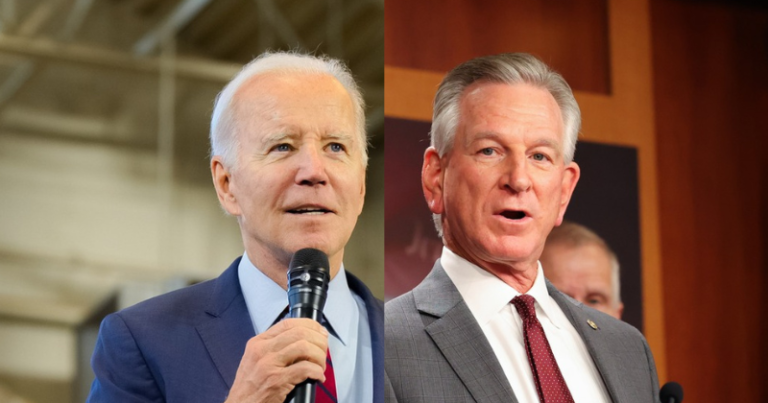
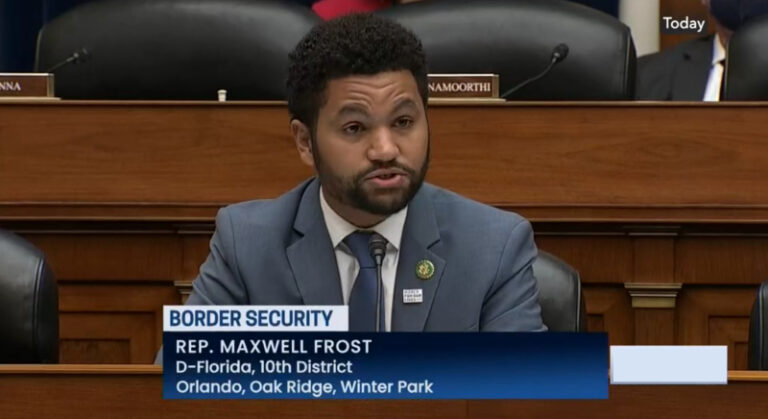
Senator Katie Britt (R-Ala.), joined fellow Alabama Senator Tommy Tuberville (R), and six other Republican Senators to reintroduce the Immigration Parole Reform Act of 2023 to restore integrity to the immigration parole statute amid ongoing misuse by the executive branch.

There is no doubt that there is an unprecedented humanitarian and national security crisis at the border, and it’s devastating families and communities across America,”Sen. Britt said.“In addition to the Biden Administration’s weak border agenda, the President’s continued abuse of our immigration system is only compounding the problem. The chaotic combination of lawless catch-and-release and expansive parole practices must end.”

Britt’s comments come one week after she introduced several bills to tighten border security and one month after her visit to the U.S. – Mexico border, where she was joined by Senators Marsha Blackburn (R-Tenn) and Cindy Hyde-Smith (R-Miss) to meet with federal, state and local law enforcement to see the impact of undocumented immigrants crossing the border illegally.

According to a release from Sen. Britt, the bill would make a number of reforms to ensure the executive branch complies with the original, long-standing congressional intent for the immigration parole authority. It would, among other changes, clarify that parole may not be granted according to criteria that describes entire categories of potential parolees, and very clearly define what qualifies as an “urgent humanitarian reason” or “significant public benefit.” It would also provide clarity on the timing and extension of immigration parole, among other reforms. 

What is Immigration Parole?

Immigration parole, first established in 1952, allows the executive branch to temporarily grant individuals entry into the United States on a case-by-case basis for urgent humanitarian reasons or significant public benefit. However, several presidential administrations, particularly those of Presidents Obama and Biden, have abused this authority to admit entire categories of individuals in circumvention of congressionally-established pathways to allow foreign nationals to enter the United States. Some of these parole programs were created even after Congress repeatedly rejected or failed to consider and enact legislative proposals that would have created an immigration pathway for the group of people covered by the programs.

The Biden administration is using dangerous loopholes to let more illegal immigrants into the country,” Sen. Tuberville said. “Giving parole to hundreds of thousands of illegal immigrants artificially decreases the number of apprehensions at the border and instead allows them right into the country. The American people are smarter than President Biden thinks and can see through this abuse of power. I am proud to join this legislation that clarifies executive parole authority to ensure the Department of Homeland Security enforces our immigration laws. We shouldn’t have to pass a law requiring DHS to do its job, but I’m committed to doing what it takes to secure our southern border and hold our leaders accountable.”

Senators Britt, Grassley, and Tuberville were joined by Senators Tom Cotton (R-Ark.), Bill Cassidy (R-La.), J.D. Vance (R-Ohio), James Lankford (R-Okla.), Mike Lee (R-Utah), and Joni Ernst (R-Iowa) in cosponsoring this legislation.

Josh Hawley Calls for Hearings on Joe Biden’s Response to Train Derailments, Toxic Impact

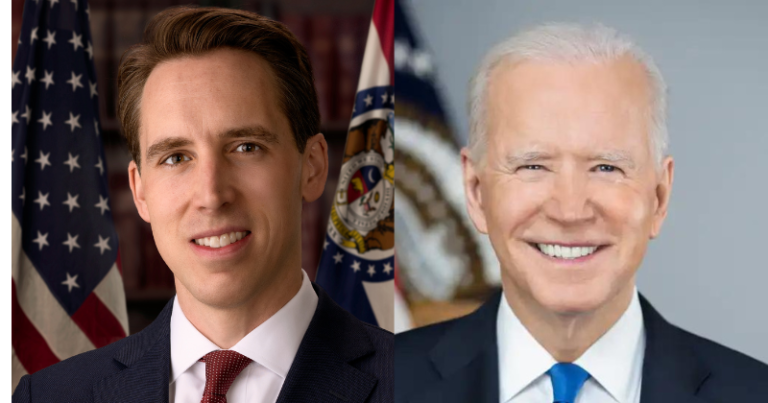
Following the massive train derailment in East Palestine, OH, Sen. Josh Hawley (R-Mo.) sent a letter to Homeland Security and Governmental Affairs Committee Chairman Gary Peters (D-Mich.) requesting a hearing on federal disaster relief efforts. Senator Hawley has also expressed serious concern over the Federal Emergency Management Agency’s (FEMA) decision to deny Ohio Governor Mike DeWine’s request for federal disaster assistance.

“The American people, not least the local residents of East Palestine and other affected communities, deserve to know how their federal government, including FEMA, is responding,” Hawley said. “If there are any gaps in our response efforts, it is the duty of this Committee to bring them to light.” 

Read the full letter here or below:

February 17, 2023

The Honorable Gary Peters
Chairman
Senate Homeland Security and Governmental Affairs Committee
340 Senate Dirksen Office Building
Washington, D.C. 20510

Chairman Peters,

I write to request that you convene a hearing on federal disaster relief efforts to address transportation-related incidents taking place across the nation. As Members of the Homeland Security and Governmental Affairs Committee (HSGAC), we have an obligation to conduct oversight over our federal disaster response, specifically as carried out by the Federal Emergency Management Agency (FEMA). It is imperative that we conduct such oversight to study and investigate any potential shortcomings in our disaster response and preparedness, especially given the serious nature of these recent events.

As you may know, there has been significant attention and concern in recent weeks over multiple transportation-related incidents across the nation. Most notably, a train carrying highly toxic and combustible chemicals derailed in East Palestine, Ohio earlier this month, leading residents of that community to evacuate. Authorities have said that multiple chemicals are “known to have been and continue to be” released to the air, surface soil, and surface waters, and subsequent testing has revealed contamination in some Ohio River tributaries. Yet FEMA has so far denied relief. Other recent incidents have prompted similar concerns, including train derailments near Houston, Texas and Detroit, Michigan, as well as a nitric acid spill near Tucson, Arizona.

Events like these threaten our critical infrastructure, disrupt our domestic supply chains, and uproot the lives of normal Americans. They also raise concerns over how the federal government responds to such incidents. The American people, not least the local residents of East Palestine and other affected communities, deserve to know how their federal government, including FEMA, is responding. If there are any gaps in our response efforts, it is the duty of this Committee to bring them to light.


Thank you for your attention and your consideration.

Sincerely,
Josh Hawley
United States Senator

Senator Rubio Urges President Biden to Request Sec. Buttigieg’s Resignation

0

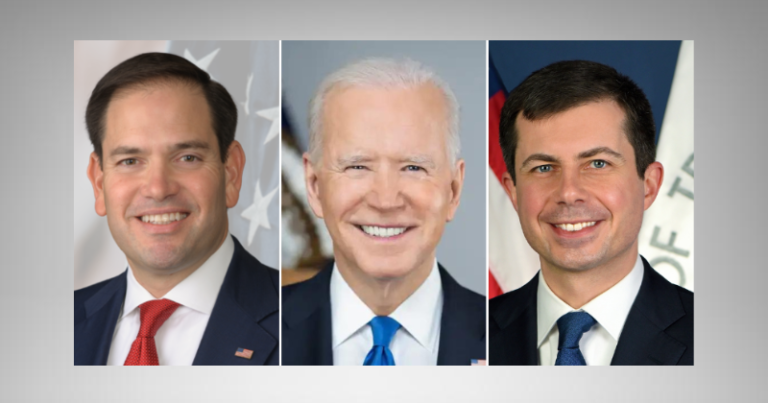
Marco Rubio Urged President Biden to request the resignation of Department of Transportation Sec. Pete Buttigieg. Rubio’s letter comes after a litany of supply chain problems across the nation, as well as air traffic control failures with Federal Aviation Administration, and Buttigieg opting not to comment for days after a disastrous train derailment that released vinyl chloride and other chemicals into the air.

The full text of the letter is below.

“Dear Mr. President:

I write to urge you to request the immediate resignation of U.S. Department of Transportation (DOT) Secretary Buttigieg, who has repeatedly demonstrated a gross level of incompetence and apathy that is detrimental to the safety and prosperity of the American people.

For two years, Secretary Buttigieg downplayed and ignored crisis after crisis, while prioritizing topics of little relevance to our nation’s transportation system. It is painfully clear to the American people that Secretary Buttigieg has little regard for the duties of the Secretary of Transportation.

At no time has that been more apparent than the past two weeks. Secretary Buttigieg refused to acknowledge the disaster in East Palestine, Ohio, until his intentional ignorance was no longer tenable. Even after acknowledging the tragedy, he continues to deflect any accountability for the safety of our nation’s rail system. The circumstances leading up to the derailment point to a clear lack of oversight and demand engagement by our nation’s top transportation official.

Unfortunately, this is part of a two-year long pattern. During historic maritime and surface transportation disruptions in 2021, Secretary Buttigieg was completely absent. Amidst an impending possible rail strike last year, Secretary Buttigieg left the country to vacation in Portuguese wine country. Near misses in commercial aviation, as well as recent system failures, including the one that shutdown air travel in Florida in January, indicate that serious and persistent problems across the DOT are not being sufficiently remedied. I do not have confidence that Secretary Buttigieg is capable of keeping the American people safe.

Secretary Buttigieg is also alleged to have abused taxpayer dollars by chartering private jets that are costlier than allowed in federal employee travel regulations, including for international travel. Similar instances in previous administrations have led to resignations. Secretary Buttigieg is also alleged to have used government aircraft for travel that may be political in nature. The American people deserve to know that their tax dollars are not being abused for personal or political purposes by government officials, and that public officials are being held to the same standards regardless of their political affiliation.

For two years, the transparency and accountability that you promised to obsessively uphold during your inauguration has been nowhere to be found. The incompetence and failure within your administration cannot continue to be ignored when Americans’ health and safety are at risk. I hope you will change course in order to uphold your so-far-unmet promise to the American people by requesting the immediate resignation of Secretary Buttigieg.”

Last December called for an investigation into Buttigieg’s private jet travel after reports surfaced that Buttigieg used taxpayer-funded private jets to travel domestically and internationally at least 18 different times since taking office.

Rubio sent a letter to DOT Inspector General Eric Soskin requesting that he conduct a review to determine whether Buttigieg’s travels were in compliance with all applicable regulations, policies, and procedures. Buttigieg, who ran for President in the 2020 Democratic Primary, is viewed by some political pundits as a possible candidate in 2024 if Biden opts against seeking re-election.

Florida, DeSantis Consider Ban on TikTok App on Government Phones

0

Florida could be added to a growing list of states across America that are banning TikTok and other ByteDance-owned applications on the phones of government employees. Security concerns have spurred Governors of both political parties to implement or propose similar or identical bans in more than 20 states including Louisana, North Carolina, Mississippi, and others. Multiple universities have blocked access to the app on campus. The U.S. Armed Services have prohibited the app on military devices. Earlier this week, Senator Marco Rubio, (R-FL) asked Senate Majority Leader Chuck Schumer to call for a vote on his legislation to ban TikTok across the United States.

“You look at the TikTok they use in China, it’s much different than what they’re trying to do in the United States,” DeSantis said. “With China, it’s all very wholesome, patriotic. In the United States, they’re trying to inject as much garbage into this as possible. They’re getting the data from people, creates a huge security risk through our country.”

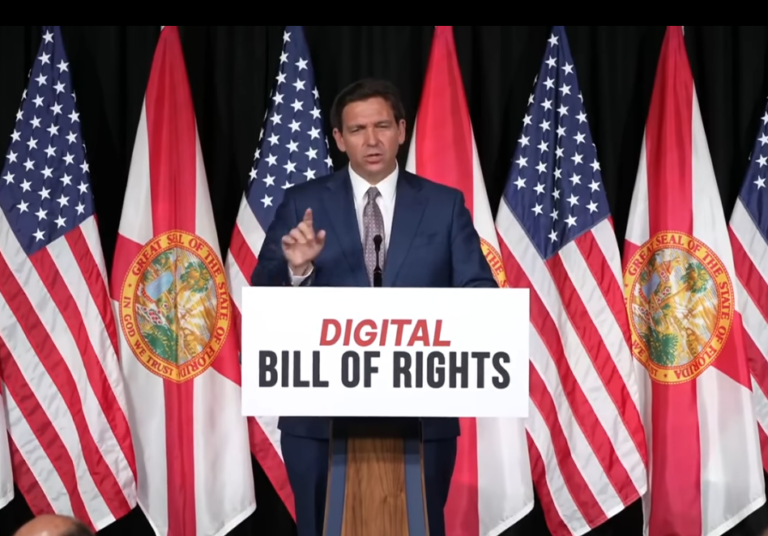
During a press conference in West Palm Beach, DeSantis proposed a digital bill of rights aimed tech companies owned by China. DeSantis also covered privacy concerns surrounding American-owned tech companies including Google and Facebook.

“We want to protect your right as a Floridian, to have private in-person conversations without big tech survey-ling you,” DeSantis said. “If you want to consent to let them have this information so that they can fashion advertising based off of it, then it’s your right to consent to do so.”

Last month, Florida State Representative Carolina Amesty filed Florida House Bill 563, which would ban users of government-issued cell phones and other devices from downloading the TikTok app. If passed the law would apply to devices issued by state, local and regional government agencies, and would apply to any future app releases by TikTok’s parent company, ByteDance.

Florida’s Attorney General Ashley Moody recently produced a video warning parents about the security risk TikTok potentially poses to users, including children.

Marsha Blackburn Introduces Bill to Stop Taxpayer Funding of Drug Traffickers Awaiting Prosecution

0

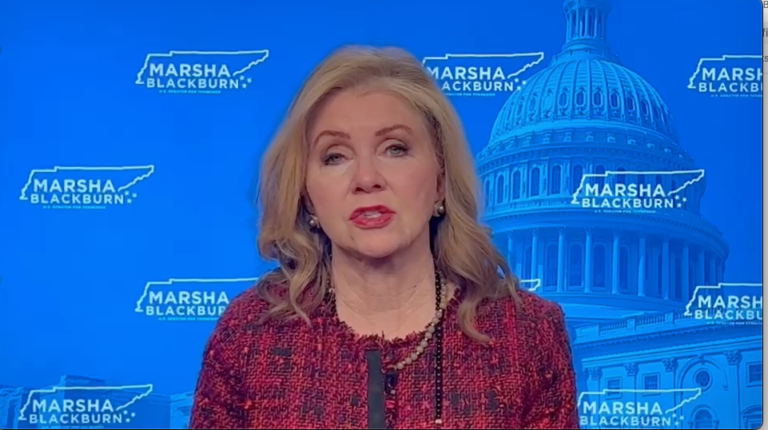
U.S. Senator Marsha Blackburn (R-Tenn.) introduced legislation to ensure human and drug traffickers cannot receive American taxpayer funding while they await prosecution and conviction. Senator Blackburn introduced the “Stop Taxpayer Funding of Traffickers Act “following her recent visit to the Del Rio Sector of the U.S.-Mexico border.

This legislation is also cosponsored by Senators Cindy Hyde-Smith (R-Miss.), Katie Britt (R-Ala.), and Mike Braun (R-Ind.).

According to a press release from Senator Blackburn’s office, the Tennessee Bureau of Investigation (TBI), Human Trafficking Intelligence Analysts processed 1,268 tips in Fiscal Year 2021-2022, 621 of which involved minors. In 2022, more than 184,000 fentanyl-laced pills were confiscated by the Louisville, Kentucky Drug Enforcement Administration (DEA) division, which includes Tennessee, Kentucky, and West Virginia. They also seized more than 316 pounds of fentanyl powder.

“For two years, President Biden’s open border policies have emboldened the cartels and caused human trafficking to grow to a $13 billion industry, with criminal cartels earning up to $14 million each day,” Blackburn said. “Last year alone, law enforcement seized over 14,000 pounds of Fentanyl at the border, enough to kill over 3.3 billion people. We cannot continue to incentivize this blatant criminal activity. This legislation ensures that hardworking American taxpayers – already crushed by inflation – are not forced to fund the lifestyles of offenders who are making our country more dangerous.”

“Entire communities are destroyed at the hands of drug and human traffickers, and it’s appalling that some of those very communities’ tax dollars go toward putting up these criminals in government housing,” said Senator Hyde-Smith. “This legislation would ensure that traffickers can’t enjoy such government benefits after they’ve been charged for drug or human trafficking offenses.”

Alabama Senator Katie Britt, a rising star in the Republican Party, Britt called out Biden’s approach to managing the border. “American taxpayers shouldn’t be forced to subsidize the monsters who are taking advantage of the Biden Administration’s border crisis to traffic vulnerable people and deadly drugs,” Britt said. “These criminals are causing untold suffering in every corner of our country — stealing lives, destroying families, and devastating communities at record rates. It is time to seal and secure the border and end the incentives and loopholes that are fueling the crisis. I am grateful for Senator Blackburn’s continued leadership on this critical topic.”

Representative Kat Cammack (R-Fla.) led the legislation in the U.S. House of Representatives. “Over the last two years, we’ve seen the horrific consequences of the Biden Border Crisis, including the devastating toll on our communities nationwide from drug and human trafficking. In Marion County, Florida, our sheriff’s department has recovered bricks of fentanyl with stamps from border cartels, alongside pill presses and sophisticated distribution plans. Our first responders gear up each day to save lives from fentanyl overdoses occurring almost daily, putting their own lives at risk,” said Representative Cammack. “Those responsible for trafficking drugs and people into our country at our borders and in our waters should not receive federal assistance after violating our laws—not only is it wrong, but it rewards those who have perpetuated this deadly crisis. I’m pleased to join Senator Blackburn on this effort and look forward to growing this legislation’s support with my colleagues.”

Mississippi Congressman Trent Kelly Selected for Subcommittee Chairman Seapower and Projection Forces

Below is a press release from Mississippi Congressman Trent Kelly.

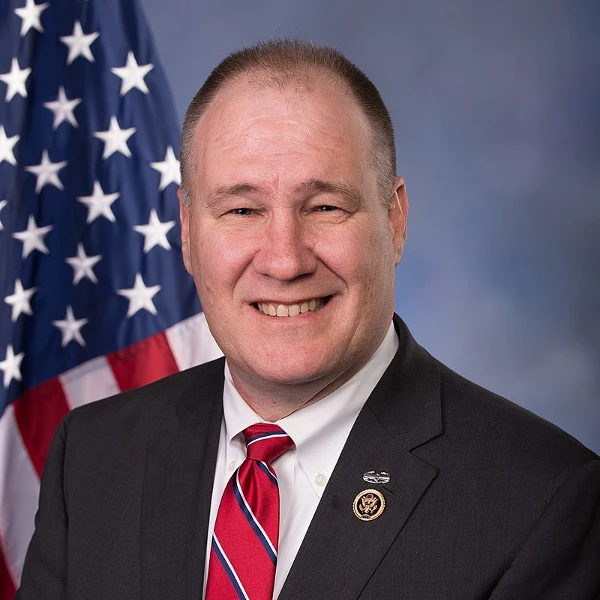
 U.S. Representative Trent Kelly (R-Miss.) is pleased to announce his selection to serve as Subcommittee Chairman of Seapower and Projection Forces on the House Armed Services Committee. This committee has oversight over Navy, Marine Corps, and Air Force programs.

“Rep. Trent Kelly has always put our national security first and his extensive service in the Mississippi National Guard has made him a respected leader on the House Armed Services Committee,” Chairman Mike Rogers (R-AL) said. “As Chairman of the Subcommittee on Seapower and Projection Forces, Rep. Kelly will continue his tireless work to ensure our warfighters have the weapons and platforms they need to succeed on the battlefield.”

“I am honored to serve as the Seapower and Projection Forces Subcommittee Chairman for the 118th Congress,” Rep. Kelly said. “I look forward to working with my colleagues to ensure our warfighters have the tools they need to defend America. As Chairman, I will have the opportunity to serve our Nation and the State of Mississippi during a time of unprecedented threats. I appreciate Chairman Rogers for the opportunity to serve in this position.”

Congressman Kelly also serves on the House Permanent Select Committee on Intelligence, the House Agriculture Committee, the Subcommittee on Forestry, and the Subcommittee on Livestock, Dairy, and Poultry.

Alabama Senator Tuberville Urges Biden to Abandon Student Loan Forgiveness Plan

0

After multiple revisions to an executive order that has been criticized for months, President Joe Biden’s college loan forgiveness plan was harshly criticized by Sen. Tommy Tuberville, (R – Ala).

In a letter to U.S. Department of Education Secretary Miguel Cardona, Tuberville joined 67 colleagues from congress citing the biggest areas of concern regarding the plan, including what Tubberville described as a process that undermines financial accountability and increases inflation.

In a press release, Tubberville cited figures from the Penn Wharton Budget Model, the proposed rule could cost taxpayers $361 billion over the next ten years, but a non-partisan student loan expert believes it could cost $1 trillion. Tuberville also referenced the Urban Institute, which found that the IDR rule now preferred by the administration will cancel the full debt of 20 percent of bachelor’s degree holders and allow a majority of all borrowers to pay back less than half of what they borrowed. This is a separate proposal from the administration’s loan cancellation effort that is currently before the Supreme Court and is estimated to cost taxpayers approximately $400 billion.

The joint letter to Secretary to Cardona read:

Dear Secretary Cardona:

We encourage you to withdraw the latest radical proposal put forth by your Department and work with Congress on meaningful and sustainable student loan reforms. This proposed regulation, formally known as Improving Income-Driven Repayment for the William D. Ford Federal Direct Loan Program (RIN 1840-AD81), would turn a safety-net for low-income federal student loan borrowers into an unsustainable transfer of wealth from hardworking taxpayers to college-educated individuals.  

We agree that the complicated maze of repayment programs has made it difficult for borrowers to navigate the best option to suit their situation and therefore has often failed the lowest-income borrowers or borrowers with degrees that did not live up to promised returns. We would welcome the opportunity to engage in reforming the current program. However, telling student loan borrowers that they can expect to pay back only a fraction of what they owe undercuts the legislative intent of the Direct Loan program the basic social contract of borrowing. Future loans to future students depend on current students paying on current loans. Without this, the entire system is in jeopardy.  

This proposal ultimately turns the Direct Loan program, which provides millions of Americans with the opportunity to move up the economic ladder, into an untargeted grant. This is a drastic shift in policy which you do not have the legal authority to make. Further, the $138 billion cost estimate for the proposed rule has been widely dismissed by student loan and federal budget experts as unrealistically low. Finally, despite proposing to change the fundamental nature of a longstanding program, you have refused to allow Congress and the American people more than 30 days to review this highly complex and costly proposal.

Cost Estimate

As a result of this rule, borrowing the maximum loan amount will have zero marginal effect on a borrower’s repayment amounts, yet the Department of Education (Department) made no attempt to quantify the proposal’s behavioral effects on borrowers. This is irresponsible. It is well-documented that graduate student loan borrowers in some fields have already learned that they can take unlimited loans with no consequences on their life-time repayment total under an income-driven repayment plan. In fact, institutions encourage some graduate borrowers to take loans the school knows the borrower will not have to repay. Any reasonable cost estimate of this proposal would apply the borrowing behavioral changes, even in the form of ranges, from the past decade in the graduate education space to all new undergraduate loans.

This administration is also keen on providing uncapped subsidies to the most educated Americans. In particular, it magnifies the amount of taxpayer dollars going to individuals who earn law, medicine, and other professional graduate degrees. According to a former economist in the Obama administration, the new definition of discretionary income alone would increase subsidies for borrowers with advanced degrees by three-fold. There may be disagreement about the federal government’s role in promoting economic mobility, but we can all agree that the federal government should not “pay twice as much to subsidize the rent of a Columbia graduate student than it will for a low-income individual under the Section 8 housing voucher program.”  An honest assessment of the costs and benefits of this program associated with graduate students is conspicuously absent.

The Government Accountability Office (GAO) provides further evidence of why there is little confidence in the proposed rule’s cost estimate. In a Summer 2022 report, GAO found that the Department had underestimated the cost of the Direct Loan program by $311 billion. The underestimates were largely due to a lack of accounting for behavioral effects associated with income-driven repayment plans. Further, this was the second GAO report to raise this concern.

Legal Authority

None of the statutory changes to federal student loans in the last 30 years are related to the provisions the proposed rule would supposedly implement, raising questions about the impetus for and timing of this proposed rule. The income contingent repayment plan was added to the Higher Education Act of 1965 (HEA) by the Omnibus Reconciliation Act of 1993. The two subsections of statute that govern the repayment plan both reside in section 455. In subparagraph (d)(1)(D), the statutory language has been amended to allow graduate PLUS loan borrowers to participate in the income contingent repayment plan while continuing to bar parent PLUS borrowers from participating. In subsection (e) the language has remained largely unchanged, with two exceptions. First, an amendment in the College Cost Reduction and Access Act 2007 added to the list of loan statuses that count toward the maximum repayment period. Second, an amendment made in 2019 by the FUTURE Act improved the procedure through which a borrower’s income data from the Internal Revenue Service can be shared with the Department.

The Biden administration’s go it alone attitude on student loan repayment and forgiveness flies in the face of the Constitution, which vests all legislative power in Congress. The Supreme Court made it abundantly clear in West Virginia vs. the Environmental Protection Agency that “[a]gencies have only those powers given to them by Congress, and ‘enabling legislation’ is generally not an ‘open book to which the agency [may] add pages and change the plot line.’” Further, the court stated, “the agency must point to ‘clear congressional authorization’ for the authority it claims.”

There has been no attempt by the Biden administration to sit down at the table with elected representatives of the people to negotiate changes to this program in spite of Congress’s repeated attempts to do just that. The year before President Biden assumed office, there were substantive bipartisan negotiations occurring in the Senate on these provisions that were ultimately scuttled by the COVID-19 pandemic. Last Congress, Ranking Member Richard Burr and Ranking Member, now Chairwoman, Virginia Foxx made public entreaties to Secretary Cardona to come to the negotiating table on student loans.

It is our belief there is no clear congressional authorization for this proposed rule. Members of the President’s own party believe that amending the HEA is necessary to enact a repayment plan that is more generous than the current plan. For example, the Affordable Loans for Any Student Act was introduced by Senator Merkley in the last three Congresses and by Representative DeLauro in the last two Congresses. Even those legislative proposals were not as generous of a discount on student loans as you now propose.

In your proposed rule, the Department claims authority to provide a 40 percent discount to student loan borrowers through the new income contingent repayment program compared to the current plan. Analysts at the Brookings Institution and the Urban Institute suggest that the discount will be 50 percent or more. Whatever the discount amounts to, the Constitution states that only Congress has the power of the purse. Clearly, Congress did not and would not authorize the Secretary to write off half of the $1.6 trillion student loan portfolio with the stroke of a pen because we know our constituents are the ones ultimately responsible for paying for it, including those who never stepped foot on a college campus.  

Since 1993, the income contingent repayment plan has included a “calculation of balance due” that includes “unpaid principal, any accrued interest, and any fees such as late charges, assessed on such loan.” Flying in the face of the law, the proposed rule plans to “not charge any remaining accrued interest each month after applying a borrower’s payment.” This amendment to the existing regulation comes with a $15 billion price tag according to the Department. Relatedly, the statute for the income contingent repayment plan specifically states, “The Secretary may promulgate regulations limiting the amount of interest that may be capitalized on such loan, and the timing of any such capitalization.” It is clear that Congress intended to provide the administration with specific flexibility regarding regulations on capitalization, but explicitly did not provide flexibility on interest accrual in this particular repayment plan. 

Subsequently, The College Cost Reduction and Access Act of 2007 created a separate income based repayment plan that explicitly called for the Secretary to pay for any interest accrued on subsidized loans for up to three years if the interest due was not paid each month. More recently, the Bipartisan Student Loan Certainty Act of 2013 set annual interest rates for loans at the 10-year Treasury note plus a percentage rate which varies depending upon the type of loan. If Congress wanted the Secretary not to charge interest or to pay a borrower’s interest, the statute would say so.

Another example of the proposed rule attempting to make policy without Congressional authorization is in its treatment of deferment and forbearance. The proposed rule plans to “allow borrowers to receive credit toward forgiveness for certain periods of deferment or forbearance.” Economic hardship deferment was added as a payment toward the forgiveness period for any income contingent repayment plan in the College Cost Reduction and Access Act of 2007. However, the proposed rule will count multiple other types of deferment as well as forbearances, none of which are mentioned in the income contingent repayment statute.

Conclusion

The Department does not have the statutory authority to promulgate this Notice of Proposed Rulemaking. In order to promulgate this rule, the Department “must point to ‘clear congressional authorization’ for the power it claims.” In this case, no such “clear congressional authorization” exists.

In addition, turning student loans into grants for the educated after they leave college is a smack in the face of taxpayers who never borrowed student loans or who have already paid theirs back. A poll just last year showed that public confidence in postsecondary education has dropped 14 points since 2020 and that these actions will further undercut America’s confidence in the value of a postsecondary education. The proposal severs any logical connection between the amount an individual pays to an institution to earn a degree and his or her expectations for future earnings.

Simply put, the proposed rule will exacerbate the problems of rising college costs and excessive borrowing. Policy experts agree that the vast majority of students will never fully repay their loans under this proposal. Borrowing for college will become the default for every household, including for those who can afford to pay and otherwise would have paid out-of-pocket. This proposal is reckless, fiscally irresponsible, and blatantly illegal and, as such, it should be rescinded.

Joining Senator Tuberville in the letter are U.S. Senate Committee on Health, Education, Labor, and Pensions (HELP) Ranking Member U.S. Senator Bill Cassidy (R-LA), and U.S. Representative Virginia Foxx (R-NC), Chairwoman of the House Committee on Education and the Workforce, along with U.S. Senators Mitch McConnell (R-KY), John Thune (R-SD), John Barrasso (R-WY), Tim Scott (R-SC), Joni Ernst (R-IA), Steve Daines (R-MT), Marsha Blackburn (R-TN), John Boozman (R-AR), Mike Braun (R-IN), Katie Britt (R-AL), Ted Budd (R-NC), John Cornyn (R-TX), Tom Cotton (R-AR), Kevin Cramer (R-ND), Mike Crapo (R-ID), Ted Cruz (R-TX), Lindsey Graham (R-SC), Chuck Grassley (R-IA), Bill Hagerty (R-TN), John Hoeven (R-ND), Cindy Hyde-Smith (R-MS), James Lankford (R-OK), Mike Lee (R-UT), Cynthia Lummis (R-WY), Roger Marshall (R-KS), Jerry Moran (R-KS), Markwayne Mullin (R-OK), Jim Risch (R-ID), Mitt Romney (R-UT), Rick Scott (R-FL), Thom Tillis (R-NC), Roger Wicker (R-MS), Todd Young (R-IN), and Shelley Moore Capito (R-WV).
Florida Democrat Downplays Illegal Fentanyl Entry from Smugglers at the US – Mexico Border – Opinion

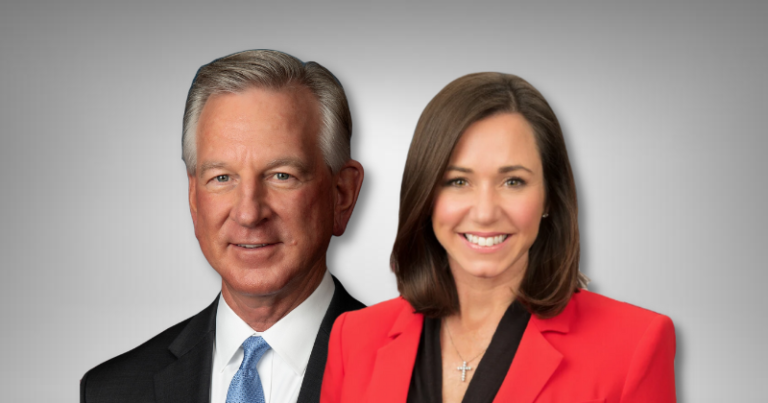
As U.S. Customs and Border Patrol Agents testified earlier this week, Congressman Maxwell Frost (D-Fla.) devoted part of his five minutes to emphasize the fact that the majority of illegally distributed Fentanyl doesn’t come across the southern border. Frost, who elevated his political rank by decrying deaths from gun violence, was eager to hear confirmation that “only” 15 percent of Fentanyl enters the United States illegally along the southern border with Mexico.

Frost proceeded to describe the border security crisis as a “humanitarian crisis, not a criminal one.” For a politician who built his brand on outrage over every death inflicted by gun violence, Frost shows no sympathy for tends of thousands of deaths that would be just as preventable with strengthened border security.

In Texas, you could take the 15 percent statistic Frost eagerly cited and apply it to the Texas Comptrollers’ figures for deaths by Fentanyl, and attribute more than 200 deaths in Texas alone for the last complete year on record, 2021. The figure was already on pace to surpass 2021’s total by the latest report, dating back to October 2022. Undoubtedly, other border states also have an influx of illegal Fentanyl, but Frost only wants you focus on the fact that the other 85% occur at “legal ports of entry.”

Nationwide, provisional data from CDC’s National Center for Health Statistics indicate there were an estimated 107,622 drug overdose deaths in the United States during 2021, an increase of nearly 15% from the 93,655 deaths estimated in 2020. The 2021 increase was half of what it was a year ago, when overdose deaths rose 30% from 2019 to 2020. The new data show overdose deaths involving opioids increased from an estimated 70,029 in 2020 to 80,816 in 2021. Overdose deaths from synthetic opioids (primarily Fentanyl), psychostimulants such as methamphetamine, and cocaine also continued to increase in 2021 compared to 2020.

If Frost wishes to be philosophically consistent, shouldn’t his concern compassion for every single death that federal government could prevent extend beyond regulation of guns?