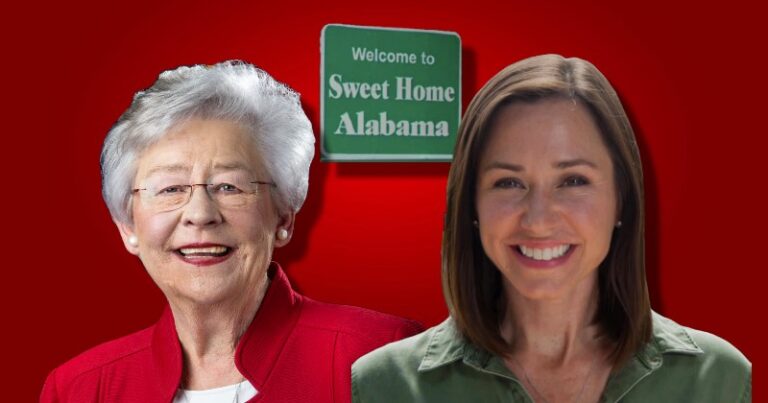
Ivey is known as one of the most socially conservative governors in the nation after she signed one of the most strict abortion laws into effect. Britt, who is almost 40 years younger than Ivey, represents one of the GOP’s freshest faces in 2022. Britt serves as president and CEO of Alabama’s business council, and she is also on the Alabama Wildlife Federation Board of Directors. The campaign trail was familiar territory for Britt, who as a campaign manager for Senator Richard Shelby. She also practiced law at Butler Snow LLP.
For more news on Alabama government and politics, visit our Alabama political news section.
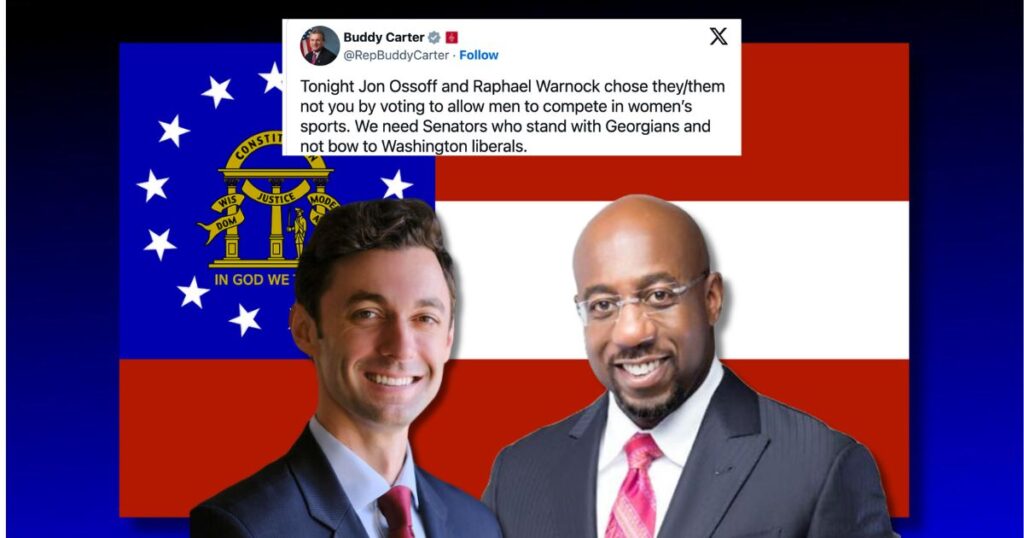
The 2022 Georgia Senate race between Raphael Warnock and Herschel Walker could come down to three counties in Georgia known as the most reliable Republican strongholds. Georgia is a unique state for political party strength evaluation for Republicans and Democrats, because Georgia voters don’t declare a party when they register to vote. The only occasion when Georgia voters effectively “choose” a party is in a primary election, when they choose the primary to participate in. While these factors complicate analysis, there are demographics and other data points to find consistent patterns of the majority of voters supporting Republican candidates.
Below is a list of Georgia’s largest counties that have consistently gone for Republican candidates in the past decade.
Cherokee County: 200,000+ voters.
Located northwest of Atlanta, Cherokee County has approximately 201,408 registered voters for the 2022 Midterm Election. During the past decade, the majority of Cherokee County voted for Romney in 2012, Trump in 2016 and Trump again in 2020. Republican strength was even more pronounced in the 2021 special runoff election for U.S. Senate, when 70.6% of Cherokee County voted for Republican David Perdue, and 70% voted for Kelly Loeffler in the other seat.
U.S. House Representative: Barry Loudermilk, (R)
Demographics of Cherokee County, Georgia:
Race:
86% of residents are white, compared to the state average of 58.6%
7% of residents are black, compared to the state average of 31.6%
10.5% of residents are hispanic, compared to the state average of 9.5%.
1.8% of residents are asian, compared to the state average of 4%
Education:
92% of residents are high school graduates, compared to 87% for the entire state.
38.2% of residents are college graduates, compared to 31.3% for the entire state.
Income:
Median income in Cherokee County is $82,740, compared to $58,700 for the entire state.
7.5% of residents live at the poverty level, compared to 15.1% for the entire state.
Related Content
Forsyth County: 167,000+ voters.
Located in North central Georgia, Forsyth County has approximately 167,000 registered voters for the 2022 Midterm Election. During the past decade, the majority of Forsyth County voted for Romney in 2012, Trump in 2016 and Trump again in 2020. In the 2021 special runoff election for U.S. Senate, when 67.9% of Forsyth County voted for Republican David Perdue, and 67.3% voted for Republican Kelly Loeffler in the other seat.
79.2% of residents are white, compared to the state average of 58.6% 3.5% of residents are black, compared to the state average of 31.6% 9.5% of residents are hispanic, compared to the state average of 9.5% 12.9% of residents are asian, compared to the state average of 4%
Education:
93% of residents are high school graduates, compared to 87% for the entire state.
53% of residents are college graduates, compared to 31.3% for the entire state.
Income:
Median income in Forsyth County, Georgia is $107,00 compared to $58,700 for the entire state.
5.7% of residents live at the poverty level, compared to 15.1% for the entire state.
Hall County: 130,000+ voters
Located in North central Georgia, Hall County neighbors Forsyth County and has approximately 130,000 registered voters for the 2022 Midterm Election. During the past decade, the majority of Hall County voters voted for Romney in 2012, Trump in 2016 and Trump again in 2020. In the 2021 Senate Special Election, 72.3% of Hall County voted for Republican David Perdue, and 71.8% voted for Republican Kelly Loeffler in the other seat.
U.S. House Representative:Andrew Clyde (R), District 9
Demographics of Hall County, Georgia:
Race:
85% of residents are white, compared to the state average of 58.6%
7% of residents are black, compared to the state average of 31.6%
28% of residents are hispanic, compared to the state average of 9.5%
2% of residents are asian, compared to the state average of 4%
Education:
79% are high school graduates, compared to 87% for the entire state.
24% of residents are college graduates, compared to 31.3% for the entire state.
Income:
Median income in Hall County, Georgia is $62,984 compared to $58,700 for the entire state.
% of residents live at the poverty level, compared to 15.1% for the entire state.
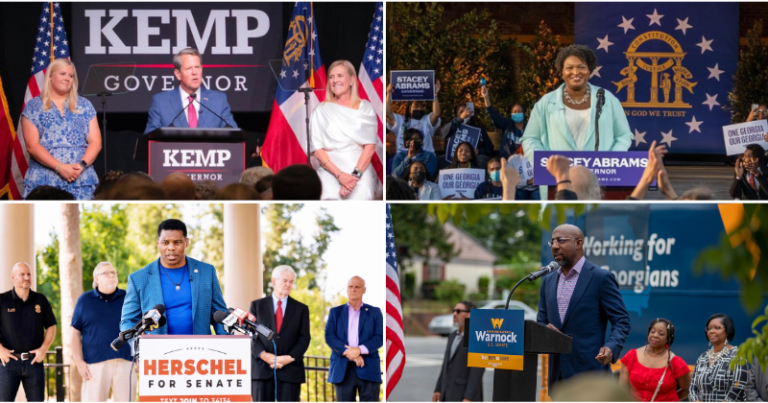
Georgia Governor Brian Kemp continues to outpace Democratic challenger Stacey Abrams in his bid for re-election. Earlier today, two different polls showed Kemp with a seven-point lead, besting Abrams 52 percent to 45 percent in the Trafalgar / Daily Wire poll, while an Eastern Carolina University poll showed Kemp defeating Abrams 51 percent to 44 percent.
In the nationally-followed Senate race, incumbent Democrat Raphael Warnock led Herschel Walker by two points in ECU’s poll, but Warnock trailed by two in the Daily Wire Poll, with Walker taking 49 percent to Warnock’s 47. Warnock’s inability to expand a lead versus Walker is being interpreted as an ominous sign for Senate Democrats across the nation. Following an ex-girlfriend’s claim that Walker helped her fund an abortion, Walker has denied the allegations and managed to maintain most of his support among surveyed Republicans. An important factor to consider is that Georgia is one of only two states that require a majority vote in the General Election to avoid a Runoff Special Election. The mandate makes Libertarian candidate Chase Oliver ‘s presence exceptionally pivotal, as he may absorb enough votes to prevent Walker or Warnock from surpassing 50 percent. If the runoff determines party control of the Senate, both parties will devote all of their resources to back the respective candidates.
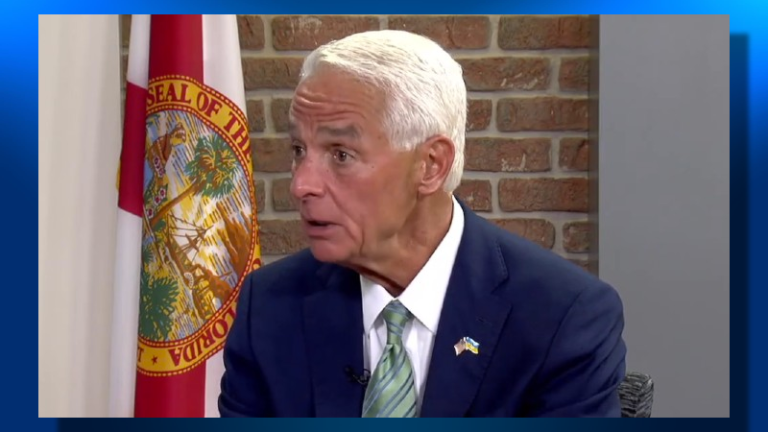
After only two years and four months as Florida Governor, Charlie Crist announced on May 12, 2009, in the midst of a housing market collapse in Florida and a national recession, that he was running for U.S. Senate, rather than re-election. Undoubtedly, Crist and his campaign hope those facts were forgotten long ago by undecided viewers who tuned into his debate against Ron DeSantis. Crist attacked DeSantis about mere rumors of DeSantis contemplating a 2024 Presidential campaign, asserting that such ambition for higher office hindered DeSantis from effectively serving as a governor.
Nobody is surprised that Crist came out swinging, while DeSantis stayed quiet. Crist has been trailing DeSantis in the polls and the distance widened to 11 points in the most recent poll, which was conducted by Florida Atlantic University. Crist hit is talking points with confidence throughout the debate, but even if Crist persuaded 100 percent of undecided voters, he may still fall short and lose his a statewide race for the third consecutive time.
Perhaps the most ironic part of Crist’s criticism regarding DeSantis’ potential run for a higher office is the fact that when Crist was governor, he appointed his own chief of staff, George LeMieux, to replace Sen. Mel Martinez, who had just resigned, despite the fact that Crist had already told his own advisors that LeMieux wasn’t qualified for the job. After a meeting in the middle of the night with LeMieux, Crist changed his mind and appointed LeMieux, despite the apparent conflict of interest and obvious power play to prevent a potential challenger in a Republican Primary for the same seat.
If anyone knows about higher ambition clouding judgement, it’s Charlie Crist.
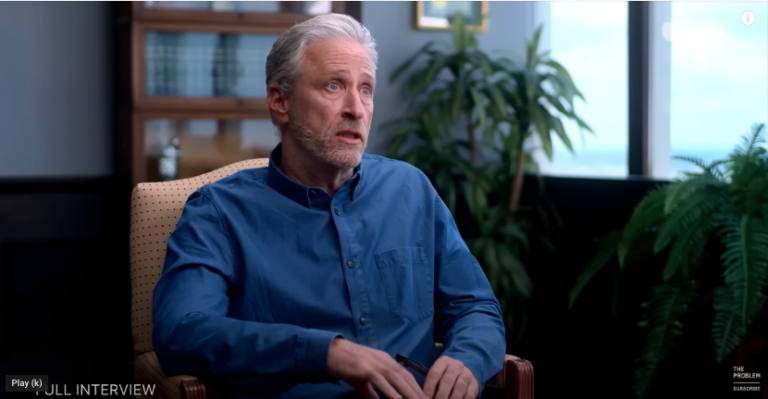
In one of the most widely publicized examples of bias confirmation disguised as journalism, comedian Jon Stewart confronted Arkansas Attorney General Leslie Rutledge for opposing “guidelines from the American Academy of Pediatrics.” Without providing viewers any details about the AAP, Stewart condemned the state’s stance against gender transition care for youth, basing his argument on the fact that gender-affirming care was endorsed by AAP. Throughout the heated discussion, it becomes clear to viewers that Stewart is implying that the majority of pediatricians in the nation endorse “gender affirming” treatments. Stewart proceeded to conflate the AAP’s guidelines with similar guidance given to parents of children contemplating chemotherapy for cancer.
To those unfamiliar with pediatric medicine and the AAP’s structure, Stewart’s passionate presentation seemed noble to some, but four vital facts should be known by anyone who watched the interview.
4 VITAL FACTS THAT WOULD HAVE ENDED STEWART’S ARGUMENT:
The American Academy of Pediatrics was accused by several of its own members of stifling a resolution that called for re-evalution of the academy’s stance gender affirming treatments at the 2022 AAP Annual Leadership Conference. The resolution cited multiple national medical organizations, including the countries listed in the last fact. Ironically, AAP’s response to media inquiry regarding the resolution backpedals from Stewart’s description of AAP’s endorsement. An excerpt from MedPageToday.com reads, “The resolution, which was proposed again at an August AAP leadership meeting but failed to pass, stated that other countries are reconsidering hormone therapy as a first-line treatment and that the AAP should do the same. However, the AAP has said that this mischaracterizes its current policy, which does not recommend hormone therapy as a first-line treatment, but rather promotes following a systematic, collaborative evaluation by clinicians and mental health professionals.
FACT 3:
Sweden and Finland, two nations considered far more socially liberal than the United States, ended their use of puberty blockers and reversed their endorsement of gender transition treatments for children, including hormone replacement therapy. They cited concerns about the inherent risks and dangers posed to the patients, including reproductive risks and other critical issues such as bone density.
FACT 4:
Vanderbilt University Medical Center paused its practice of gender affirming therapies based on “new recommendations” from the World Professional Association for Transgender Health. In other words, VUMC didn’t deem AAP’s endorsement of gender affirming care sufficient to prevent its pause of gender affirming procedures. VUMC’s deputy CEO and chief health system officer C. Wright Pinson said the clinic will be “seeking more advice from local and national clinical experts”. VUMC’s announcement came a week after Tennessee legislators pressed VUMC’s for answers regarding videos of a doctor on staff touting that gender-affirming procedures are “huge money makers”, and another video showed a staffer saying anyone with a religious objection should quit.
The news of Vanderbilt’s decision to pause their clinic’s gender-affirming treatments broke roughly around the same time that Stewart’s show aired, but Stewart’s production team undoubtedly has the ability to add such vital info via digital editing, and has yet to do so, more than a week after VUMC’s’s announcement. Since the pause, VUMC has noted that their gender affirming procedures didn’t involve surgery on genitalia, but didn’t disclose any details on puberty blockers or other hormone therapies.
Of course, Stewart didn’t bother to get into any such nuance, because doing so would have informed viewers that there is nothing close to a widespread endorsement from the majority of pediatricians throughout the country, even if you filter that pool down into strictly pediatricians who are undermined the crux of his chief point and repeated grievance throughout the interview. While it’s obvious that Attorney General Rutledge wasn’t adequately prepared to defend her stance, she also has plenty of other pressing issues on her plate, and is accustomed to questions from reporters that aren’t as intellectually dishonest or misleading as the Stewart and the drivel repeated ad nauseam. In the past, Stewart showed a true talent for balancing comedy with intellectual curiosity regarding policies, but this recent hit piece on Arkansas’ attorney general exposes Stewart as the hypocrite, not the elected official. Stewart used to be considered a more moderate version of another internationally-known liberal comedian and commentator, Bill Maher, but they seem to have traded roles during the past year, as the clip below demonstrates.
For more articles on Arkansas politics and government, visit our Arkansas political news section.
In Georgia, incumbent Democrat Senator Raphael Warnock holds an RCP average lead of 3.3 percent over Republican candidate Herschel Walker. Last week, Warnock and Walker debated in Savannah, where Walker’s gaffes included flashing an honorary police badge as a rebuttal to Warnock citing Walker’s misleading claims about being a member of law enforcement. The moderator reminded Walker that props were not allowed at the debate, but Walker falsely claimed that the badge was a legitimate piece of law enforcement identification. Two days ago, former President Barack Obama said he will campaign in Atlanta for Warnock, as well as the Democratic gubernatorial candidate Stacy Abrams, who is falling further behind Georgia Governor Brian Kemp in recent polls, including the Atlanta Journal Constitution. .
In North Carolina’s Senate Race, current Republican Congressman Ted Budd enjoys a slight edge over former North Carolina State Supreme Court Justice Cheri Beasley, with Budd up by 2.5 in the RCP average, putting the two in a statistical dead heat to take the seat relinquished by retiring Senator Richard Burr. Budd and Beasley also debated last week, but neither candidate committed a remarkable gaffe or took a position that surprised any spectators.
With each race close enough to be considered within the typical margin of error, the two keys to success will be get out the vote efforts by the respective parties, and the ultimate decision of voters who have yet to commit to either candidate. With those factors in mind, below is a list of the percentage of undecided voters in the two most recent polls in each of the three states.
PERCENTAGE OF NORTH CAROLINA VOTERS UNDECIDED IN BUDD VS BEASLEY SENATE RACE:
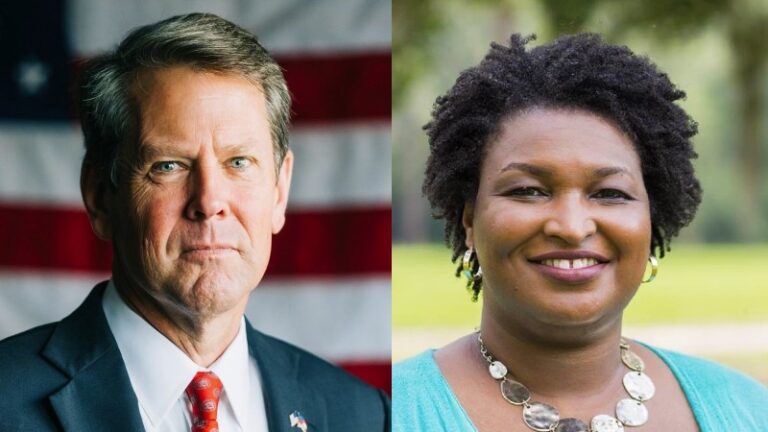
With less than 30 days until 2022 Midterm Election Day, Georgia Governor Brian Kemp appears to be headed to a comfortable re-election against Stacey Abrams. In a poll released earlier this week by the Atlanta Journal Constitution, Kemp led Abrams 51 percent to 41 percent. With the exception of a Quinnipiac Poll, Kemp’s lead throughout October has been by at least five points, and Abrams has yet to get any more than 46 percent of the vote.