Home Blog Page 18

In Race for North Carolina Governor, Robinson & Stein Remain Neck-And-Neck

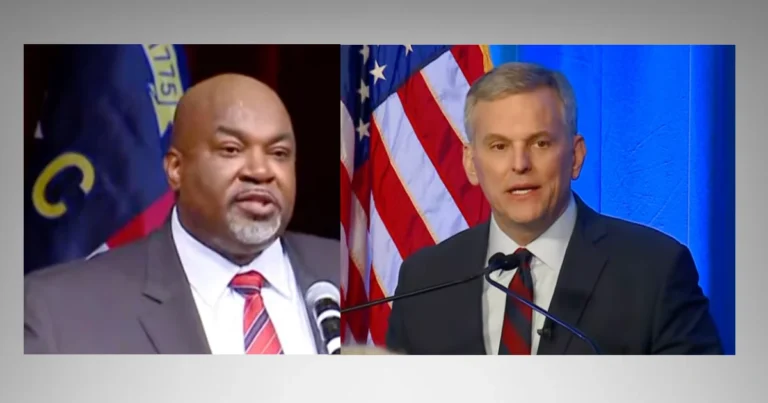
The race to succeed Governor Roy Cooper in North Carolina appears to be just as competitive as Biden Harris and Trump’s contentious battle for the White House. North Carolina Lt. Gov. Mark Robinson, the Republican nominee, and state Attorney General Josh Stein, come within the margin of error in most of the recent polls.

Earlier this week, North Star Opinion Research’s latest poll results showed Robinson leading Stein with 44% of the vote to Stein’s 42%, and the remaining 14% undecided. Two weeks ago, the left-leaning Change Research poll showed Stein leading Robinson by one point, 44% to 43%, with 9% responding “unsure” and four percent of the 835 voters polled responding that they would not vote. Considering the narrow margins, voter dissatisfaction could be the pivotal factor in the gubernatorial election’s outcome. If the Democratic Party is more successful with its get-out-the-vote effort in 2024, those extra voters could help Biden overcome the deficit that prevented him from capturing the Tar Heel State in 2020.

For the past eight years, Democrat Roy Cooper, a moderate Democrat, governed among that may serve as the ultimate example of the nation’s intensifying polarization, particularly between urban metro areas vs. suburban and rural sectors of the state.

North Carolina’s Democratic Party won offices of governor, secretary of state, and attorney general, but the Republican Party controls both chambers of the state legislature.

Marsha Blackburn, Rick Scott Slam Schumer’s 2nd Attempt to Pass Immigration Bill

Schumer’s So-Called ‘Border Deal’ is Not Border Security

In response to a Senate Majority Leader Chuck Schumer’s second attempt to pass a border security bill endorsed by President Joe Biden, several Republican Senators voiced the opposition during a press conference hosted by Sen. Marsha Blackburn, (R-TN).

“Let me start by making one thing clear: Senator Schumer’s so-called ‘border deal’ is not a border security bill,” Blackburn said. “It is an election year political stunt designed to give our Democratic colleagues the appearance of doing something about this problem without doing anything. Why would Senator Schumer choose to bring forward legislation that has already failed once and stands no chance in the House? Well, Senator Schatz gave us the answer, and I quote, ‘We are tired of being on defense about this.’”

Blackburn said that Biden’s policies led to 10 million illegal aliens to cross the border into America, and referenced H.R. 2 as the better plan.

“There is a solution to this catastrophe, and one that takes ‘border security’ seriously – the Secure the Border Act or H.R. 2,” Blackburn said. “On May 15 of last year, H.R. 2 was received by the U.S. Senate from the House. For 373 days since then, it has been sitting in the Senate without so much as a hearing. If Democrats were truly serious about upholding the rule of law and defending democracy, they would join us and pass H.R. 2.”

Florida Sen. Rick Scott emphasized the risk of allowing Pres. Biden and Democrats’ to pursue an open border agenda.

“Everyone knows Schumer’s push to bring back this failed immigration strategy is a sham,” Scott said. “This is a desperate move to shift blame and distance Democrats from Biden’s toxic open border policies that have brought millions of illegal immigrants, drugs and terrorists across our border. This bill won’t solve Joe Biden’s crisis—in fact, it codifies his failed policies. The truth is, if Biden wanted to fix the border, he would do it today by enforcing the laws we have to secure the border, just like President Trump did. Then Biden and Mayorkas dismantled the entire immigration system and allowed it to become lawless…His own FBI director admitted that his policies are making our nation less safe. It is making the fentanyl crisis worse, and I do not want another 70,000 Americans to die from an overdose. I continue to hear from Florida families about how this crisis is ripping apart families, and we have to put an end to it. Unfortunately, it is the Democrats that don’t want to secure the border. They want to pass a massive immigration bill that codifies Biden’s open border policies into law. We HAVE to stop illegal immigration and keep Americans safe, and that’s going to require a new president in the White House.”

 Other speakers at the conference included Ron Johnson (R-Wis.), JD Vance (R-Ohio), Cynthia Lummis (R-Wyo.), John Cornyn (R-Texas), and Eric Schmitt (R-Mo.)joined Senator Blackburn in the press conference.

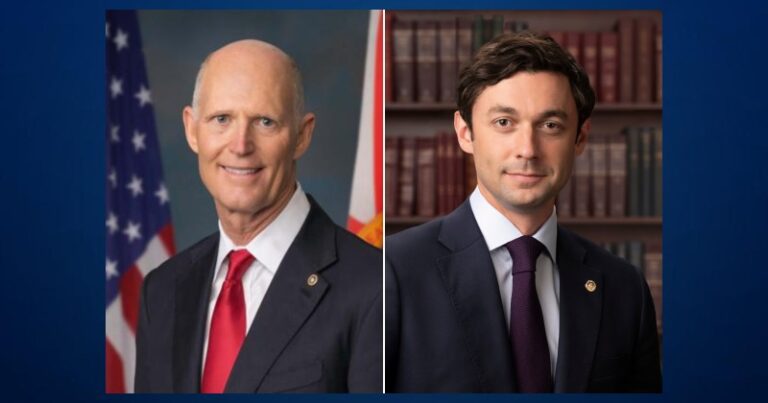
Rick Scott & Jon Ossoff Introduce Bipartisan Bill to Lower Costs for Servicemembers

Below is an official statement from Florida Senator Rick Scott regarding a bipartisan-supported bill introduced with Georgia Sen. Jon Ossoff.

WASHINGTON, D.C. — Today, Senator Rick Scott and Senator Jon Ossoff are introducing a bipartisan bill to lower costs for servicemembers and their families through their bipartisan SCRA Benefit Utilization Act to expand access to financial protections and benefits available to active duty service members and their families. The Servicemembers Civil Relief Act (SCRA) provides legal and financial protections to active duty service members, including National Guard and reserve members, and their families; however, the benefit is often underutilized, according to a Consumer Financial Protection Bureau report.

The bipartisan bill would expand existing financial literacy programs to include information about these protections, require the Department of Defense’s annual survey to include information about these programs, require benefit information on all activation orders, and require creditors to apply a 6 percent cap to all eligible accounts under their jurisdiction once a servicemember invokes their SCRA rights.

Senator Rick Scott said, “Our servicemembers who put everything on the line don’t deserve to be taken advantage of—especially when it comes to their financials. I am proud to join my colleague Senator Ossoff to lead the bipartisan SCRA Benefit Utilization Act that will provide more ease and access to the legal and financial protections our active duty members are entitled to for their personal, auto, and student loans, as well as increase financial literacy resources. We must continue to protect our servicemembers, especially as these brave Americans serve our country and protect our freedoms.”

Senator Jon Ossoff said, “Georgia’s servicemembers and their families deserve the very best, yet many are unaware of key benefits to help them save money. I’m introducing this new bipartisan bill to expand access to these key financial protections for our heroic service members and help them save money and build wealth.”

Companion legislation was introduced in the U.S. House of Representatives by Congressman Matt Cartwright (PA-08).

Congressman Matt Cartwright said, “Financial issues should not distract our brave men and women in uniform from their mission. This bipartisan, bicameral legislation identifies commonsense opportunities to improve benefit awareness, increase the likelihood of substantial financial savings, and enhance the overall readiness of our armed forces. I am grateful to Senators Ossoff and Scott for taking the lead on getting this vital legislation through the Senate.”

Click HERE to read the SCRA Benefit Utilization Act.

Three Reasons Why Florida May Decide the 2024 Election Outcome

For nearly a decade, Florida has been considered a “reliably red” state for political candidates, but recent decisions by the state supreme courts and dramatic shifts in certain economic areas could put the Sunshine State back into the national spotlight in November.

3 REASONS WHY FLORIDA MAY DECIDE THE 2024 ELECTION OUTCOME

1. Abortion and Marijuana Amendments

Recreational marijuana use and abortion access amendments are both on Florida voters’ 2024 election ballots. Florida’s Supreme Court finalized these amendments earlier this month, completely changing the forecast for turnout among young voters. Prior to those amendments being on the ballot, Democrats faced an uphill battle to persuade disillusioned younger voters and independent voters to turn out.

2. GOP Resource Spreading

Even if Trump wins the state for a third time, it may come at a cost for Republicans in other states. The millions of dollars Trump’s campaign will have to spend on get-out-the-vote efforts to counter an uptick in Florida’s youth vote are precious funds that the GOP would otherwise have devoted to swing states, such as North Carolina, Michigan, and Arizona.

3. Property Insurance Costs

Economic issues are already a major issue for the 2024 campaign. Since Ron DeSantis’ landslide victory in 2022, property insurance rates have skyrocketed for millions of Floridians. While many culprits can be blamed, it’s not unreasonable to assume that many voters will hold the party in power accountable. Even if only five percent of independent voters change their vote based on frustration over property tax, that could be enough to flip the state blue.

Who is Nikki Fried? Meet the Florida Democratic Party Leader

0

Nikki Fried is the current chair of the Florida Democratic Party and a prominent figure in Florida politics. Elected to the position in February 2023, Fried took over the leadership role at a time when the party faced significant challenges, including underperformance in statewide races and the need to rebuild its infrastructure and voter engagement strategies. Fried, a lawyer and former lobbyist, is well-known for her independent approach and her ability to connect with diverse groups of voters across Florida.

Before becoming party chair, Fried served as Florida’s Commissioner of Agriculture and Consumer Services from 2019 to 2023, making history as the only Democrat to hold statewide office in Florida during that period. As commissioner, she focused on issues such as medical marijuana expansion, consumer protection, environmental conservation, and advocating for farmers and rural communities. Her tenure was marked by a commitment to transparency and challenging Republican-led policies, especially those spearheaded by Governor Ron DeSantis.

Fried’s political career began after years of legal practice and lobbying work, particularly in the medical marijuana industry. Her advocacy for cannabis reform and civil liberties helped her gain a progressive following. In 2022, Fried ran in the Democratic primary for Florida governor but lost to former Governor Charlie Crist.

Since assuming the chair position, Fried has emphasized grassroots organizing, voter registration efforts, and party unity. She has been vocal about countering voter suppression laws, expanding Democratic outreach in rural and suburban areas, and energizing younger voters. Fried’s leadership style combines pragmatism with progressive values, aiming to modernize the party’s operations and messaging ahead of the 2024 elections.

Fried remains a high-profile voice in Florida politics, often using her platform to criticize Republican policies on issues like reproductive rights, gun control, and climate change, while working to reposition the Florida Democratic Party as a competitive force statewide.

Robinson, Stein Advance to General Election for North Carolina Governor

In North Carolina, two heavy favorites were named victors shortly after polls closed to the margin of their lead in their respective party primary races. Republican Lt. Gov. Mark Robinson and Democratic Attorney General Josh Stein will move on to the general election battle to become the Tar Heel state’s next governor.

With 27% of the votes in, Lt. Gov. Mark Robinson had 63.1% of Republican votes, putting him more than 40 points ahead of his next two closest competitors – Dale Folwell (18.8%) and Bill Graham (18.1%). In the Democratic Party, with 25% of the vote in, Josh Stein was already on pace to a landslide victory, with 73.1% of the vote to Michael Morgan’s 13.2% and Chrelle Booke’s 5.7%.

For the past eight years, Democrat Roy Cooper, a moderate Democrat, governed among that may serve as the ultimate example of the nation’s intensifying polarization, particularly between urban metro areas vs. suburban and rural sectors of the state.

North Carolina’s Democratic Party won offices of governor, secretary of state, and attorney general, but the Republican Party controls both chambers of the state legislature.

Poll Shows 67% of N.C. Voters Favor Immigration Reduction

North Carolina has added five million residents since 1980, and two-thirds of voters there support reducing immigration to control the state’s explosive growth.

Results from a recent telephone and online survey by Rasmussen Reports and NumbersUSA revealed that only 14% of Likely North Carolina voters want their state’s population to continue to grow at the recent rapid rate, while 50% prefer it to grow much more slowly. Twenty percent (20%) want the North Carolina population to stay about the same size and 11% want the state’s population to become smaller.

North Carolina’s population, which was less than 6 million in 1980, is now nearing 11 million. Sixty-seven percent (67%) of North Carolina voters believe the federal government should reduce new immigration to slow down the state’s population growth. Twenty-one percent (21%) favor keeping new immigration and population growth at the current rate. Just five percent (5%) want to increase annual immigration and population growth.

Rubio Co-Sponsors Bill to Improve Military Maternal Healthcare

0

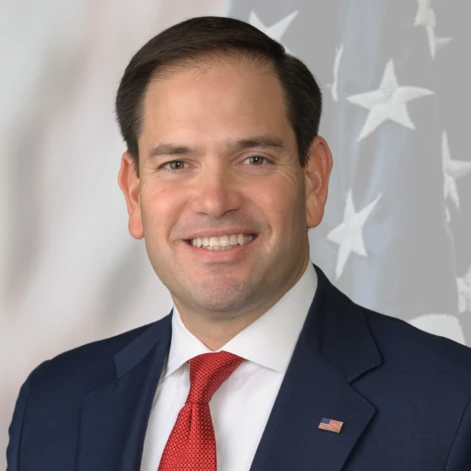
A new bill seeks to improve maternal health care for expectant mothers. U.S. Sen. Marco Rubio, (R-FL) introduced the bi-partisan sponsored bill with the Improving Access to Maternal Health for Military and Dependent Moms Act with Sen. Jon Tester (D-MT) and U.S. Representatives Elise Stefanik (R-NY) and Terri Sewell (D-AL).

According to the bill’s introduction, recent studies have demonstrated low patient satisfaction for obstetric care in military health facilities despite pregnancy and childbirth being the top reasons for inpatient admissions at military treatment facilities. The bill would require the U.S. Department of Defense to provide Congress with a comprehensive study on access to maternal health care within the Military Health Service for service members and their dependents.

“Ensuring the well-being of our military families means addressing the unique challenges mothers face while they, or their spouses, serve in the military,” Rubio said. The Improving Access to Maternal Health for Military and Dependent Moms Act is a crucial step towards understanding and overcoming the obstacles to maternal health care within the Military Health System.”