Home Blog Page 57

Florida Attracts Most New Residents of All States in 2022

0

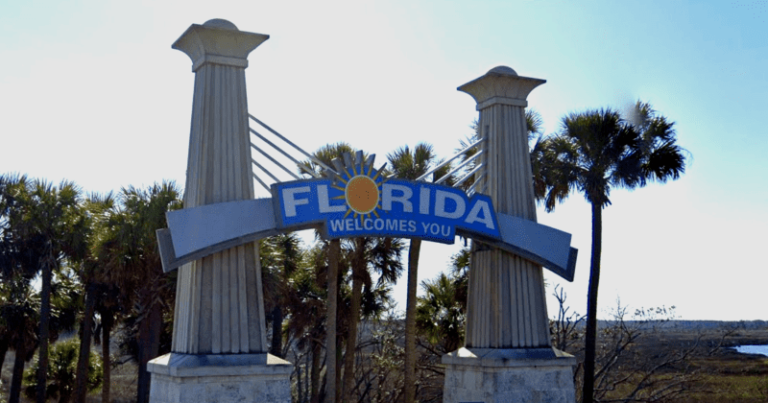
A vibrant economy and an influx of news residents and news businesses have helped Florida become the top state for new residents in 2022, according to the latest report from the U.S. Census. Florida’s population increased by 1.9% to 22.2 million between 2021 and 2022, the data show, surpassing Idaho, which led last year. Florida had the second-largest numeric gains, behind Texas.

“For the third most-populous state to also be the fastest growing is notable because it requires significant population gains,” the US Census bureau’s Marc Perry, Luke Rogers and Kristie Wilder said in a press release.

In addition to the influx of new residents, the Sunshine State also touts one of the top states for company relocations, and Florida led the country in new business formations from January 2021 to January 2022, accounting for almost 12% of all new business starts nationwide. Florida also ranked as the top states for foreign business, with Miami and Orlando ranking first and second, respectively, in Financial Times-Nikkei ranking of best US cities for foreign businesses. Florida also touts one of the lowest unemployment rates in the country, with the latest statewide report showing an unemployment rate of only 2.6 percent.

Ron DeSantis announced that Florida’s unemployment rate dropped to 2.6 percent in November, down from 2.7 percent in October. The national unemployment rate stood at 3.7 percent.

“Florida’s private sector employment increased by 28,100 jobs over the month in November 2022, an increase of 0.3 percent. Florida’s total private sector employment increased by 5.2 percent (+420,700 jobs) over the year in November 2022, faster than the national private sector job growth rate of 3.6 percent over the same time period. Florida employers have added jobs for 31 consecutive months in November 2022,” the governor’s office noted.“Florida’s continued success over the past two years is no accident. No matter the challenges, we have stayed on offense,” said DeSantis. “Florida’s economy is outpacing the nation for the second consecutive year because we have invested in our workforce and prioritized keeping Floridians at work and businesses open. As the new year approaches, we will continue investing in our workforce and infrastructure to create jobs and keep our economy moving forward.”

“While D.C. liberals and blue states are still exacerbating their self-inflicted inflation and supply chain woes, Governor DeSantis has continued his charge for Freedom First policies, and as a result Florida is literally hedging against a recession, growing its workforce, supporting new businesses and innovation, and leading the nation’s economic recovery,” said outgoing Department of Economic Opportunity (DEO) Sec. Dane Eagle. “People vote with their feet, and folks are running to the free state of Florida as fast as they can.”

Colony Capital relocated its corporate headquarters from Los Angeles to Boca Raton, and despite Disney’s public disagreements with Governor DeSantis on state education reforms, Disney is expected to finalize the transfer of its entire Disney Parks, Experiences and Products division from California to Orlando’s Lake Nona region.

Tennessee Governor, Senators Tell Biden to Stop Planned Release of Immigrant Detainees

0

According to an official release from the office of Tennessee Governor Bill Lee, the Immigration Control Enforcement Department under President Biden’s administration is planning to release immigrant detainees into Tennessee.

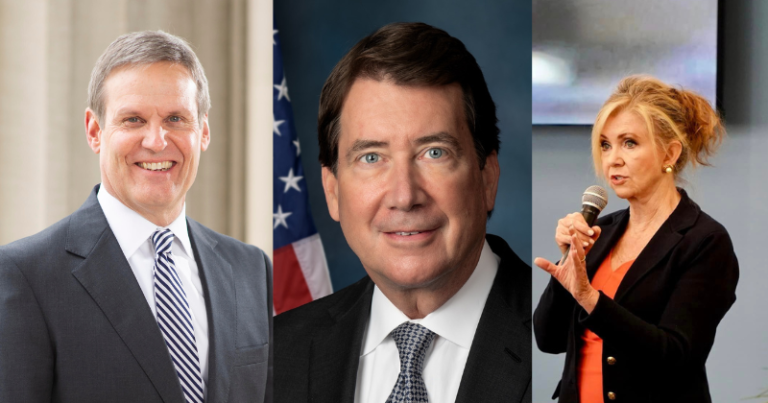
Below are statements from Gov. Lee, Senator Marsha Blackburn, and Senator Bill Hagerty.

On Monday afternoon, Gov. Lee’s office was notified of the Biden administration’s intent to transport multiple busloads of single adult detainees from ICE facilities in New Orleans into Tennessee, beginning as soon as this week. Federal officials have not shared any further details. The Governor’s office continues to push back on the plan.

Gov. Lee: “We’ve been informed by ICE that they plan to release single adult detainees into Tennessee while they await court proceedings. This is irresponsible and a threat to the safety of Tennesseans. Furthermore, we already have a national security crisis at our border, and the Biden administration’s attempt to revoke Title 42 will only incentivize more illegal crossings. It’s not compassionate to perpetuate a problem that leads to more exploitation and trafficking. 7,000 people unlawfully enter our country every day. This crisis is too big to ignore, and the only way to stop it is to secure the border. Placing the burden on states is not a solution, and we should not bear the brunt of the federal government’s failures. We are demanding the Biden administration reverse their plan for detainee relocation. In the meantime, we’re also discussing options with the Tennessee Attorney General and our federal delegation.”

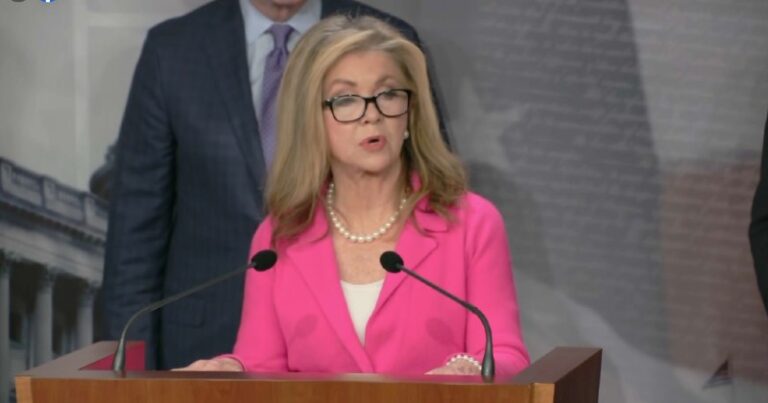
Sen. Blackburn: “Joe Biden’s border crisis has made one thing abundantly clear — every town is a border town and every state is a border state. The Biden Administration is trafficking illegal immigrants into communities across the country, including here in Tennessee. Governor Lee, Senator Hagerty, Attorney General Skrmetti, and I will be utilizing all possible options to stop President Biden from trafficking them into our state. Biden created this crisis by terminating successful Trump-era immigration policies, including Remain in Mexico and safe third country agreements. Tennesseans will not stand for this flagrant disregard for law and order.” 

Sen. Hagerty: “When I traveled to the border in April, Border Patrol agents told me that ‘the people don’t stay here and the drugs don’t either.’ Today’s news underscores what I’ve heard from Tennessee law enforcement time and again, which is that our open border has turned every town into a border town. This has brought heartbreaking consequences to communities throughout America in the form of increased drug overdoses. It has strained resources for hospitals, schools, and local communities. It has also jeopardized our national security—with border crossers arriving from more than 160 different nations, a number of whom are on terrorist watch lists. In the last year, nearly three million migrants have illegally entered the country—a population larger than the largest four cities of Tennessee combined—Nashville, Memphis, Knoxville, and Chattanooga. This does not even include the number of “gotaway” migrants who illegally crossed into our country undetected. Congress must take action to secure the border. It’s unfair to place the burden on Tennessee citizens and local officials to deal with this Administration’s self-inflicted failures. Yet shockingly, in spite of this ongoing humanitarian disaster, President Biden and Democrats in Congress have put forward a government funding bill that will only serve to exacerbate the crisis by increasing funding for resettlement operations while simultaneously ignoring that Title 42—Border Patrol agents’ last enforcement tool—is on the cusp of expiring. This is unacceptable. A nation without a border is not a sovereign nation. President Biden cannot ignore this crisis any longer.”

Earlier this year, other governors drew national attention for relocating immigrants from Texas and Florida to Martha’s Vineyard, Connecticut and Washington D.C. While many pundits and political analysts predicted the actions of those governors would draw fierce backlash, both Governors were re-elected by large margins, with Florida Governor Ron DeSantis winning by 19 points, and Greg Abbott won by 12 points.

Marsha Blackburn & Senate GOP Celebrate Successfully Ending Military Vaccine Mandate

0

Andy Beshear Recaps Past Year as Kentucky Governor

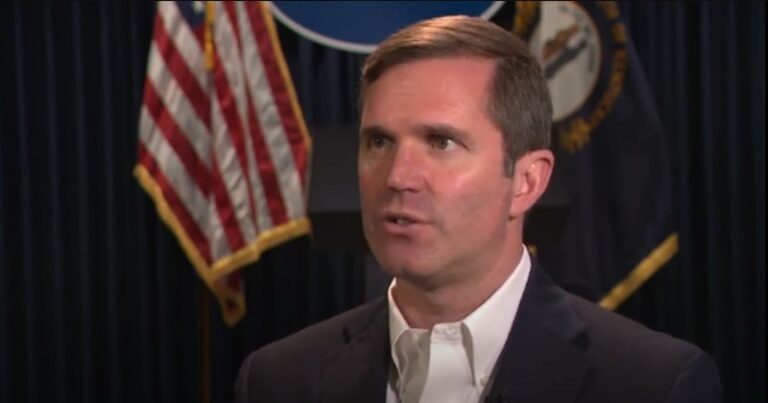
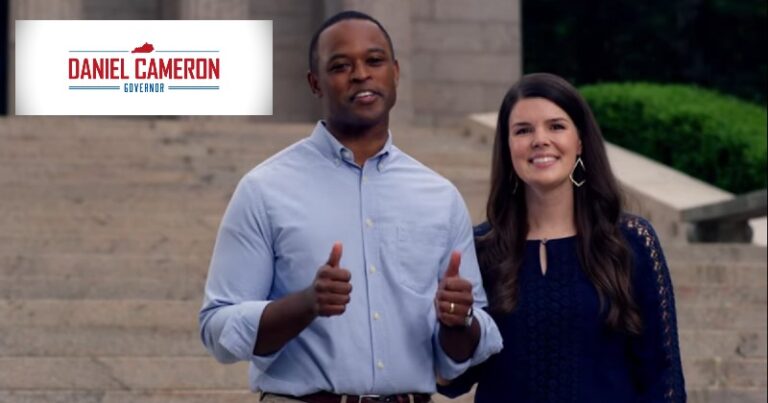
Kentucky Governor Andy Beshar (D) recapped the year 2022. BeShar faces Kentucky Attorney General Daniel Cameron in the 2023 Gubernatorial Election.

Georgia Secretary of State Wants to End Runoff Elections

0

With two runoff elections for the U.S. Senate in the past two years, the state of Georgia gained national attention for its pivotal role in the balance of power between Republicans and Democrats. Judging from recent comments Georgia Secretary of State Brad Raffensperger, the attention isn’t wanted anymore. calling on legislators to do away with the state’s runoff system for general elections, arguing that the process places too heavy a burden on voters and election officials. 

In a statement released yesterday, Raffensperger said: “Georgia is one of the only states in the country with a General Election Runoff,” said Georgia Secretary of State Brad Raffensperger. “We’re also one of the only states that always seems to have a runoff. I’m calling on the General Assembly to visit the topic of the General Election Runoff and consider reforms.”

The General Assembly convenes in January and could select from a wide range of options to address this topic to help further the goal of safe, secure, and efficient elections.

“No one wants to be dealing with politics in the middle of their family holiday,” said Georgia Secretary of State Brad Raffensperger. “It’s even tougher on the counties who had a difficult time completing all of their deadlines, an election audit and executing a runoff in a four-week time period.”

Georgia’s 2022 midterms shattered previous turnout records and achieved a high level of access for Georgia voters. Some counties had as many as 19 days of Early Voting in the General Election, and Georgia voters needed no excuse to vote early or by mail. Georgia continues to be a national leader in providing safe, secure, and accessible elections to all eligible Georgians.”

Raffensperger was a name not recognized by many people outside of Georgia politicos, but that all changed in January 2021, when Trump pressured him to change the state’s Presidential vote totals. Unmoved by the power of the Oval Office, Raffensperger stood his ground, openly defied Trump’s claims and asserted that there was no evidence to support claims of voter fraud. Audio of the call was published worldwide the following day, and from that point on, Raffensperger was lumped into the same group of “disloyal” Republicans who frequently receive public rebuke from the former President.

Considering the damage typically inflicted on any Republican who contradicts Trump, it was easy to expect a primary election loss for Raffensperger, yet he defied the odds. His principled stance gained popularity and support from Georgia voters, including Democrats, who are allowed to vote in Georgia’s open primaries. Ultimately, he defeated his primary opponent, Rep. Jody Hice, 52.3 percent to 33.4 percent. Last month in the Midterm General Election, Raffensperger defeated Democrat Bee Nguyen, 53.23 percent to 43.99 percent.

DeSantis Jumps to 23-Point Lead vs Trump in Major Poll

Former President Donald Trump appears to be reeling after multiple legal defeats, blowback for hosting a dinner party with a Holocaust-denying white supremacist, and a string of losses by his endorsed candidates, including last week’s Georgia Senate runoff loss by Herschel Walker.

News didn’t improve for Trump this week, as Florida Governor Ron DeSantis routed him by 23 points in a poll of Republicans surveyed by USA Today and Suffolk.

In the poll of 1,000 registered Republican voters, 56 percent chose DeSantis as their preferred Presidential candidate for 2024, compared to 33 percent who chose Trump. Only 47 percent want Trump to run again, and 45% don’t want Trump to run. Those numbers indicate a significant drop in enthusiasm since the summer. In July, 60% of Republicans wanted Trump to run in 2024.

David Paleologos, the director of the Suffolk University Political Research Center, said that the data suggests Republicans and conservative independents increasingly want Trump-styled policy, without Trump. Despite the fact that DeSantis has yet to declare himself as a 2024 candidate, he is speaking to audiences across the country and recently hosted an intimate dinner event for his largest donors.

One of the biggest disadvantages facing Trump during the next year is the mere fact that DeSantis can add to his resume. Major milestones in the near future for DeSantis could include a renegoitated deal with Disney’s Reedy Creek District, tax reform, and property insurance reform, which is being addressed in a special session this week in Tallahassee.

DeSantis does face a notable legal challenge surrounding his decision to participate in the relocation of immigrants to Martha’s Vineyard, but the state law involving the funding is interpreted by a Republican-dominated Florida Legislature. Meanwhile, several of Trump’s former advisors and staff members are being investigated in a variety of legal cases that will require financial and legal commitments not faced by potential rivals in a 2024 Republican Primary Election.

Perhaps one of the most telling metrics from the entire USA Today poll was the fact that 23 percent of Republicans now view Trump unfavorably. That sentiment was reflected in comments from other Republicans in congress and the Senate after Trump said termination of all rules, regulations, and articles, even those found in the Constitution, would be justified to overturn the 2020 Election results, due to the fact that Twitter decided to suppress the spread of a New York Post expose story about Hunter Biden’s possible business ties with Ukrainian energy companies.

Republican leaders, including Mitch McConnell, condemned Trump’s calls for termination of Constitutional Law.

“Let me just say, anyone seeking the presidency who thinks that the Constitution could somehow be suspended or not followed, it seems to me would have a very hard time being sworn in as President of the United States,” McConnell said. McConnell’s comments came one week after Trump labeled the Senate Minority leader a loser, in response to McConnell’s criticism of a dinner Trump hosted for Kanye West and white supremacist Nick Fuentes.

Florida Governor Ron DeSantis Faces Major Test in Property Insurance Special Session

TALLAHASSEE, Fla. – Florida Governor Ron DeSantis will meet with state legislators this week to address rising property insurance rates. According to a statement from DeSantis’ office, the special session will address solutions to stabilize Florida’s property insurance market that will introduce more competition and policies that will lower prices for consumers.

For the past year, property insurance reform has ranked among the top-tier concerns of Florida residents. Skyrocketing property insurance costs have been making headlines since last winter, as they’ve impacted not only homeowners along coastal communities, but also residents in the center region of the peninsula, where the governor enjoys some of his strongest support on policy and performance.

Mother nature elevated property insurance to the forefront after two hurricanes wreaked havoc across the Sunshine State, including record-setting levels of flood damage inflicted from storm surge brought into Cape Coral, Ft. Myers and Naples, when Hurricane Ian, a Category 4 hurricane, made landfall Sept. 28. DeSantis called for the Special Session on Oct. 20, and signed Executive Order (EO) 22-242 to “suspend deadlines for payment of property taxes in counties that have been impacted by Hurricane Ian” and “extends to real property including personal homes and commercial property that was destroyed or otherwise rendered uninhabitable.” Those counties included, Brevard, Charlotte, Collier, DeSoto, Flagler, Glades, Hardee, Hendry, Highlands, Hillsborough, Lake, Lee, Manatee, Monroe, Okeechobee, Orange, Osceola, Palm Beach, Pasco, Pinellas, Polk, Putnam, Sarasota, Seminole, St. Johns and Volusia Counties.

“Floridians who have lost their homes and businesses because of Hurricane Ian shouldn’t have to now worry about their property taxes,” DeSantis said. “Through this Executive Order, we are providing temporary relief until we can get the Legislature back to Tallahassee to establish more permanent solutions for property taxes, provide additional economic relief to Southwest Florida, and implement necessary reforms to the property insurance market. I look forward to working with our legislators to find innovative solutions and I am glad we have a legislature that’s ready and willing to address these issues soon.”

As legislators prepared for the Special Session, Hurricane Nicole added injury to insult, making landfall on Nov. 10. While Nicole was only a Category 1 Hurricane, thousands of homes on Florida’s Atlantic Coast were damaged.

Florida’s State House Democratic Leader Fentrice Driskell didn’t hold back criticism in her reply to the governor’s call for a special session.

“Florida’s property insurance collapse has been building for a long time!” Driskell said. “We should have worked to solve this problem during the last legislative session, or the special session afterwards, but instead the problem was ignored while companies folded or stopped writing policies in Florida. The governor and the Legislature played culture war politics while the media reported story after story about the housing insurance market “Experts said Florida was in trouble and homeowners knew it was true when their rates skyrocketed or companies dropped them,” Driskell added. “We’re glad Governor DeSantis is finally on board with what Florida Democrats have been saying the whole time: our property insurance market is in crisis and Floridians are suffering. I’m just sorry it took a hurricane to get him to act.”

In her newly-elected role as the state Democrats’ house leader, Driskell will have to find common ground for compromise, because Florida’s Democratic Party was dominated in the 2022 Midterm Election and hasn’t controlled the Florida State House of Representatives, the Florida Senate, or the governor’s office for more than two decades.

Tennessee Senator Questions FTC on Ticketmaster’s Site Security After Taylor Swift Concert Ticket Crash

0

Ticketmaster’s Taylor Swift ticket crash around the world has led to new questions being raised of the Federal Trade Commission and its chair, Lina Kahn. In a bipartisan effort, Tennessee Senator Marsha Blackburn (R) joined Connecticut Senator Richard Blumenthal (D), to press the FTC for answers regarding data security versus bot attacks that allegedly took down the nation’s unofficial monopoly on concert ticket sales and distribution. Blackburn’s probe comes two weeks after glitches and website outages kicked customers offline and angered hundreds of thousands fans awaiting their chance to buy tickets to Taylor Swift’s latest concert series, “Eras Tour.”

Blackburn, a member of the U.S. House Energy and Commerce Committee, said the recent difficulties consumers encountered are “reflective of anti-competitive conduct” in the online marketplace. Blackburn is no stranger to consumer headaches with Ticketmaster. In 2016, President Obama signed her legislation, the Better Online Ticket Sales (BOTS) Act, into law. Senator Blumenthal was also an original co-sponsor of the bill. The BOTS Act was crafted to prohibit mass purchases of tickets and reduce the impact of a practice known as “scalping tickets”, where the tickets are resold at prices that are often at least double the face value of the ticket.

“Fortunately, a solution is already in place that would go a long way in reducing ticket costs and protecting consumers and artists from scammers,” Blackburn said. “The federal government needs to get serious about implementing my legislation, the BOTS Act, immediately.”

For decades, concert goers have complained about service fees and poor customer service from Ticketmaster. In 2009, consumers expressed concerns when the Live Nation merged with Ticketmaster to form Live Nation Entertainment. Outrage over poor service and an absence of viable competition has been expressed across party lines. New York Congresswoman Alexandria Ocasio-Cortez said that music fans are “being fleeced” by Ticketmaster. In an interview with Rolling Stone, Cortez said she believes that the merger should be unwound, and she pushed for limits on ticket prices and fees.

The letter Blackburn and Blumenthal sent to the FTC can be read, below.

Dear Chair Khan:

We write to ask for information about the steps the Federal Trade Commission (FTC) is taking to combat the use and operation of bots in the online ticket marketplace. As you know, the Better Online Ticket Sales, or BOTS Act, became law in 2016. This law prohibits the circumvention of a security measure, access control system, or other technological control measure used online by a ticket issuer. It also prohibits the selling or offering of an event ticket obtained through a circumvention violation if the seller participated in, had the ability to control, or should have known about the violation. The BOTS Act gives the FTC and state attorneys general the authority to enforce violations as unfair and deceptive practices.

Recently, several high profile incidents arose where consumers encountered serious difficulties purchasing tickets through online ticket vendors, including Ticketmaster and AXS. While bots may not be the only reason for these problems, which Congress is evaluating, fighting bots is an important step in reducing consumer costs in the online ticketing industry. For example, consumers reported trying to purchase tickets to see Bob Dylan at the Ryman Auditorium in Nashville, only to be told the tickets in their shopping cart no longer existed. Similarly, 22,000 fans preregistered to buy tickets for Blake Shelton, but only a few hundred actually got tickets. Finally, Ticketmaster/LiveNation pointed to online bots as a reason why fans could not get Taylor Swift concert tickets, leading the ticket seller to shut down sales to the general public.

While some consumers opt to purchase tickets on the secondary market, most fans cannot afford to pay thousands of dollars for a single concert ticket. Some reports have found secondary ticket sales ranging from $1,000 (Bruce Springsteen) to $40,000 (Adele). Preventing this type of consumer harm is exactly why Congress chose to enact the BOTS Act six years ago and why we both chose to sponsor that bill.

We understand that, in January 2021, the FTC took its first enforcement actions under the BOTS Act. However, given the numerous high-profile incidents in the online ticket marketplace, it would be helpful to understand how the FTC intends to act to address such conduct going forward. We request answers to the following, which may be provided in a confidential briefing if needed:

Does the FTC have any pending enforcement matters before it with respect to the BOTS Act?

Why has the FTC only undertaken a single enforcement action to date using its BOTS Act authority?

Are there obstacles preventing the FTC from exercising its authority under the BOTS Act that Congress should be aware of?

Are there other solutions that Congress needs to consider in conjunction with the BOTS Act?

We appreciate your timely attention to this issue.