Home Blog Page 8

Kentucky Sen. Rand Paul Among Few Republicans to Oppose Trump Tariffs

As stock market investors experience a week-long sell-off, Senator Rand Paul of Kentucky is publicly opposing President Donald Trump’s recent tariff policies, describing them as detrimental both economically and politically. Paul emphasized that tariffs function like taxes on American consumers, leading to higher prices for various goods, including vehicles, energy, and construction materials. He pointed out that historical implementations of tariffs have often resulted in significant economic downturns and political losses for the Republican Party. Paul referenced past examples such as the McKinley Tariff of 1890 and the Smoot-Hawley Tariff of 1930, both of which preceded considerable defeats for the Republicans in subsequent elections.

Paul warned that the current tariff strategy could cause similar political ramifications, potentially harming the party’s prospects in future elections. Additionally, Senator Paul co-sponsored a bipartisan resolution with Virginia Senator Tim Kaine aimed at revoking the tariffs imposed on Canadian imports. This resolution successfully passed in the Senate with a 51-48 vote, with Paul and three other Republican senators—Mitch McConnell, Susan Collins, and Lisa Murkowski—joining Democrats in support. The resolution challenges the President’s use of emergency powers to impose tariffs without congressional approval, raising concerns about the constitutional allocation of taxing authority.

Senator Paul has been vocal about the need for Congress to reclaim its constitutional role in trade policy. He advocates for legislative measures that would require congressional approval for any imposition of tariffs. He believes that these steps are critical to prevent economic harm to American families and to maintain the system of checks and balances envisioned by the Constitution.

Lucy McBath Suspends Georgia Gubernatorial Campaign

Georgia Congresswoman Lucy McBath (D) has decided to put her potential run for Georgia governor on hold to prioritize her husband’s health as he undergoes treatment for complications stemming from a recent cancer diagnosis.

In an interview with The Atlanta Journal-Constitution on Monday, McBath announced that she is suspending the exploratory committee she launched just weeks ago. While she has not completely ruled out a future gubernatorial bid, she emphasized that her focus must remain on her family for now.

“It’s a hard decision. It’s really difficult to make,” McBath said. “Right now, I can’t decide whether or not to run for governor. I’ve always said my priorities should be where I’m needed most — and that’s helping my husband.”

Earlier this month, McBath became the first Georgia Democrat to establish an exploratory committee for the 2026 governor’s race, sparking speculation that she would formally enter the race. Her candidacy would have been historic, as she would have been positioned to become Georgia’s first female and Black governor, as well as the first Black female governor in U.S. history.

However, her husband, Curtis McBath, recently faced complications from cancer surgery, which revealed a longer and more challenging recovery path than expected.

Despite stepping back from the gubernatorial race for now, McBath, 64, made it clear that she is not resigning from her congressional seat. “At this time, I need to assess everything organically and ensure I’m where I’m most needed,” she stated.

McBath had hoped to generate early momentum and fend off potential challengers in what promises to be a competitive race to succeed term-limited Republican Gov. Brian Kemp. Her decision leaves the Democratic field wide open, with other possible contenders including Atlanta Mayor Keisha Lance Bottoms, state Sen. Jason Esteves, and former DeKalb County CEO Michael Thurmond. Stacey Abrams, who lost twice to Kemp, has not ruled out a third run.

Meanwhile, the Democratic Party of Georgia is facing internal upheaval. U.S. Rep. Nikema Williams resigned as state party chair on Monday amid mounting pressure from activists, donors, and fellow officials, including U.S. Sen. Jon Ossoff, who reportedly urged her to step down.

As Democrats work to clarify their lineup, the GOP race is already heating up. Attorney General Chris Carr has formally launched his campaign and is expected to face stiff competition from Lt. Gov. Burt Jones, who is likely to enter the race soon.

McBath’s decision adds new uncertainty to the Democratic field as the party seeks to reclaim the Governor’s Mansion for the first time in over 20 years.

Feds Terminate UNC Charlotte LGBTQ Research Grant

Earlier today, the Charlotte Observer reported that the University of North Carolina at Charlotte had a federal grant for LGBTQ research terminated, along with 67 other LGBTQ-related grants across 49 universities, totaling $40 million in cuts by the National Institutes of Health (NIH) in March. The termination comes less than six weeks after the university joined the top tier of research institutions in the nation with its new R1 classification.

All four terminated grants at UNC Charlotte were linked to LGBTQ issues or diversity and inclusion, totaling $905,873.

Professor Mennicke and her team had pursued federal funding for six years before receiving the grant last April, but it was abruptly terminated on March 20.

Mennicke described the situation as “traumatic,” noting that the grant focused on improving mental health outcomes for LGBTQ survivors of sexual violence. The termination letter criticized the project as “unscientific” and stated it no longer aligned with agency priorities.

This news coincided with biologist Jerry Coyne’s op-ed in the Wall Street Journal, “Losing my non-religion”, in which he explains why he resigned from a leading atheist group, the Freedom From Religion Foundation, when it turned into a “gender fundamentalist organization.” due to its refusal to publish content implying that gender is biologically determined. Richard Dawkins left the organization for similar reasons a few months earlier.

As for Mennicke’s team at UNC-C, they had received just over $450,000 for a three-year study, with about $400,000 remaining unspent after six months. The research aimed to train peers in support techniques for survivors of sexual violence. “People often disclose to friends first, and if the response is harmful, it can worsen trauma,” she explained. Sonyia Richardson, a former researcher at UNC Charlotte, also lost NIH funding for her study on suicide prevention among Black youth, which included sexual orientation as a risk factor. The NIH is the largest public funder of medical research in the U.S. and supports many universities in North Carolina. Mennicke warned that these funding cuts could lead to worse mental health outcomes for LGBTQ survivors and decreased safety in the community. The economic impact is also significant, as NIH data indicates that every $1 in funding generates about $2.46 in economic activity.

Georgia Gov. Kemp: U.S. DOJ Dismisses Biden-era Lawsuit Against SB 202

ATLANTA – Georgia Governor Brian Kemp welcomed the announcement that U.S. Attorney General Pam Bondi directed the Department of Justice to dismiss its Biden-era lawsuit challenging SB 202 – the Georgia Election Integrity Act of 2021.

“Despite the lies and misinformation from Joe Biden, Kamala Harris, Stacey Abrams, and their allies, Georgia is one of the top states in the country for early voting and experienced record voter turnout in multiple elections since the passage of the Elections Integrity Act,'” Kemp said.‘. “I am grateful that under the leadership of Attorney General Pam Bondi and President Trump, the DOJ has followed the truth: in Georgia, it’s easy to vote and hard to cheat!”

In the 2024 General Election, a record 5.29 million Georgians turned out to vote with no significant issues or complications, breaking the previous record set in the 2020 General Election. The 2024 General Election continued the successes of the 2022 Midterm election, where a federal report a federal report ranked Georgia as the No. 2 state in the country for early voter turnout.

North Carolina Governor Stein Announces District Court Appointments

Earlier today, North Carolina Governor Josh Stein announced the following judicial appointments:

Tia Hudgins Taylor to the District Court for Judicial District 8, serving Edgecombe, Nash, and Wilson Counties. Taylor is filling the vacancy created after Judge William Solomon retired. 

  • Taylor most recently worked as an associate attorney at Lassiter and Sperati, PLLC. She received her B.A. from Queens University of Charlotte and her J.D. from Elon University School of Law. 

Sonya Davis to the District Court for Judicial District 9, serving Greene, Lenoir, and Wayne Counties. Davis is filling the vacancy created after Judge Beth Heath retired.

  • Davis most recently worked as a solo practitioner in Kinston, specializing in domestic matters, real estate, and criminal defense. She received her B.A. from North Carolina Central University and her J.D. from North Carolina Central University School of Law.

“Tia Hudgins Taylor and Sonya Davis are exceptional attorneys who have dedicated themselves to the practice of the law,” said Governor Josh Stein. “They will be impartial and hard-working jurists, and I look forward to their service.”  

For Suprerior Court, Stein nominated Stephanie Brennan as a Special Superior Court judge. Brennan is filling the vacancy created after the Hon. Louis A. Bledsoe, III, retired. For Brennan’s position, the General Assembly, which must confirm the appointment by joint resolution.

  • Brennan currently serves as a Special Deputy Attorney General and Section Head for Special Litigation at the North Carolina Department of Justice. She received her B.A. from Dartmouth College and her J.D. from Yale Law School.

“Stephanie is an exceptional litigator, and I witnessed her legal acumen and leadership firsthand during my time as Attorney General,” said Governor Josh Stein. “She is committed to excellence and fairness, and I look forward to her service on the court.”

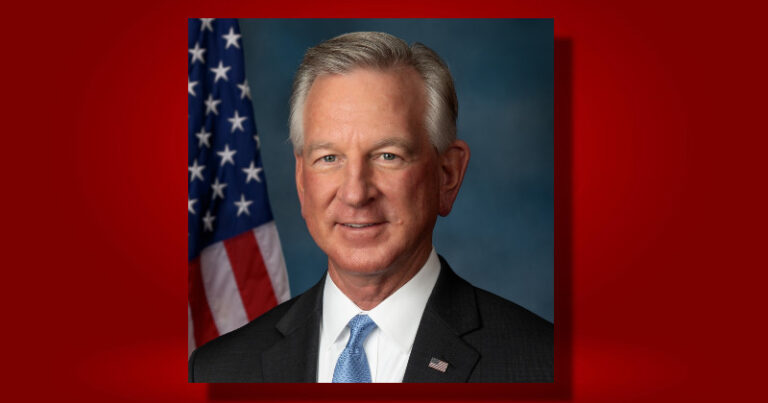
Tuberville Files Bill to Privatize Transportation Security Administration

U.S. Senators Tommy Tuberville (R-AL) and Mike Lee (R-UT) introduced the Abolish TSA Act, which would dissolve the bloated and ineffective Transportation Security Administration (TSA) while allowing America’s airports to compete to provide the safest, most efficient, and least intrusive security measures, under a new Office of Aviation Security Oversight.

“The TSA has become an inefficient, bureaucratic mess that infringes on Americans’ freedoms and wastes taxpayer money,” said Sen. Tuberville. “It’s a bloated agency that offers minimal security benefits while causing unnecessary delays and frustration for travelers. We need to focus on smarter, more effective methods to protect our country without sacrificing the liberties that make America great. The TSA should be eliminated and replaced with more targeted, streamlined, and accountable solutions.”

“The TSA has not only intruded into the privacy and personal space of most Americans, it has also repeatedly failed tests to find weapons and explosives,” said Sen. Lee.“Our bill privatizes security functions at American airports under the eye of an Office of Aviation Security Oversight, bringing this bureaucratic behemoth to a welcome end. American families can travel safely without feeling the hands of an army of federal employees.”

Read full text of the legislation here and the Fox News exclusive here

BACKGROUND:

The TSA is not equipped to manage the fast-evolving threats posed to aviation transportation. Over the past two decades, it has ballooned into an over-bloated, inefficient agency of 60,000 employees. Its highly bureaucratic and non-competitive nature make it slow-moving, perpetually out of date, highly resistant to innovation and modernization, and simply ineffective. In addition to widespread allegations of employee misconduct and theft, a 2015 assessment found that TSA agents missed 95% of mock explosives and banned weapons during checkpoint screenings. The 95% failure rate was repeated in 2017 at Minneapolis-St. Paul Airport and repeat national tests that year were “in the ballpark” of 80% failure rates.

Switching to privatization with appropriate but limited government oversight is the answer for modern aviation security. Over 80% of European commercial airports privatized airport security screening, and the overall performance of the U.S. airports—such as the San Francisco International Airport—participating in the TSA’s limited privatization program (Screening Partnership Program, or SPP) frequently outperformed their federalized counterparts in reducing wait times and mitigating threats. 

Competition drives excellence, efficiency, and safety—not bureaucracy. TSA, the regulating entity in aviation security, should not be conducting the regulated activity.

Abolish TSA Act:

TSA is abolished three years after enactment, allowing time for privatization and the repeal or transfer of additional authorities.

Within 90 days of enactment, the Secretary of Homeland Security, in consultation with the Secretary of Transportation, shall submit a reorganization plan to Congress that includes:

  • Creation of the Office of Aviation Security Oversight within the FAA, solely responsible for overseeing the privatization of aviation security screening.
  • Rapid transfer of security activities and equipment to qualified private companies.
  • Transfer of non-aviation security functions to DOT (mass transit, freight rail, pipelines, etc.).
  • Proportional reductions of TSA operations and personnel to facilitate transfer of duties.

The reorganization plan cannot include requirements for private security companies to conduct warrantless searches and seizures or extend the TSA’s existence. Congress will consider, amend, vote up or down on the reorganization plan through expedited and privileged procedure. Compliance will be monitored by the GAO and regular reports to Congress.

Louisiana Governor Landry Remarks on the March 29th Election Results

Baton Rouge, LA – Amendment 2 was a chance to permanently lower the maximum state income tax rate, double the tax deductions for residents over the age of 65, create a government growth limit, provide a permanent pay raise for teachers and school staff, maintain the homestead exemption and protect religious organizations, keep more tax dollars in local communities, allow for the elimination of inventory tax, and protect against special interest tax breaks.  

“The primary goal of Amendment 2 was to create a better opportunity for our citizens. To work towards inviting people into our State rather than have them leave. Unfortunately, Soros and far left liberals poured millions into Louisiana with propaganda and outright lies about Amendment 2,” said Governor Landry. “Although we are disappointed in tonight’s results, we do not see this as a failure. We realize how hard positive change can be to implement in a State that is conditioned for failure. We will continue working to give our citizens more opportunities to keep more of their hard-earned money and provide a better future for Louisianians. This is not the end for us, and we will continue to fight to make the generational changes for Louisiana to succeed.” 

OPINION | GOV SARAH HUCKABEE SANDERS: Finish the Job

Fund the prison, public safety

The Arkansas Democrat-Gazette published “Finish the job,“an op-ed by Governor Sarah Huckabee Sanders on why the Legislature should appropriate funds to build a new prison in Franklin County:

It’s been two decades since Arkansas made significant investments in its prison infrastructure. That’s two decades of chronic prison bed shortages, two decades of releasing violent offenders back into society because of lack of space, and two decades of worst-in-the-nation crime rates.

Enough is enough.

Arkansas has a chance to address this crisis head-on and help end our state’s prison bed shortage, but we need to act now. The Legislature must appropriate the funds our state needs to build a new prison.

Government has no greater responsibility than protecting its citizens’ safety. Not long ago, some left-wing states listened to “defund the police” activists and cut funding to law enforcement and prisons, with predictably disastrous results. I was elected in part because of my promise to do the opposite by supporting law enforcement and cracking down on violent crime.

That’s why I worked with the Legislature to pass the Protect Act, ensuring violent criminals do their time before they re-enter society, and why we’ve already opened up 1,500 prison beds in existing facilities.

But our state is still short thousands of prison beds. When inmates aren’t placed in state-run prisons, they are put in county-run jails that aren’t equipped for the burden of long-term incarceration, costing taxpayers around $30 million each year.

My administration is moving quickly to build a new, 3,000-bed prison in Franklin County that will boost that area’s economy while building a safer, stronger Arkansas. The state has set aside the funding we need to get the project started, and the Legislature approved a new prison by voting for the Protect Act.

Now, those same legislators must finish what they started, appropriate the full cost of our new prison, and let our state move forward. Arkansas simply can’t afford to kick the can down the road any longer.

Imagine two inmates, each convicted of a violent felony and sentenced to 10 years in prison.

The first inmate is sent to the state’s Wrightsville Unit here in Pulaski County and enrolled in a program called Pathway to Freedom. I’ve visited Pathway to Freedom so I can tell you what it’s like: His schedule is packed with job training and classes to improve his social and emotional skills. He deepens his faith, learns how to handle conflict resolution, and acquires the capability to re-enter society and fulfill his God-given potential.

He is less than half as likely to recommit and return to prison as other inmates stuck in county jails who don’t have access to quality programming.

The second inmate isn’t so lucky. He is bounced around from county jail to county jail. He’s in a facility designed for petty criminals but he’s a hardened felon; it’s not long before he gets into trouble.

Before I signed the Protect Act, the state would have likely let this inmate go on parole early, sometimes years before his sentence was supposed to be up. Once he’s out, there’s about a 50 percent chance that he recommits and finds himself back behind bars within three years.

Unfortunately, the second story is much more likely than the first. That’s bad for the inmates themselves–and more importantly, it’s bad for public safety.

There are more than 3,600 individuals who have been in and out of our prison system more than four times. One individual has been through the revolving door a shocking 21 times. Clearly, these people aren’t being rehabilitated–they’re just biding their time before they can terrorize the public again.

We need to make real changes to our prison system, which is why I’ve prioritized rehabilitation programs like Pathway to Freedom. But that can’t happen if we don’t have enough prison beds to fit all our inmates and instead overcrowd county jails or release criminals back into our communities.

Arkansas has a chance to turn the page on our decades-long cycle of ignoring violent crime, instead cleaning up our streets and ensuring violent felons aren’t released until they’ve served their time and hopefully been rehabilitated.

Reject the tired excuses of politicians who don’t want criminals behind bars. Fund the prison, public safety, and a better future for all Arkansans.