For the past decade, Gavin Newsom has been the Democrats’ Golden Boy in the Golden State. Newsom’s polished, media-friendly aura and persona keep him in the national media spotlight, but that doesn’t mean he’s the best candidate to recover vital swing states in the electoral college.
Since President Ronald Reagan finished his second term, no California candidates have been elected to the White House, and the state is arguably the furthest to the left with its policies, initiatives, and regulations.
When considering Gavin Newsom’s record, you must remember that he has enjoyed an unofficial rubber stamp to get any policies he vocally supports. During that time, California’s economy has grown, but it has also lost hundreds of thousands of residents who cited unaffordable living as the primary motive for relocating to Texas, Florida, and other states across the south.
Newsom’s policies play well to the crowd that Democrats have already locked in: upper-middle-class or wealthy females with a college degree who live in urban areas. That demographic is valuable in blue states, but ask Kamala Harris if she wishes she had expanded her base of support to males who are blue-collar workers without a college education or middle-class suburban mothers.
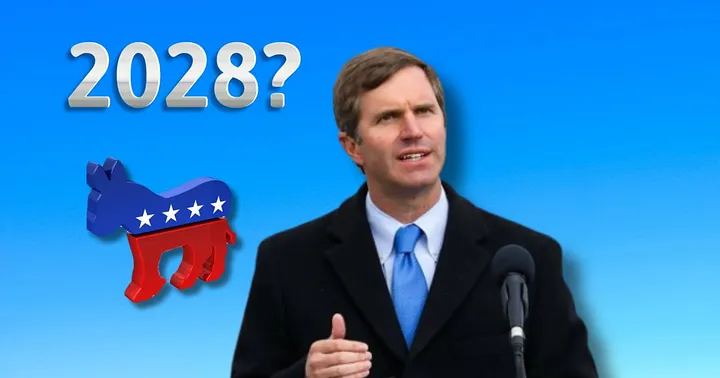
Two southern states have Democratic governors juxtaposed by Republican-led chambers: North Carolina has Gov. Josh Stein, and Kentucky has Gov. Andy Beshear. Stein, who was elected last November, is a rookie compared to Beshear. Beshear will complete his final term in 2026.
During Beshear’s tenure as governor, which began in December 2019, the Republican Party has consistently held the majority in both chambers of the Kentucky General Assembly: the state House of Representatives and the state Senate.
The Republican Party has controlled the Kentucky State Senate since 1999. As of the 2025 session, Republicans hold 31 of the 38 seats, maintaining a supermajority.
This Republican dominance in the legislature has enabled the party to set the legislative agenda and override Governor Beshear’s vetoes. For instance, in the 2024 legislative session, Republicans upheld their supermajorities, allowing them to pass legislation against the governor’s objections.
Despite leading a deeply Republican state, Democratic Governor Andy Beshear has achieved several notable bipartisan accomplishments by collaborating with Kentucky’s GOP-controlled legislature. Here are some key examples:
1. Legalization of Medical Marijuana
In 2023, Governor Beshear legalized medical cannabis, with Beshear and Republican lawmakers jointly celebrating the achievement.
2. Sports Betting
Kentucky legalized sports wagering, marking a major policy shift supported by both parties. Beshear praised these efforts as examples of “divided government working to get the tough things done that voters want”.
3. Expansion of Voting Access
In a rare move among Republican-led states, Kentucky expanded voting access through House Bill 574. The law introduced three days of early in-person voting, transitioned the state toward universal paper ballots, and maintained an online portal for requesting absentee ballots. Governor Beshear signed the bill into law, highlighting its bipartisan support and its role in making voting more accessible for Kentuckians
4. American Rescue Plan Investments
Beshear and legislative leaders from both parties collaborated to allocate federal American Rescue Plan funds toward critical infrastructure projects. The bipartisan agreement directed investments into building better schools, expanding broadband, providing clean drinking water, and creating more than 14,500 jobs across the state.
5. Income Tax Reduction
In 2025, the Kentucky House passed House Bill 1, which reduced the state’s income tax. The bill received bipartisan support, with Governor Beshear signing it into law. Republican leaders credited the tax cut for bolstering Kentucky’s economy and noted the collaborative effort in achieving this legislative milestone.
Beshear has prioritized attracting businesses to Kentucky. He promoted the state at the World Economic Forum in Davos, Switzerland, highlighting Kentucky’s workforce and potential for corporate expansion, especially in the electric vehicle battery sector.
Another notable feat for Beshear was healthcare expansion. Kentucky expanded healthcare access for 100,000 residents across the Bluegrass State.
Regardless of how Trump’s final year ends in 2028, independent voters will have at least one new choice at the top of the ticket, and most likely, the Democratic candidate will also be new, unless Kamala Harris opts to run and defies the odds against her. It’s safe to assume that voters who aren’t blindly loyal to either Republicans or Democrats will want a candidate with a proven track record of working with the opposing party to reach compromises and deliver positive results.