| Reps. Allen and DeSaulnier Reintroduce the Startup ActShare on Facebook Share on X Print this Page Share by EmailWashington, March 14, 2025Today, Congressmen Rick W. Allen (GA-12) and Mark DeSaulnier (CA-10) introduced the Startup Act, bipartisan legislation that would support American entrepreneurs by expanding access to programs that offer training and resources to individuals seeking to start their own business. Upon the bill’s introduction, Reps. Allen and DeSaulnier issued the following statements: “Having built and grown my own small business from the ground up, I know how difficult and demanding that process can be. With over seven million unfilled jobs across the country, Congress must lead the way in connecting entrepreneurs with the resources they need to build successful businesses, create jobs, and bolster the U.S. economy. Through the Startup Act, we can eliminate barriers to entrepreneurship and empower more hardworking individuals to achieve the American Dream. I thank Rep. DeSaulnier for joining me in this effort and am hopeful we can send this critical legislation to President Trump’s desk,” said Congressman Allen. “As a former restaurant owner, I know firsthand the joys and challenges of running a small business,” said Congressman DeSaulnier. “I am proud to co-lead this bipartisan bill with Congressman Allen to increase access to the support and resources entrepreneurs need to help their business thrive and remain the engines of our local economies.” “At Make Startups, we’ve helped thousands of entrepreneurs and proven that building a business is one of the most effective ways to create jobs — not just for the founder, but for their community. Yet too often, our workforce systems create barriers instead of pathways for aspiring entrepreneurs. We’re grateful for Congressman Allen’s leadership in reintroducing the Startup Act to help unlock the full potential of entrepreneurship as a driver of economic growth in communities across the country,” said Eric R. Parker, AIA, Cofounder & CEO of Make Startups. BACKGROUND: The Startup Act would amend the Workforce Innovation and Opportunity Act of 2014 (WIOA), inserting language to incorporate entrepreneurial skills development training into the current system. Furthermore, the bill authorizes the Department of Labor (DOL) to conduct a three-year, multi-state study to review the outcomes of these programs and report its findings to Congress. During the 118th Congress, the Startup Act was included in the bipartisan Stronger Workforce for America Act, which was advanced by the Education and Workforce Committee. |
Reps. Allen and DeSaulnier Reintroduce the Startup Act

North Carolina Governor Stein Delivers State of the State Address

Below is an official news release from the office of North Carolina Governor Josh Stein regarding his first “State of the State” address to state legislators.
Governor Josh Stein delivered his first State of the State Address, highlighting the ongoing work to recover in western North Carolina and urging the General Assembly to invest in economic opportunity, workforce development, families and children, public schools, and public safety. Specifically, he urged the General Assembly to resolve their differences and quickly pass a Helene recovery funding bill.
“We’re talking $60 billion in damages overall– by far the costliest storm to ever hit North Carolina,” said Governor Stein. “That’s too much for those affected to bear themselves. They need our help. People need to get back in their homes. Roads and bridges need to be fixed. Businesses need to keep their doors open and their workers employed. And communities need clean drinking water. No matter where they live, the people of North Carolina need to know that if disaster strikes, we will be there.”
Governor Stein emphasized creating opportunities for every North Carolinian to succeed, including investing in apprenticeships, child care, and targeted tax cuts that put more money in people’s pockets.
Reaffirming his commitment to North Carolina’s public schools, Governor Stein highlighted his proposals to raise starting teacher pay to the highest in the Southeast, invest in a $4 billion education bond to repair old and unsafe school buildings, and provide universal school breakfast at no cost to students.
The Governor also proposed robust investments in public safety, including salary increases to better recruit and retain law enforcement. He also called for a Fentanyl Control Unit to prosecute drug traffickers, get fentanyl off the streets, and save lives.
Highlighting proposed federal cuts to Medicaid, Governor Stein said, “We do not need to be pulled into those political games. We can create something better, something forward-looking right here in North Carolina. Just as we stood arm-in-arm as North Carolinians to make Medicaid expansion a reality, let’s stand arm-in-arm to defend our health care. When we all – Republicans and Democrats – come together, that’s when we make a real difference for our people.”
Click here to read more about the guests recognized in Governor Stein’s address.
Click here to read Governor Stein’s remarks as prepared for delivery here.
Reps. Barry Moore and Jimmy Panetta reintroduce Stop Secret Spending Act
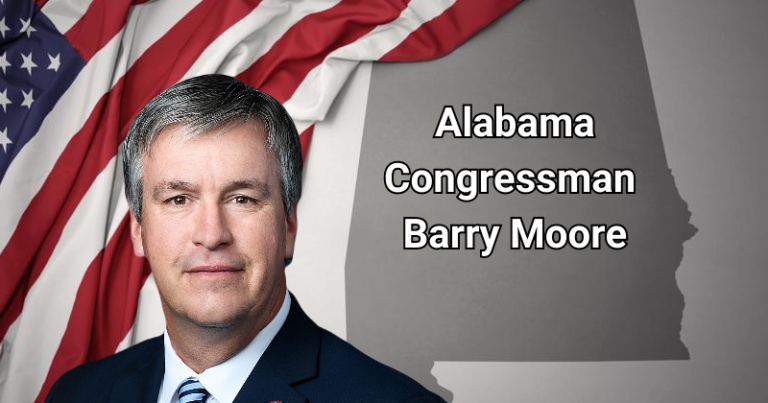
Rep. Barry Moore (R-AL) and Rep. Jimmy Panetta (D-CA) introduced the Stop Secret Spending Act of 2025, which requires federal agencies to include other transaction agreements (OTAs) in the list of federal awards that must be reported on USAspending.gov. Senator Joni Ernst (R-IA) led the Senate companion to this legislation.
OTAs are legally binding agreements that are not standard contracts, cooperative agreements or grants that authorized government agencies may use, and thus they are not subject to certain federal acquisition laws and requirements. Analysis from the General Services Administration (GAO) has found that significant amounts of OTAs are not being reported.
“Federal agencies should be disclosing every taxpayer dollar they spend, especially as we close in on $35 trillion in national debt. Unfortunately, the current OTA loophole allows these agencies to spend billions and leave Americans in the dark, ” said Rep. Moore. “I thank my colleague, Rep. Panetta, for joining me on this bipartisan legislation to ensure that all federal agency expenditures are easily accessible to the American people on USAspending.gov.”
“Right now, billions in federal spending go unreported due to a loophole in the disclosure of other transaction agreements,” said Rep. Panetta. “Our bipartisan, bicameral legislation would close that gap by ensuring these expenditures are accounted for on USAspending.gov. This is a commonsense step toward strengthening public trust, improving fiscal accountability, and ensuring responsible stewardship of taxpayer dollars.”
Katie Britt, Gary Palmer Introduce Lulu’s Law

Representative Gary Palmer (AL-06) introduced Lulu’s Law in the U.S. House of Representatives. Lulu’s Law is named after Lulu Gribbin of Mountain Brook, Alabama, who was attacked by a shark in June 2024.
Only 90 minutes prior to Lulu Gribbin and McCray Faust being attacked, another woman was attacked by a shark a few miles away. Lulu’s Law would codify the ability for authorities to quickly deploy wireless emergency alerts (WEAs) to the public if someone has been attacked by a shark or if the conditions for a shark attack are present.
“If there is a commonsense solution to keeping Americans safe and out of harm’s way, we should capitalize on it. Had an alert gone out on June 7, 2024, the dreadful shark attack on Lulu could have been prevented,” said Rep. Palmer. “Lulu’s tremendous strength, faith, and bravery throughout her healing journey has inspired many. By passing Lulu’s Law, we would be creating a practical solution to prevent future attacks from occurring and keeping beachgoers safe.”
Senator Katie Britt (R-AL) introduced companion legislation in the U.S. Senate.
“Last June, the unthinkable happened when Lulu suffered a devastating shark attack. When Lulu woke up, she said, ‘I made it’ and since then, she has only continued to prove her resilience,” said Sen. Britt. “I’m incredibly proud of her faith, her courage, and her strength – she truly personifies both grace and grit. Lulu’s Law would empower authorities to quickly and accurately put information in the hands of beachgoers to help keep them out of harm’s way. This is a commonsense measure aimed at keeping families safe – a cause that I know people can rally around, just like her local community, our great state, and the entire nation have rallied around Lulu.”
The Integrated Public Alert and Warning System (IPAWS) is managed by the Federal Emergency Management Agency (FEMA) and sends out local alerts in an effort to provide emergency information to the public. Other WEA alerts include extreme weather warnings, amber alerts, and more.
Read the bill here.
Casey DeSantis’ Whisper Campaign for Governor Could Be Ron’s Gauge for His Odds vs. Trump Jr. in 2028

Recent whispers about Casey DeSantis considering a run for governor of Florida in 2026 may not be what they seem. While some might assume it’s about her own political ambitions, but I have my own theory: Ron DeSantis is using the speculation as a trial balloon to assess his own prospects in the 2028 Republican presidential primary. Ron DeSantis understands that his path back to the national stage requires learning from 2024’s failures.
He needs to measure his strength against a Trump-endorsed candidate in a Republican primary—without having to put himself on the ballot just yet. That’s where Casey DeSantis comes in. If she runs for governor in 2026, her biggest obstacle to the nomination would be Congressman Byron Donalds, who received Trump’s enthusiastic endorsement before he had even officially declared his candidacy. While Donalds is not Trump, that endorsement alone makes him the de facto choice for Trump’s loyal base. In this way, a DeSantis vs. Donalds primary would mirror the dynamics of the 2024 GOP presidential race, where Ron DeSantis struggled against Trump’s overwhelming influence. The difference is, this time, Ron can sit back and observe.
If you don’t think Trump can pull a primary candidate for a statewide office down when his approval is low, just ask David Perdue, the Trump-endorsed gubernatorial candidate who lost in a 52-point landslide in Georgia, or Herschel Walker, who lost his bid for Senate in the same state, despite Trump’s endorsement.
If Casey could stay within winning distance in a GOP primary against a Trump-endorsed candidate, it would signal that Trump’s influence—while still dominant—might not be insurmountable. It would also provide valuable insight into what messages and strategies resonate with Republican primary voters in a post-Trump era. On the flip side, if Casey loses to Donalds, Ron would have to seriously reconsider his own viability in 2028. That race would demonstrate that the DeSantis name alone isn’t enough to overcome a Trump-backed opponent, even in Florida, the state where Ron has built his brand. Ron’s biggest challenge in 2028 won’t just be Trumpism—it will be Trump’s potential successors.
If Donald Trump Jr. enters the race, DeSantis could find himself in third place behind him and JD Vance. But if Trump Jr. sits out, DeSantis’ main rival would likely be Vance, Trump’s current VP pick. And as history has shown, a vice president doesn’t always get a guaranteed endorsement from their former boss (ask Mike Pence). If Trump’s popularity begins to fade by 2028, Vance may have to slightly distance himself, much like Al Gore did from Bill Clinton in 2000. That could give DeSantis an opening to argue that his executive experience as governor is more valuable than Vance’s short tenure in the Senate.
The GOP primaries in both 2016 and 2024 showed that Trump won key states by pluralities, thanks to a divided field. If DeSantis wants to avoid a repeat of 2024, he needs to game out the possibilities early. Testing the waters with Casey in 2026 lets him do just that—without the personal risk of running himself. In the end, Casey DeSantis’ rumored bid for governor may not just be about her future. It may be the first move in Ron DeSantis’ long-term plan to reclaim relevance in 2028. Whether that strategy succeeds or fails will depend on how much control Trump still holds over the Republican electorate two years from now.

Gary Palmer: Mayors of sanctuary cities VIOLATED their oath of office by illegally providing sanctuary to criminals’

U.S. Rep. Gary Palmer (R-Hoover) blasted several Democratic mayors on Wednesday during a House Oversight Committee hearing for giving criminal illegal aliens “safe harbor” in their cities.
The mayors on hand to discuss sanctuary city policies included Boston Mayor Michelle Wu, Chicago Mayor Brandon Johnson, Denver Mayor Mike Johnston, and New York City Mayor Eric Adams.
“I just want to respond about crimes committed by people here legally,” Palmer said to the mayors at the hearing. “Every crime committed by someone in the United States illegally is a crime that would not have been committed Lincoln Riley, Ruby, Garcia, Rachel Moran, Joycelyn Nunga Ray, the woman set on fire in the New York subway, these are all assaults, rapes, murders, and other crimes that would not have taken the lives of these people if those people were not here illegally, they were given safe harbor.”
The congressman then asked the city leaders if they understood that their actions could be violating their oaths to the Constitution.
“When you declared your city sanctuary cities, you did so illegally,” Palmer argued. “Do you understand that? We’re disagreeing with the law. It’s against the law to give sanctuary to people who have committed felonies, and it’s a felony to cross the border illegally. You gave sanctuary to people who are here illegally. You violated your oath to uphold the Constitution because of the Supremacy Clause.”
Palmer also told the mayors that he has been considering referring charges to the U.S. Justice Department over their failure to follow federal immigration laws.
Fox News Host Laura Ingraham highlighted Palmer’s statement Wednesday night saying, “Consequences, yes, I agree completely with Congressman Palmer.”
Tennesssee Gov. Lee Bans Manus, DeepSeek AI Platforms on Tennessee State Network

Tennessee Gov. Bill Lee announced that two artificial intelligence (AI) tools with direct ties to the Chinese Communist Party are now banned on the state network. Manus and DeepSeek have been added to a list of foreign-owned platforms that are now strictly prohibited due to serious threats regarding data privacy and cyber security. Tennessee becomes the first state in the Nation to ban the Alibaba-owned Manus platform, which launched earlier today.
“As artificial intelligence platforms emerge and this technology landscape evolves, there is growing concern regarding data protection and the threat of influence from foreign adversaries,” said Gov. Lee. “Tennessee has taken consistent action to mitigate risk from platforms with ties to the Chinese Communist Party, including TikTok, and banning Manus and DeepSeek on state devices will further reduce security risks to Tennesseans.”
Security threats posed by the Manus and DeepSeek platforms include:
· Censorship and Propaganda: Integrating Chinese political values into its output, which could lead to the spread of misinformation.
· Bias & Discrimination: Generates output that displays biases in areas such as race, gender, health, and religion, leading to discriminatory results.
· Data Privacy: Collects sensitive user information, including IP addresses, keystrokes, and behavior patterns. This data is stored on Chinese servers for unspecified purposes, raising the potential for espionage or targeted influence campaigns.
· Cybersecurity: The platforms have vulnerabilities that could be exploited by adversaries to generate malicious code or compromise sensitive information.
Following Tennessee’s state ban on DeepSeek, the Tennessee Attorney General issued a consumer warning regarding the platform.
Tennessee has a strong track record on data protection and cybersecurity:
· Gov. Lee took decisive action to ban TikTok from the state network and state devices in December 2022, making Tennessee the first state to do so.
· In June 2024, Gov. Lee directed a state ban on financial services platforms with ties to the Chinese government, including Webull, Tiger Brokers, Moomoo and Futu Holdings, and digital-assets brokerage Prometheum.
South Carolina Attorney General Alan Wilson Announces Human Trafficking Task Force Partners

South Carolina Attorney General Alan Wilson, Chair of the South Carolina Human Trafficking Task Force, announced the launch of a statewide certification program for service providers working with human trafficking victims. The new program is in partnership with Safe House Project, a national non-profit providing certification, survivor support, and safe housing options for those that have been trafficked.
“South Carolina’s efforts to better protect human trafficking victims began with the 2019 launch of a Victim Service Provider Certification for Human Trafficking Professionals, the first of its kind in the nation,” said Wilson. “The State will now require Safe House certification for residential and community-based programs, another first in the nation.”
Up to 20 programs in South Carolina will receive certification services each year. Eight non-profits will be invited for the first cycle of the process. The State Task Force will include those who receive certification in its online resource directory. Certified programs will also be included in the National Human Trafficking Hotline victim services referral list.
Kristi Wells, CEO of Safe House Project, said, “South Carolina will become the first state to require Safe House Certification for both residential and community-based services supporting survivors of trafficking.”
“As we work to expand Safe House Certification across the country, partnerships like South Carolina’s will serve as a model for other states,” said Brittany Dunn, COO of Safe House Project. “Our goal is to strengthen survivor care nationwide by ensuring every program has the tools, training, and resources to provide the highest level of trauma-informed, survivor-centered support.”
For more information about anti-human trafficking efforts in South Carolina, please visit the State Task Force website at humantrafficking.scag.gov. To report an incident or seek victim services, call the National Human Trafficking Hotline at 888-373-7888. The Hotline is confidential and open 24 hours a day, 7 days a week.